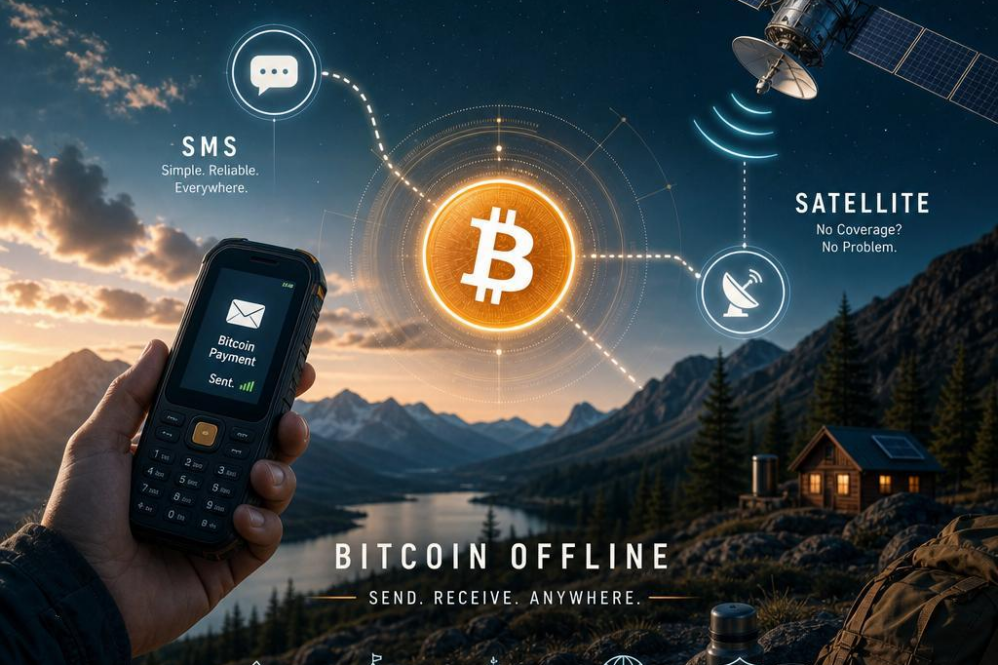
Using SMS Networks for bitcoin Transactions in Remote Areas
In regions where internet access remains unreliable or altogether absent, SMS networks offer a surprisingly effective channel for conducting bitcoin transactions. Leveraging the ubiquity of mobile phone networks, these text-based communications circumvent the need for live internet connectivity, making decentralized finance accessible to millions. Users can send bitcoin transaction data encoded within SMS messages, which are then relayed through specialized gateways and decoded to broadcast onto the bitcoin blockchain via connected nodes.
Key advantages of using SMS for bitcoin transactions include:
- Worldwide Reach: SMS technology works even on basic mobile phones, extending bitcoin accessibility to remote and underserved communities.
- Low Bandwidth Requirements: Unlike data-heavy applications, SMS transmissions demand minimal bandwidth, reducing transactional latency and costs.
- Resilience: SMS networks often remain functional during natural disasters or network outages, preserving financial dialog when it is needed most.
To illustrate, here is a simple comparison of data needs and operational features between internet and SMS-based bitcoin transactions:
| Feature | Internet-based | SMS-based |
|---|---|---|
| access Device | Smartphone/Computer | Any mobile phone |
| Connectivity | Wi-Fi/Cellular data | Cellular text network |
| Data Volume | High | Minimal |
| Transaction Speed | Fast | Moderate |
| Operational Reliability | Dependent on internet | Strong in remote areas |
Satellite Technology as a Reliable Alternative to Internet Access for bitcoin
Satellite technology has emerged as a groundbreaking solution for accessing the bitcoin network in remote or connectivity-challenged regions. By transmitting blockchain data from space, satellites bypass the need for terrestrial internet infrastructure, offering unparalleled resilience and coverage. This approach ensures continuous bitcoin network updates even in areas where traditional internet services are unreliable or entirely unavailable, making it an ideal choice for users prioritizing security and network independence.
One of the key advantages of satellite-based bitcoin access is its ability to deliver a one-way data stream of blockchain facts directly to users through low-cost satellite receivers.While users cannot broadcast transactions via satellite alone, they can easily monitor and verify the blockchain status offline. The data flow includes:
- Real-time blockchain updates transmitted regardless of local infrastructure.
- Network censorship resistance by removing dependency on ISPs or government-controlled internet.
- Low entry cost with affordable satellite receiver hardware.
to complete the offline bitcoin experience, many users pair satellite reception with alternative uplink methods, such as SMS gateways or mesh networks, which can broadcast transactions back to the bitcoin network without full internet access. This hybrid setup offers a robust, decentralized communication ecosystem. The table below summarizes the capabilities and limitations of satellite bitcoin access:
| Feature | Functionality | Notes |
|---|---|---|
| Data Reception | Continuous blockchain updates | One-way stream only |
| Transaction Broadcasting | Not via satellite | Requires alternative uplink |
| Coverage | Global, including offline regions | Unaffected by internet outages |
| Hardware | Low-cost receiver | Easy setup |
Security Considerations and Best Practices for Offline bitcoin Use
When engaging in offline bitcoin operations, the primary concern is safeguarding private keys from exposure. Storing keys in a physically secure surroundings-such as hardware wallets kept in tamper-evident cases or air-gapped computers-minimizes the risk of remote hacking attempts. Furthermore, utilizing encrypted backups and ensuring multi-factor authentication during any online interaction before or after offline transactions strengthens overall security.A disciplined approach to key management and regular audits of backup integrity keep assets insulated against both digital and physical threats.
Offline bitcoin use via SMS and satellite brings unique security challenges. SMS transactions can be vulnerable to SIM swapping and interception,so it is vital to verify sender authenticity rigorously and prefer cryptographic signatures over SMS-based OTPs when possible. Satellite-based broadcasts, while reducing dependence on internet infrastructure, require extensive protection of the offline device used to decode signals, ensuring no malware compromises transactional validity. Users are also encouraged to combine these methods with cold storage and never re-use addresses to prevent transaction traceability attacks.
The table below summarizes best practices suited for offline bitcoin scenarios, illustrating how security can be layered effectively:
| Practice | SMS Use | Satellite Use |
|---|---|---|
| Key Storage | Encrypted & offline hardware wallets | Air-gapped devices with physical isolation |
| Verification | Signature validation on messages | Checksum and cryptographic proof verification |
| Backup | Multi-location paper or metal backups | Redundant offline copies in secure vaults |
| Address Hygiene | One-time addresses preferred | Dedicated addresses per transaction |
Adopting a layered security framework and respecting the inherent limitations of offline channels ensures that users can maintain trust and integrity in bitcoin transactions, even without constant internet connectivity.
Technical Requirements and Step-by-Step Guide to Implementing Offline bitcoin Solutions
Implementing offline bitcoin transactions requires a reliable setup that bridges the gap between blockchain networks and disconnected environments. For SMS-based solutions, the most critical component is a compatible SMS gateway or service provider capable of handling encrypted bitcoin transactions.Users typically need a hardware or software wallet that supports message signing offline, ensuring private keys remain secure. On the satellite front, integrating with a satellite bitcoin broadcasting service demands specialized equipment such as a software-defined radio (SDR) or compatible satellite receiver along with a computer or device configured to decode incoming blockchain data streams.
The step-by-step procedure often begins by generating and signing bitcoin transactions in an offline environment. For SMS, once the transaction is signed, the data is encoded into SMS-compatible messages and sent via the GSM network.For satellite, signed transactions are uploaded to a node connected to the satellite uplink, where they broadcast across a global footprint without relying on traditional internet infrastructure. The receiver’s device then listens for these broadcasts, decoding and relaying them back to the local node or wallet. Below is a simplified breakdown:
- Generate and sign the transaction in an air-gapped wallet.
- Encode the signed transaction for SMS or satellite transmission.
- Transmit via SMS gateway or satellite uplink.
- Receive and decode the transaction data on the recipient’s device.
- broadcast the transaction to the bitcoin network when connected.
To clarify compatibility and hardware needs, the following table outlines essential components for each offline method with a focus on bitcoin transaction security and network reliability.
| Component | SMS Solution | Satellite Solution |
|---|---|---|
| Key Hardware | GSM phone or SMS gateway | Software-defined radio (SDR) receiver |
| Wallet Type | Air-gapped hardware/software wallet | Cold wallet + satellite-compatible node |
| Transmission Medium | Mobile cellular network | Satellite broadcast network |
| Security Focus | Encrypted SMS messaging & private key offline storage | Offline signing & tamper-proof data reception |