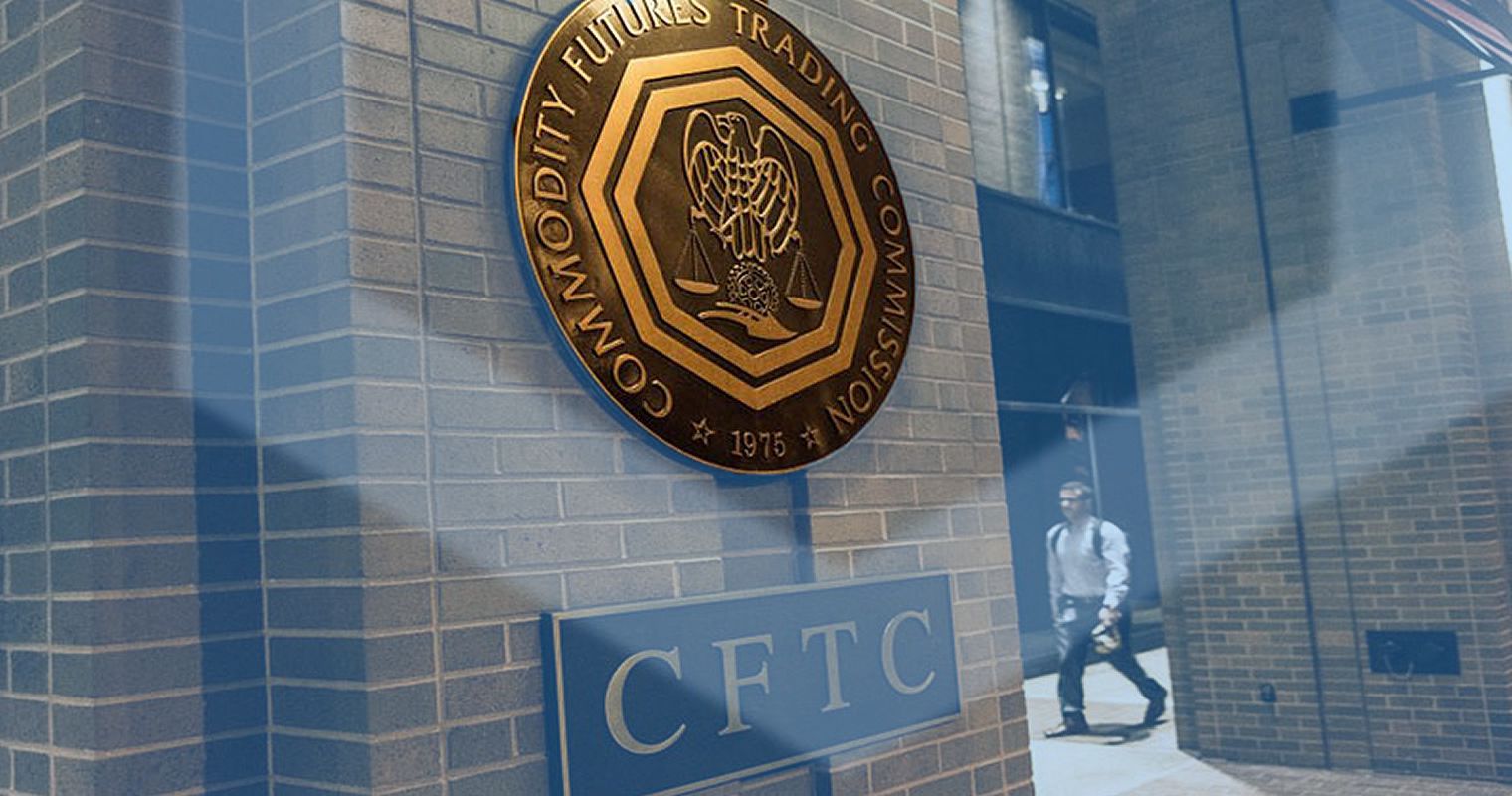
U.S. District Judge Jack Weinstein in Brooklyn ruled that the Commodity Futures Trading Commission (CFTC) has standing to regulate cryptocurrencies as commodities. The financial watchdog first determined that virtual currencies are commodities in 2015.
Cryptocurrencies are commodities
The ruling gives the CFTC the needed authority to bring a fraud lawsuit against Patrick McDonnell, a New York resident charged with cryptocurrency fraud scheme along with his company Coin Drop Markets (CDM).
The CFTC complaint was filed in January, but the defendant tried to use the unregulated nature of cryptocurrencies to have the case dismissed. The federal judge’s ruling will allow the case to go forward.
Moreover, Weinstein entered a preliminary injunction barring McDonnell and Coin Drop Markets from engaging in commodity transactions. The CFTC had found “a reasonable likelihood that without an injunction the defendants will continue to violate the CEA [Commodity Exchange Act].” The ruling stated that;
“The court finds the plaintiff has made a preliminary prima facie showing that the defendants committed fraud by misappropriation of investors’ funds and misrepresentation through false trading advice and promised future profits.”
The judge argued that the CFTC had broad leeway to interpret the federal law regulating commodities, which is enough to legally define cryptocurrencies as commodities.
The CFTC alleges that McDonnell and CDM engaged in a deceptive and fraudulent virtual currency scheme to induce customers to send money and virtual currencies to CDM, purportedly in exchange for real-time virtual currency trading advice and for virtual currency purchasing and trading on behalf of the customers under McDonnell’s direction.
In its continuing civil litigation, the CFTC seeks restitution to defrauded customers, civil monetary penalties, trading bans, and a permanent injunction against future violations of federal commodities laws.
James McDonald, the CFTC’s Director of Enforcement, said:
“This action is among the latest examples of the CFTC’s continuing commitment to act aggressively and assertively to root out fraud and bad actors involved in virtual currencies. As alleged, the Defendants here preyed on customers interested in bitcoin and Litecoin, promising them the opportunity to get the inside scoop on the next new thing and to benefit from the trading acumen of a supposed expert. In reality, as alleged, customers only bought into the Defendants’ fraudulent scheme. We will continue to work hard to identify and remove bad actors from these markets.”
There is still lack of consensus regarding the nature of cryptocurrencies and whether they are , but there is an inclination towards the latter. Late last year, the announced that they would not consider bitcoin a currency but rather as a commodity.
Two Weeks to Go: Malta AI & Blockchain Summit Launching Exclusive Pool Party The second edition of the Malta AI & Blockchain Summit (AIBC) is wrapping things up for a stellar show just two weeks […]
One of the key points of contention in the politicization of bitcoin protocol development over the past couple of years has been the concept of miner signaling. While not intended to be a vote among miners to decide the future of the bitcoin network, CEO and contributor pointed out that miners are now using the signaling process as leverage in the discussion over bitcoin scaling.
Lombrozo made the comments during a discussion with host Thomas Hunt and bitcoin developer Jimmy Song on Hunt’s .
“This whole signaling thing is a huge problem that I think created a very terrible narrative,” said Lombrozo.
What Is BIP 9?
is a method of rolling out upgrades to bitcoin. The short description of this process is that soft-forked changes will be enabled once 95 percent of miners have signaled to the network that they are ready for activation, using a trick called “version bits.”
“It was an arbitrary system created by developers in order to coordinate smooth soft-fork transitions,” said Lombrozo. “It was not designed to be a political system for voting on controversial issues ever — that was never the intention.”
Lombrozo also noted that, in the past, soft forks have been deployed on bitcoin without any special treatment for miners, and BIP 9 was supposed to solve some of the issues miners could face during the deployment of a soft fork.
“It was introduced for the courtesy of miners to be able to reduce their and reduce the probability that they’re going to end up mining blocks that are actually invalid — that was the real motivation behind it,” said Lombrozo.
According to Lombrozo, the goal is still to get nodes upgraded and enforce the rules of the soft fork; BIP 9 was simply a technique to coordinate with miners.
The Ciphrex CEO added that there was nothing like miner signaling in the original version of bitcoin, and Satoshi Nakamoto never used miner signaling for the soft forks that he deployed on the network.
“It was a mechanism that was created way later,” said Lombrozo. “And once this mechanism was created, it was abused and turned against the developers to try to extort stuff. And now it’s being used against businesses to extort stuff from them.”
BIP 9 Does Not Work With Uncooperative Miners
According to Lombrozo, BIP 9 would not have been used for (SegWit) if the contributors to bitcoin Core knew then what they know now.
“If we considered that there had been this kind of, like, contentious or adversarial situation, then BIP 9 would not have been used,” said Lombrozo. “We would not have used the signaling mechanism because it obviously does not work under those kinds of circumstances.”
In Lombrozo’s view, miners are now using the effective veto power that comes with the miner signaling process outlined in BIP 9 as leverage in the discussions around scaling bitcoin. He also believes bitcoin Core developers may deserve some of the blame for using BIP 9 in the first place.
“But at the same time, we only had the best of intentions at the moment,” added Lombrozo. “We thought we’d gotten through all these disagreements and it seemed like the miners were for it and going to support it … Obviously, the adversarial case needs to be considered because it’s just the nature of this network and the way that it works.”
Lombrozo suggested that miners also used miner signaling as a sort of “propaganda” tool with bitcoin Unlimited, even though there was no activation mechanism included in the code.
Never Use BIP 9 Again?
According to Lombrozo, miners now think they have some control over the protocol due to the use of the miner signaling process outlined in BIP 9.
“Miners started thinking, ‘Hey, maybe we have control over the protocol because of this whole signaling thing,’” said Lombrozo during his discussion with Hunt and Song.
Lombrozo claimed that “we’re never going to use BIP 9 to deploy anything almost for sure” if SegWit is not activated via the current BIP 9 deployment.
As an alternative, bitcoin Core could turn to , which is a variation of BIP 9 from pseudonymous developer Shaolin Fry that eventually activates a soft-forking change whether miners have signaled for it or not. Miners can still activate the change before it is automatically locked-in on the network, but approval from miners is not required before that lock-in takes place.
Europol Claims $5.5 Billion Laundered Using Cryptocurrency Adam James · February 12, 2018 · 11:00 pm bitcoin and cryptocurrencies have long had a reputation for being the payment tools of criminals. Now, Europol claims billions […]