UPS Eyes Blockchain in Bid to Track Global Shipping Data
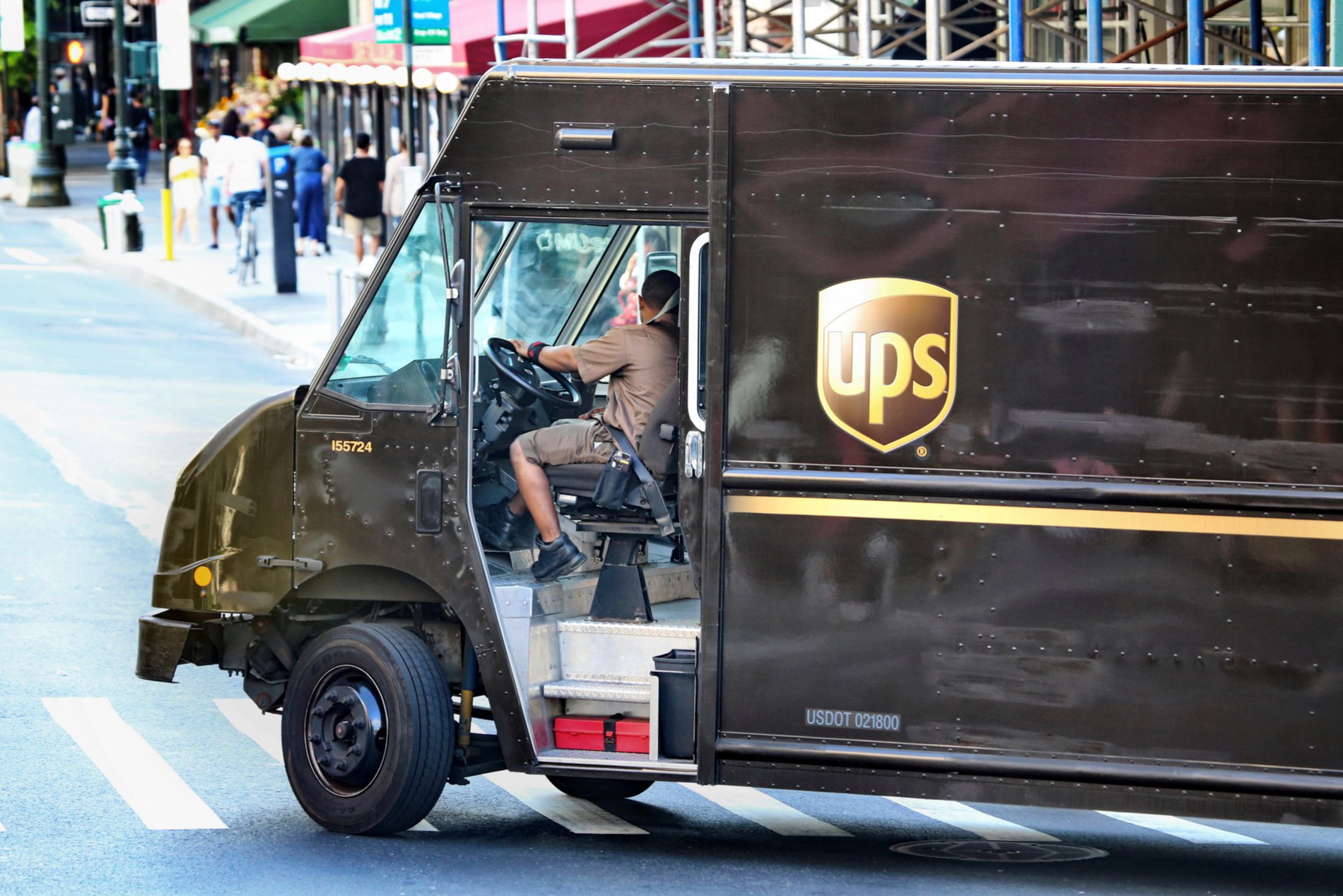
Shipping giant UPS has filed for a new patent that uses blockchain as part of a distributed system for sending packages worldwide.
The patent application, published on Aug. 16 by the U.S. Patent and Trademark Office (USPTO), further reveals the company’s interest in using blockchain to re-envision how shipments move around the world.
Entitled “Autonomous services selection system and distributed transportation database(s),” the concept involves storing numerous types of data within a distributed ledger network, including information about a package’s destination, its movement and transportation plans for shipment units.
As CoinDesk previously reported, UPS joined in 2017 and has even through a proposed system of item-exchange lockers.
Notably, UPS suggests using more than one distributed ledger in an effort to track a range of shipment orders, “each providing varying information/data regarding respective asset types (e.g., shipment units and/or associated shipment units).”
“Thus, certain embodiments enable tracking of a first set of shipment units and a second set of shipment units associated with the first set of shipment units separately, thereby enabling the use of various smart contracts relating to shipping services and shipment unit handling in a bifurcated manner,” the company wrote.
That the company would look at different ways to enhance the process through which it moves shipments around the world is perhaps unsurprising, given its scale. UPS shipped more than 5 billion packages and documents last year, , earning $54 billion in revenue.
Image via Shutterstock
The leader in blockchain news, CoinDesk is a media outlet that strives for the highest journalistic standards and abides by a . CoinDesk is an independent operating subsidiary of Digital Currency Group, which invests in cryptocurrencies and blockchain startups.
How To Mine Gulden On Pool & Setup Wallet ★☆★Build Your Own Mining Rig! Yursa’s Recommendations!★☆★ ► Graphic Cards: XFX Radeon RX 580 8GB►https://amzn.to/2JrsjDc ASUS Radeon RX 580 4GB►https://amzn.to/2JhHGlj ASUS Radeon RX Vega 64 8GB►https://amzn.to/2Lxy4Ql […]
Blockchain technologies like the one that underpins bitcoin are gaining wide acceptance across industry sectors from finance to healthcare to real estate. bitcoin itself, however, is still struggling with legitimacy and regulation issues. Just this week, the fact that bitcoin was chosen as the payment method for the latest round of global data , WanaCrypt0r 2.0 malware, has underscored the negative perception that still swirls around the cryptocurrency.
, co-hosts and interviewed , Director of Research of , a nonprofit research and advocacy center focused on the public policy issues facing decentralized financial networks like bitcoin and Ethereum. During the interview, Van Valkenburgh explained how bitcoin is currently dealing with its branding issue; how Coin Center is laying the groundwork for future discussions about bitcoin regulation; and how more mainstream uses of the technology would be helpful for discussions around regulation.
Van Valkenburgh noted how Coin Center has struggled with the issues around bitcoin as a brand, as many in the mainstream associate the digital currency with the collapse of Mt. Gox and drug sales on darknet markets.
“We take a lot of meetings with congressional staff, we take meetings with regulators at [the United States] Treasury, and oftentimes we can’t take credit for those meetings because a congressman doesn’t want it, necessarily, to immediately hit the news that he’s meeting with the bitcoin people,” said Van Valkenburgh.
From Van Valkenburgh’s viewpoint, networks like bitcoin are used to “decentralize power” and push security to end users’ devices. “That means you lose the choke point for regulation because the choke point for regulation is the bank, the choke point for regulation is the centralized intermediary,” he explained.
Van Valkenburgh went on to note that, since control over these networks is pushed to the edges, the technology can potentially be used for illicit activities.
Laying the Groundwork for a Future Debate
One of the illicit activities that regulators and journalists sometimes associate with bitcoin is terrorism. Although there haven’t been any major terrorist attacks funded through bitcoin or any other cryptocurrency up to this point, that we know of, Van Valkenburgh pointed out that it’s “possible that one day somebody will use these networks in a meaningful way” to finance that sort of activity.
According to Van Valkenburgh, one of Coin Center’s main goals is to prepare for the potential conversation that would take place within government in the aftermath of such an event.
“What will be the government response when this tool is used in a way that a lot of people get upset about?” asked Van Valkenburgh. “Our metric of success, I think truly, would be a reasonable response to clear evidence of illicit uses of the technology — like dangerous, illicit uses of the technology.”
For Van Valkenburgh, success for Coin Center in such a scenario would mean the prevention of a push for an instant ban of bitcoin and other related technologies, along with software developers not getting arrested as part of the process. Coin Center is effectively laying the groundwork to make sure these future conversations remain reasonable.
“This is a technology and, just like all technologies, it can be used for good and for evil,” said Van Valkenburgh. “We are not, as Americans, in the business of banning technologies. We’re not in the business of banning speech.”
More “Legitimate” Use Cases Needed
Going back to the aforementioned branding issue, one possible way to improve the outlook on bitcoin from a regulatory perspective is to create more mainstream use cases for the technology. This point was originally brought up by Crain.
“If you have stuff where there is 50 million users and they are like, ‘This thing is great. It really makes something possible that I couldn’t do before. It’s a totally legitimate thing, and this is amazing.’ It would be so much harder if it’s still this kind of fringe thing,” said Crain.
Van Valkenburgh agreed with Crain’s assessment and continued, “You need the legitimate use cases to emerge. You need to show that you’re making a positive impact on the world — that it’s not just a bunch of people getting rich off of token sales or people using underground drug markets.”
Van Valkenburgh added that Coin Center hopes to clear the way, at least from a regulatory perspective, for these sort of mainstream applications to appear. “The longer we go without more mainstream, legitimate uses, the more danger we’re in,” he added.
As far as mainstream uses of bitcoin today, Van Valkenburgh pointed to the financial autonomy enabled by the technology, and he identified as a specific example. However, Van Valkenburgh also added that this example has become more politically charged since allegations of WikiLeaks working directly with Russia have appeared.
Cryptography News Decred Market Capitalization Reaches $153.14 Million Decred traded 1.6% higher against the dollar during the one day period ending at 7:00 AM ET on December 9th. During the last seven days, Decred has […]