September 10, 2026

Capitalizations Index – B ∞/21M

Unregistered Japanese Crypto Exchanges Could See Suspension Orders: Report

Unregistered japanese crypto exchanges could see suspension orders: report

Unregistered Japanese Crypto Exchanges Could See Suspension Orders: Report

Japan fsa ico
Advertisement

Get Trading Recommendations and Read Analysis on Hacked.com for just $39 per month.

Upon completion of its first phase of inspecting cryptocurrency exchanges, Japan’s financial regulator is reportedly set to issue business suspension orders for unregistered exchanges.

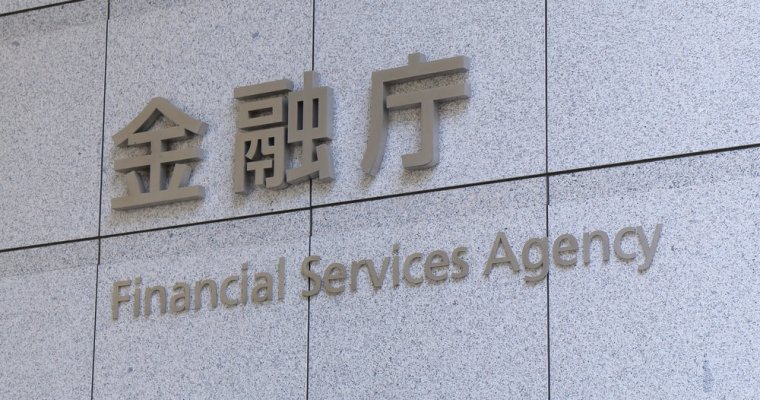
According to the Nikkei, Japan’s Financial Services Agency (FSA) is due to announce punitive measures that include business suspension orders for some cryptocurrency exchange operators. The country’s financial regulator has increased its scrutiny of exchanges and trading platforms following the $530 million hack of Tokyo-based exchange Coincheck in late January. One of 32 exchanges operating in the country, Coincheck is notably not among the 16 operators registered with the regulator, under new legislation.

As reported at the time, the financial regulator confirmed it would conduct on-site inspections of all domestic exchanges to check their internal auditing practices, anti-money laundering measures and cybersecurity infrastructure to ensure robust security measures to safeguard customers’ assets.

The regulator has now completed its first phase of inspections, the Nikkei report confirms, with the FSA set to issue ‘business suspension’ orders for an ‘unspecified’ number of exchanges.

The report further suggests that the suspension orders will be issued to exchanges that have been operational while despite their FSA applications currently being reviewed. The sixteen exchanges already registered are ‘unlikely’ to be targeted while those who are to be scrutinized will be mandated to ‘improve all aspects of their operations.’

The punitive measures are set to be announced by the end of the week alongside a second business improvement order to Coincheck, which is yet to compensate its users for the NEM theft. The exchange has already lifted a temporary freeze on withdrawals of fiat deposits, leading to customers rushing to take out 40.1 billion JPY ($372 million) in a single day on February 13.

Featured image from Shutterstock.

Follow us on Telegram.
Advertisement

Published at Thu, 08 Mar 2018 09:10:45 +0000

Exchanges

Previous Article

Coincheck to Begin Compensating NEM Hack Victims Next Week

Next Article

Coincheck to Begin Compensating NEM Hack Victims Next Week

You might be interested in …

Bitcoin Miners Miss the First BIP 148 “Deadline”

Bitcoin Miners Miss the First BIP 148 “Deadline”

bitcoin miners at large have missed the first BIP 148 “deadline” to prevent a “split” in bitcoin’s blockchain.

As bitcoin’s scaling dispute appears to be heading for a climax, the next couple of weeks could prove pivotal. One scaling solution in particular, Bitcoin Improvement Proposal 148 (“BIP 148”), is scheduled to trigger activation of Segregated Witness (SegWit) on August 1, 00:00 UTC. As a User Activated Soft Fork (UASF), all users that run a BIP 148 node will then start rejecting any and all blocks that do not signal support for SegWit by the “deadline” — or, perhaps more accurately, “ultimatum” — set by BIP 148 users.

BIP 148 and SegWit are backward-compatible protocol upgrades, which means that non-upgraded nodes will still accept SegWit-signaling and SegWit-utilizing blocks. Therefore, if a majority of hash power in one way or another adopts SegWit before August 1, all current bitcoin nodes would follow the same blockchain.

However, if only a minority of miners activates SegWit through BIP 148, bitcoin’s blockchain and currency would “split” in two. This would result in two types of “bitcoin”: one that activated BIP 148 and one that did not, while even more types of “bitcoin” could emerge as a result. A split between BIP148-nodes and non-BIP148 nodes would last at least until a majority of hash power joins the BIP 148 chain, or until the BIP 148 chain is abandoned by all users and miners for good.

Miners essentially have three options to avoid such a split. This first option was to lock in SegWit before August 1 through the activation mechanism proposed by Bitcoin Core and implemented in many nodes on the network. This required 95 percent of hash power to signal support for the upgrade within a two-week difficulty period. Specifically, such a difficulty period consists of 2,016 of these sequential blocks, which means that a minimum of 1,916 blocks must signal support. Or, in other words, if more than 100 blocks — at least 101 of them — do not signal support for SegWit within a single difficulty period that ends before August 1, this BIP 148 deadline is missed.

Ignoring extreme statistical deviations or other unexpected events, the final difficulty period to end before August 1 started on Friday (UTC). And out of the first day and a half worth of blocks within this difficulty period, only about half of them signaled support for Segregated Witness. This means that the threshold of 101 blocks not signaling support has now been reached.

With two more BIP 148 deadlines ahead, the first one was probably also the most likely to be missed. Its threshold was the hardest of the three to achieve as it required the highest level of hash rate to succeed. Additionally, a large majority of miners (by hash power) indicates that they will activate SegWit through BIP 91 instead. This is the next BIP 148 deadline.

This next deadline will be on July 29. This is the last day that BIP 91 can activate in time to be compatible with BIP 148. In order to do so, 80 percent of hash power must have signaled support for SegWit2x within 2 1/3 days. As such, miners should at the very latest start signaling support for BIP 91 on the 26th of July. Though like the now-missed BIP141 deadline, which is technically not until August 31, the BIP 91 deadline could actually be either missed or met before July 29 as well.

If this next BIP 91 deadline is missed too, miners will have one more chance to avoid a “split.” A majority of hash power would have to activate SegWit through BIP 148 itself by August 1, 00:00 UTC. Alternatively, a majority of hash power could switch to the BIP 148 chain even after August 1 to reunite both chains, but this will likely cause significant disruption on the bitcoin network(s), and potentially a loss of funds for users not aware of the risks.

For more information on how to keep your bitcoins safe during a potential coin-split, click here.

The post Bitcoin Miners Miss the First BIP 148 “Deadline” appeared first on Bitcoin Magazine.