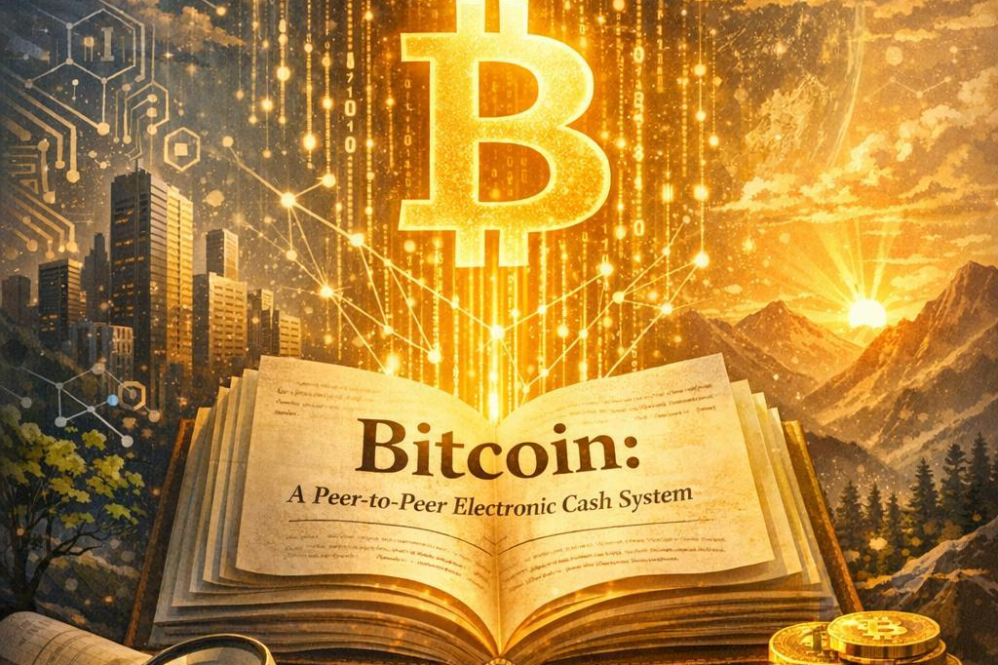
Understanding the Significance of the Title in bitcoin’s White Paper
The title of bitcoin’s foundational white paper is a carefully crafted gateway into one of the moast revolutionary financial innovations of the 21st century.It succinctly captures the essence of the technology by highlighting both the core mechanism-“bitcoin”-and its nature as a peer-to-peer electronic cash system. This choice of words immediately sets the stage for what the reader can expect: a decentralized digital currency that functions without intermediaries.
Examining the wording, the title underscores three vital components:
- Peer-to-peer: Emphasizing direct transactions between individuals without reliance on third parties.
- Electronic cash: connoting digital money that mimics the simplicity and immediacy of physical cash.
- system: Signaling a holistic, interconnected framework rather then just software or a standalone concept.
This precise framing invites curiosity and establishes trust by promising a solution to long-standing issues like double-spending and centralized control.
| Title Element | Implied Meaning | Impact on Reader |
|---|---|---|
| bitcoin | Digital currency name | Recognition and branding |
| Peer-to-Peer | Direct user transactions | Decentralization emphasis |
| Electronic Cash | Digital form of money | Trust in usability |
| System | Integrated solution | Comprehensive approach |
Ultimately, the title functions as a beacon. It encapsulates the white paper’s groundbreaking vision, compelling readers to delve deeper into the mechanics behind this innovative monetary experiment.
Analyzing the Terminology and Its Implications for decentralization
Delving into the terminology presented in the title of bitcoin’s foundational white paper unlocks a deeper understanding of the project’s groundbreaking approach to decentralization. The intentional choice of words like “peer-to-peer” and “electronic cash” isn’t arbitrary; rather, it encapsulates the core beliefs of a trustless, distributed network where transactions occur directly between participants without intermediaries. This represents a fundamental shift from traditional centralized financial systems, emphasizing autonomy, security, and resilience.
Examining these terms reveals an inherent challenge embedded within the design: achieving a truly decentralized consensus without relying on a central authority. The implications are profound, as this decentralization fosters censorship resistance, diminishes single points of failure, and democratizes control over monetary transactions. The vocabulary thus serves not only as a descriptor but as a manifesto for a system that patiently redefines how value and trust coexist in a digital realm.
| Term | Implication for Decentralization |
|---|---|
| Peer-to-Peer | Eliminates intermediaries, enabling direct interaction |
| Electronic Cash | Facilitates digital value transfer with privacy and speed |
| Trustless | Reduces reliance on third-party institutions |
- Redefines power dynamics in financial transactions
- Empowers individual sovereignty and economic freedom
- enables robust network security through decentralization
Exploring the Concept of Digital Cash as Presented in the Title
Digital cash represents a paradigm shift from traditional currency systems by enabling peer-to-peer electronic transactions without reliance on centralized intermediaries such as banks or payment processors. At its core, it is a form of money designed for online use, offering both the convenience of digital transfer and the characteristics of physical cash-namely, immediate settlement and the potential for anonymity. This innovation challenges the conventional financial infrastructure by proposing a decentralized approach where trust is distributed among a network of users rather than vested in a single authority.
In exploring this concept, it is essential to understand the mechanisms that ensure the integrity and security of digital cash. cryptographic protocols and blockchain technology play a pivotal role in creating a tamper-resistant ledger that records every transaction transparently while preventing issues like double-spending. Key attributes of digital cash systems include:
- Decentralization: Eliminating reliance on third-party intermediaries.
- Openness: Publicly verifiable transaction history to enhance trust.
- Security: Encryption protects users’ digital assets and identities.
- Immutability: Once recorded, transactions cannot be altered or deleted.
Below is a succinct comparison highlighting how digital cash contrasts with traditional payment methods:
| Aspect | Traditional Currency | Digital Cash |
|---|---|---|
| intermediary | Centralized banks/payment networks | Decentralized peer network |
| Settlement Time | Hours to days | Near-instantaneous |
| Privacy | Limited, regulated | Enhanced, pseudonymous |
| Control | Regulators and financial institutions | Individual users |
Interpreting the Foundational Principles Embedded in the Title Language
The title chosen for the seminal bitcoin white paper is far from arbitrary; it encapsulates the core innovations and underlying philosophy of the project. Every word serves as a strategic beacon,guiding readers toward the paper’s revolutionary vision. “bitcoin: A Peer-to-Peer Electronic Cash System” explicitly communicates a shift from traditional financial infrastructures, emphasizing decentralization and direct value transfer without intermediaries. This title sets an immediate expectation that the document details an innovative solution to a longstanding problem in digital currency-trustless, direct transactions secured by cryptographic proof.
Breaking down the components within the title reveals layers of foundational principles:
- Peer-to-Peer highlights the decentralized nature, ensuring that transactions occur directly between users without relying on central authorities.
- Electronic signals the digital environment in which the currency functions,distinguishing it from traditional physical cash.
- Cash System implies an operational model designed for everyday use, emphasizing practicality and convenience alongside innovation.
These elements collectively reflect a paradigm shift toward empowering individuals with greater control over their financial interactions.
| Title Element | Core Principle | Implication |
|---|---|---|
| bitcoin | Digital Asset | New form of money based on cryptography |
| Peer-to-Peer | Decentralization | Trustless exchange without middlemen |
| Electronic | Technology-Driven | Operates in a digital networked environment |
| Cash system | Everyday Usability | Designed for practical monetary transactions |
Examining the Title’s Role in Shaping Perceptions of bitcoin’s Purpose
The title of bitcoin’s foundational white paper performs a critical role far beyond mere identification; it serves as a succinct summary that frames the reader’s initial understanding and expectation of bitcoin’s revolutionary mission. By explicitly referencing a “peer-to-peer electronic cash system,” the title encapsulates the essence of decentralization integral to the project. This phrasing immediately positions bitcoin not only as a technological innovation but as a response to traditional financial intermediaries,inviting readers to reconsider the very nature of money and trust.
Moreover, the title’s carefully chosen terminology impacts how various audiences perceive bitcoin’s potential. For developers and technologists,the emphasis on peer-to-peer signals an invitation to explore decentralized networking. For economists and financial experts, the term electronic cash challenges centralized monetary policy models. Meanwhile, for the general public, this title strikes a balance between technical credibility and accessibility, fostering curiosity and engagement without obscuring the project’s practical intent.
| Aspect | Impact on Perception |
|---|---|
| “Peer-to-Peer” | Highlights decentralized network structure |
| “Electronic” | Modernizes the concept of money as digital |
| “Cash System” | Emphasizes everyday usability and trustless exchanges |
the title sets a thematic foundation that influences the framing of subsequent discussions within the white paper and beyond.It primes readers to anticipate solutions that address both technological and socio-economic challenges. This dual focus embedded in the title ensures bitcoin’s narrative is understood as one that strives not only for technical innovation but also for reshaping public trust in a transparent, user-empowered monetary system.
recommendations for Communicating bitcoin’s Vision Through Its Title
Clarity and Precision are essential when crafting the title to evoke bitcoin’s groundbreaking ethos. The title should encapsulate the essence of a decentralized,trustless peer-to-peer electronic cash system in a succinct phrase.It must avoid jargon and overly technical terms that obscure understanding, ensuring accessibility for both newcomers and seasoned technologists.A sharply focused title invites curiosity and sets the expectations for the revolutionary framework described within the document.
engaging emotive and forward-looking language reinforces the transformative potential embedded in bitcoin’s design. Words reflecting disruption, empowerment, and freedom resonate well to connect with a global audience seeking alternatives to traditional financial systems. This strategic word choice not only highlights bitcoin’s innovative mechanics but also champions the broader societal implications-privacy, sovereignty, and financial inclusion-woven through its philosophy.
The title’s structure should consider typographic and visual impact, leveraging contemporary design principles to enhance immediate comprehension. Incorporating a simple, clear hierarchy-such as a main descriptive segment followed by a clarifying subtitle-can guide readers effortlessly into the deeper content. Below is a sample framework demonstrating how components could be arranged for clarity and engagement:
| Part of Title | purpose | Example |
|---|---|---|
| Main Descriptor | Summarizes the core innovation | Decentralized Electronic Cash |
| Clarifying Phrase | Contextualizes the technology | for Peer-to-Peer transactions |
| Vision Statement | highlights broader mission | – A Trustless Financial Future |