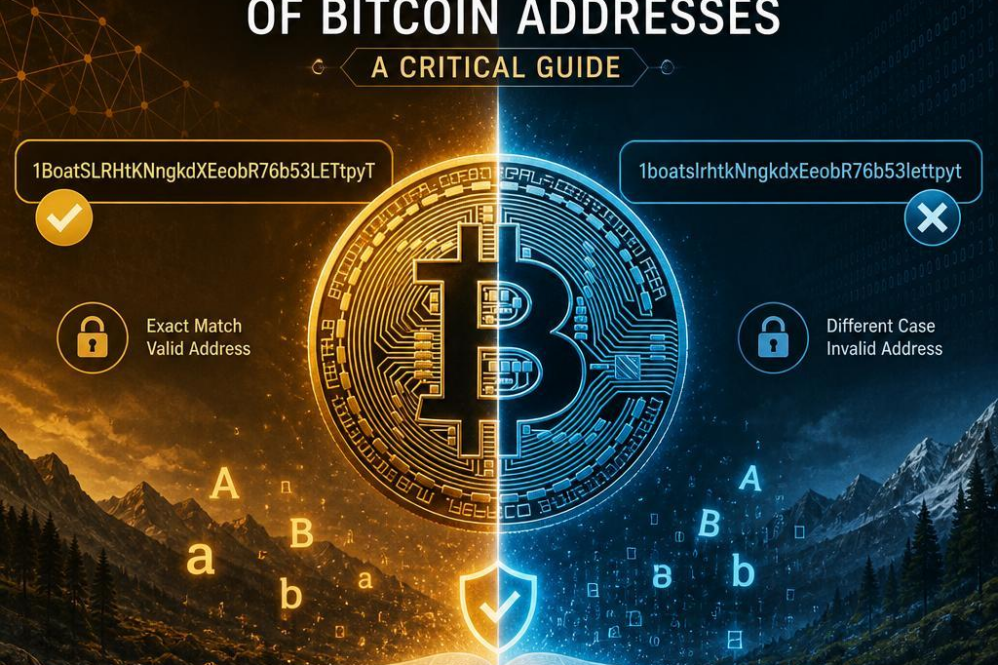
Decoding The Mechanics Of Case-Sensitivity In bitcoin Transactions
understanding the nuances of case sensitivity is crucial. A common misconception is that all parts of a bitcoin address should be treated equally in terms of capitalization,but in reality,certain elements within a bitcoin address are case-sensitive and directly impact the validity and security of the transaction.
bitcoin addresses are derived from public keysand while the address itself appears to be a random string of alphanumeric characters, each character plays a significant role. The format of a bitcoin address begins with a ’1′ or ‘3’, representing two different address types: P2PKH (Pay-to-Public-Key-Hash) and P2SH (Pay-to-Scripthash), respectively.Most software tools and websites that interact with bitcoin addresses are designed to recognize and accept lowercase letters, although the underlying hash could technically be expressed in either case.
To highlight this, consider a scenario where an address is incorrectly capitalized. Using an uppercase ’K’ rather of ‘k’ would render an address invalid and inaccessible, as it would be mistaken for a completely different address. This underscores the importance of precision in bitcoin transactions. For instance, a legitimate address might look like:
1A1zP1eP5QGefi2DMPTfTL5SLmv7Div3L
It’s also worth noting that when a private key is involved, its format is case-sensitive and often includes lowercase and uppercase characters mixed with numbers. If a user mistypes their private key by switching the case of lettersor using the wrong numeral, they might lose access to their funds. This sensitivity underscores the need for meticulous handling and secure storage of sensitive facts in cryptocurrency environments.
Avoiding Common Pitfalls And Ensuring Maximum Security For Your Bitcoins
When handling bitcoin, security is paramount. Many users make the mistake of overlooking small details that could substantially jeopardize their funds. A common pitfall is the lack of awareness about the case sensitivity of bitcoin addresses.While alphanumeric strings like the ones used in bitcoin addresses may appear straightforward, they can pose a significant challenge if not carefully inputted. As a notable example, a single error like typing a lowercase letter rather of an uppercase one could result in losing access to your funds or worse, having them sent to an entirely different wallet.
One crucial aspect of ensuring maximum security is understanding how to properly store and manage your private keys. Private keys grant full control over your bitcoin transaction authority, and improperly managing them can lead to severe consequences. Always ensure you save your private keys in a secure and encrypted format, such as a hardware wallet or a password-protected document. Never rely on simple, insecure methods like text files on a computer or even sticky notes, as these can easily be compromised. Maintaining a backup of your private keys is also important. Without a backup, restoring access to your funds after a hardware failure or accidental deletion could be nearly unachievable.
To avoid common mistakes and enhance your security, consider using a hardware wallet for storing large amounts of bitcoin and maintaining multiple backups of your private keys across different mediums. Never share your private keys or seed phrases with anyone.
Best Practices For Copying And Verifying bitcoin Addresses Manually
accuracy is paramount. A single typo in a bitcoin address can result in funds irreversibly becoming lost. To prevent such mishaps, follow these best practices to ensure you are copying and verifying bitcoin addresses correctly.
First and foremost, always double-check the address format before sending any funds. A typical bitcoin address starts with a ‘1’ or a ‘3’, indicating it’s a legacy or P2SH address, respectively. More recently, addresses may also begin with a ‘bc1’, signifying the use of the Bech32 format, which supports advanced features like segwit. Ensure the address adheres to this structure by manually reviewing it or using a simple verification tool like Blockchain.info.
To enhance manual verification, consider breaking down the task into segments. For instance, rather than scanning the entire address at once, check it digit by digit. Alternatively, you can split the address into halves or thirds and cross-reference each segment with what you expect to see. This method significantly reduces the chance of overlooking minor discrepancies.if you have access to a previous transaction or a backup of the address, it’s wise to compare the new address against this known valid version before proceeding. Never rely solely on auto-fill or copy-paste mechanisms, as these can introduce errors.
Implementing Technological Solutions To Mitigate Case-Sensitivity Issues
When dealing with the intricacies of bitcoin addresses, one must be vigilant about case sensitivity, which can complicate transactions and lead to irreversible errors. To mitigate the common pitfalls associated with case sensitivity in bitcoin addresses, several technological solutions are available. First and foremost, it’s crucial to employ robust address validation tools before sending any transactions. These tools ensure that the address is correctly formatted, including proper case and structure, before funds are dispatched.
Leveraging user-pleasant interfaces that highlight case discrepancies can significantly reduce the likelihood of human error. For example, visual cues like color coding can make it easier to spot uppercase letters in an address’s checksum. One such solution involves using wallet applications that integrate advanced validation features. When a user attempts to send BTC, the app checks the address for correctness and alerts the user to any case issues. This process is typically seamless, providing immediate feedback to the user without disrupting the transaction flow.
For developers and tech-savvy users,implementing open-source libraries that handle case sensitivity is another effective strategy. These libraries can be integrated into custom software or applications to automatically validate and correct address case discrepancies.One popular library for this purpose is Bitcoinj, which provides extensive functionality for bitcoin address validation and encoding. By using such libraries, developers can ensure that their software is robust against case sensitivity errors, making transactions more reliable and user-friendly.