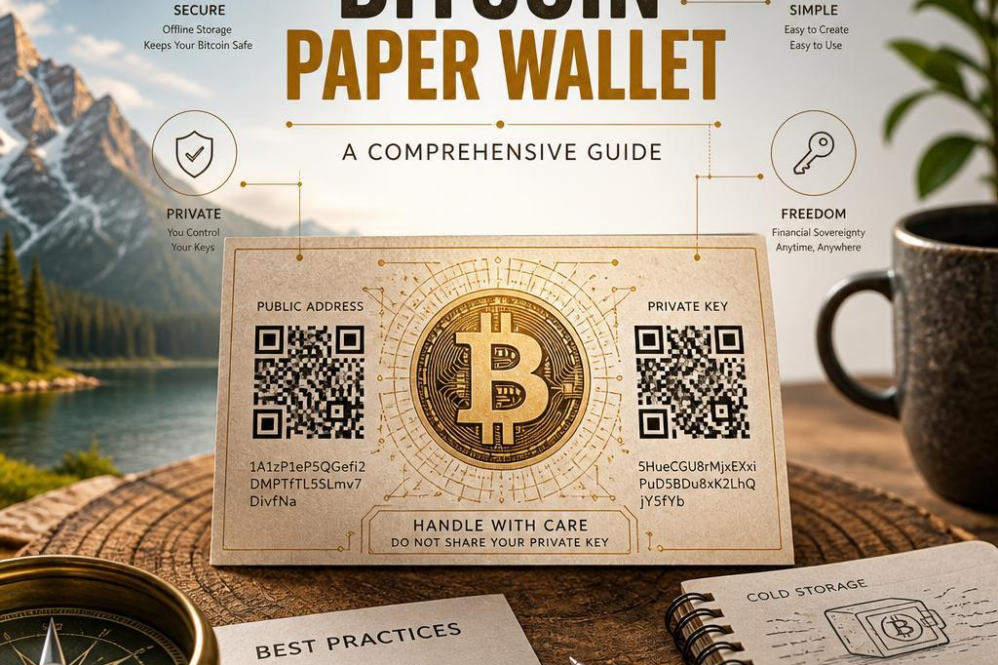
The Security Implications of Using a bitcoin Paper Wallet
When storing bitcoin, security is paramountand paper wallets can be a highly secure method if used correctly. Essentially, a paper wallet is a physical piece of paper with a wallet address for receiving bitcoin and a private key for spending it. Storing your bitcoin on a paper wallet ensures that your funds are offline and isolated from digital threats, but it introduces another form of risk: physical security.If someone gains access to your paper wallet,they could perhaps steal your funds.
To maintain security, you need to take extra precautions when handling and storing your paper wallet. First, ensure you print your paper wallet on a secure printer, away from prying eyesand preferably one that does not have access to the internet, to prevent hackers from capturing your private keys. After printing, physically protect your paper wallet by placing it in a secured, fireproof safe or a high-security deposit box. Do not use common passwords or PINs to access your storage location; opt for strong, unique combinations instead.
Avoid common pitfalls when managing your paper wallet. Never store your paper wallet in an unsecured location like a desk drawer or a public locker. Doing so increases the risk of unauthorized access. refrain from taking a photo of the paper wallet and storing it on your smartphone or cloud storage. Digital backups of your paper wallet compromise the physical security it offers by making the private key accessible online. Remember, the primary security mechanism of a paper wallet is its physical separation from digital networks, so treat it with the respect it demands.
Best Practices for Storing and Retrieving Your bitcoin Paper Wallet
When safeguarding your bitcoin through a paper wallet, the storage and retrieval process becomes an integral aspect of ensuring your security and convenience. A paper wallet serves as a physical document containing your private keys, making it a tangible form of cryptocurrency ownership. To maintain its integrity, one must avoid common pitfalls and adopt best practices.
Choose a Secure Location: Storing your paper wallet in a safe place is crucial. Avoid leaving it in a location that could be easily accessible to unauthorized individuals. It’s advisable to keep it somewhere secure, such as a fireproof safe, a safety deposit box at a bankor a secure digital vault that supports physical documents. Ensure the space offers protection against fire, water damageand theft. When selecting a safe, consider one with a combination lock rather than a key-based system to avoid losing your key or having it stolen.
Use Duplications Strategically: Creating duplicates of your paper wallet can provide an extra layer of security but requires careful handling to prevent compromising the original key. Store one copy in a different location from the primary one to mitigate risks if one storage spot is compromised. For instance, keep the main copy in a fireproof safe at home and a backup in a safety deposit box at a different bank. Creating digital copies on a secured, offline computer can also be beneficial, but ensure the drive remains disconnected from the internet to prevent unauthorized access.
For a visual guide on recommended storage methods, refer to the table below which outlines different scenarios and their respective advantages:
| Situation | Storage Method | Benefits |
|---|---|---|
| Primary Home Storage | Fireproof Safe | Fireproof, theft-resistant, easy access |
| Safety Deposit Box | Bank Deposit Box | High security, access controlled by bank |
| Offline Digital Copy | Offline Computer and Encrypted USB Drive | Security through isolation, access through encryption |
Understanding the Limitations and Risks Associated with bitcoin Paper Wallets
Understanding the Limitations and Risks of bitcoin paper wallets is crucial for anyone considering using this method to store their cryptocurrency. Despite the allure of physical backups, paper wallets come with several inherent limitations. One of the biggest risks is the security of the physical document itself. If your paper wallet is lost, damaged, or stolen, the bitcoin it secures is lost forever with no way to retrieve it.Another drawback is the potential for human error. Creating a paper wallet involves some technical steps such as generating a private key and printing it securely. A mistake at any stage, like a smudge that corrupts the QR code or a typo when entering the private key back into a digital wallet, can render the entire process useless.
Moreover, security vulnerabilities associated with paper wallets can be meaningful. For instance, if you create a paper wallet using a browser connected to a public Wi-Fi networkor a computer known to have been compromised, there’s a risk that the private keys generating process could be observed or intercepted by a malicious actor. This makes the private keys less safe and potentially exposes your bitcoin to theft. paper wallets assume that the security habitat where they are generated and stored is entirely trustworthy, which is rarely the case. Even in seemingly secure environments, the risk of leaks from hardware or software vulnerabilities remains ever-present, making it hard to truly know if your keys are safe.
To further illustrate these risks, it’s helpful to consider real-world examples. Imagine a scenario where a paper wallet containing $10,000 worth of bitcoin is printed and kept in a safety deposit box. If the bank’s security fails or the box is somehow compromised, the paper wallet along with the private key inside is at risk. Without a backup copy or recovery mechanism, the bitcoin is lost, highlighting the vulnerability of having all your eggs in one basket. These limitations and risks make it essential to weigh carefully the benefits of paper wallets against more modern and secure storage solutions before deciding on your bitcoin storage strategy.
| Security Risk | Example Scenario |
|---|---|
| Leak During Generation | Using a compromised computer to generate a paper wallet. |
| Physical Loss | Lost or stolen paper wallet. |
| Environmental Malfunction | Paper wallet destroyed by a fire or flood. |

