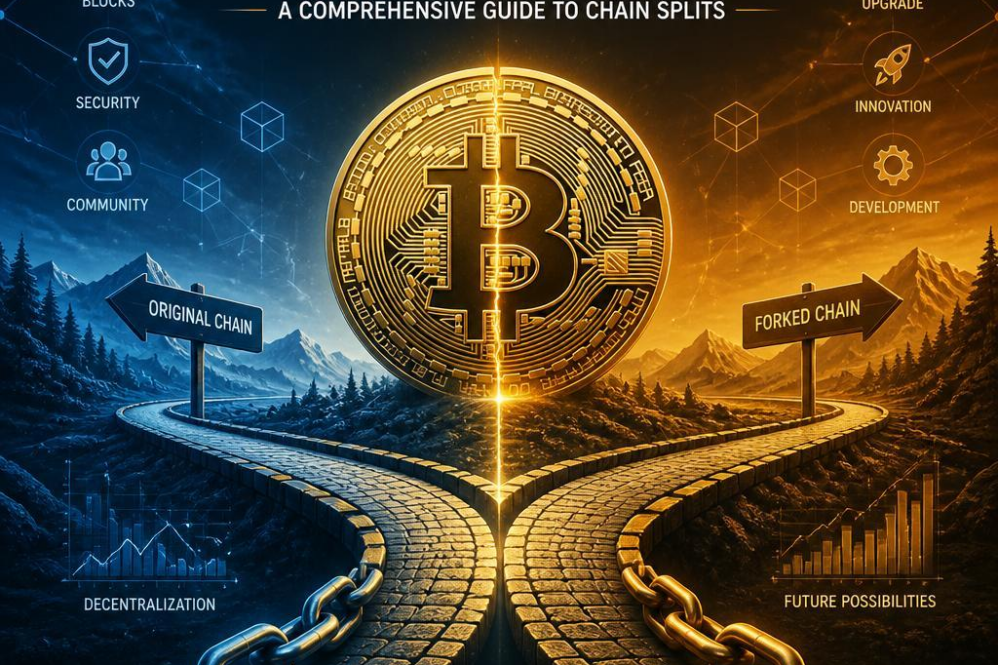
Navigating the Complexities of Hard Forks and Soft Forks
Hard forks and soft forks are two crucial mechanisms in the ever-changing world of blockchain technology. Both introduce changes to existing protocols, but they do so in different ways, catering to different community needs and objectives. In the context of bitcoin,a hard fork involves a significant change to the network rules,frequently enough requiring all participants to upgrade their software to stay compatible with the new rules. This can be like a major earthquake within the ecosystem, affecting how transactions are recorded and validated. Conversely, soft forks are more subtle and generally backward-compatible, allowing older nodes to continue processing transactions even if they’re unaware of the new protocol.
Understanding the differences between these forks is crucial for stakeholders and developers within the bitcoin community. A hard fork effectively splits the cryptocurrency, creating two distinct chains, each governed by its own set of rules. This happened with bitcoin Cash in 2017. Soft forks, however, are more commonly used for enhancing network capabilities or introducing new features that all nodes can eventually adopt. They offer a smoother transition, allowing the ecosystem to continue developing without the abrupt halt and potential divisiveness of a hard fork event.
To illustrate the impact and complexity of these fork types, consider the following table which highlights some key distinctions:
| Hard Fork | Soft Fork | |
|---|---|---|
| Impact on Nodes | Requires all nodes to upgrade; otherwise, they cannot sync. | Backward-compatible; legacy nodes can still verify transactions. |
| Community Consensus | Highly divisive,frequently enough leading to new currency creation. | More incremental changes, generally well-received by the community. |
| Examples | bitcoin Cash (2017) | Cash Shiba Inu (a more recent example using a soft fork for new features) |
Best Practices for Miners and Investors During Network Splits
When dealing with a network split in the bitcoin ecosystem, miners and investors must adopt a range of best practices to navigate the complexities and uncertainties that arise. The first step involves closely monitoring the technical details of both chains after the fork.This includes understanding the consensus rules, transaction malleabilityand the specifics of any newly activated features or software updates. Miners should also ensure their mining software supports the latest protocol changes to avoid compatibility issues, which can lead to orphaned blocks or wasted computational power.
Investors need to prepare for rapid price fluctuations common during a network split.Market volatility spikes as the community reacts to the new developmentsand early decisions can have significant financial repercussions. It’s crucial to maintain a diversified portfolio that includes both the original chain and the fork, if relevant. Avoid making snap decisions based on speculative news or hype. Instead, wait for the community to agree on which chain will be dominant before committing serious capital to either side. This approach minimizes the risk of backing the wrong chain and losing value.
A key strategy for both miners and investors is to engage actively in community discussions and forums. These platforms provide essential updates, insights from developersand the latest consensus on chain support. Tables like the one below summarize crucial data about the fork, such as hard fork activation height, changes in block sizeand new features, helping to keep track of the evolving situation.
| Aspect | Details |
|---|---|
| Activation Height | Height X |
| Block Size Change | Base: 1 MB, Increasing to 2 MB |
| New Features | SegWit Implementation, DAA |
Understanding the Security Implications of Forks on bitcoin Network Integrity
Understanding the security implications of forks on the bitcoin network is crucial for any user looking to maintain the integrity and reliability of their transactions. At the heart of bitcoin’s design is a consensus mechanism that ensures all nodes agree on the order of transactions. When a fork occurs, it creates a temporary divergence within the blockchain, potentially leading to conflicts and uncertainties. As an example, imagine a scenario where Alice sends 1 BTC to Bob, but due to network delays, the transaction is confirmed on two separate branches of the blockchain-on one branch Bob receives the coins, while on another he does not. This situation can trigger a chain reorganization as nodes seek the longest valid chain to maintain a single, consistent state of the ledger.
Forks can generally be categorized into hard forks and soft forks. A soft fork introduces a rule change that is backward compatible with the older version of the software. It requires only a minority of the network to upgrade, making it less disruptive and less likely to cause a prolonged split. However, a hard fork, like bitcoin Cash’s inception in 2017, necessitates all full nodes to upgrade to the new protocol, leading to a permanent divergence. This can complicate the situation,especially if the two chains have conflicting rules,which may lead to security vulnerabilities or even a double-spend scenario where the same funds are spent twice.
Table 1: Comparison of Soft Fork vs. Hard Fork Impact
| Aspect | Soft Fork | Hard Fork |
|---|---|---|
| Impact on Network Stability | Minor, typically resolves quickly | Major, could lead to permanent splits |
| User Compatibility | Backward compatible | Requires all users to update |
| Transaction Consistency | Preserves transaction integrity across blocks | May challenge transaction validation rules |
Understanding these nuances helps in making informed decisions about which chain to follow and how to mitigate potential risks when faced with a fork event.