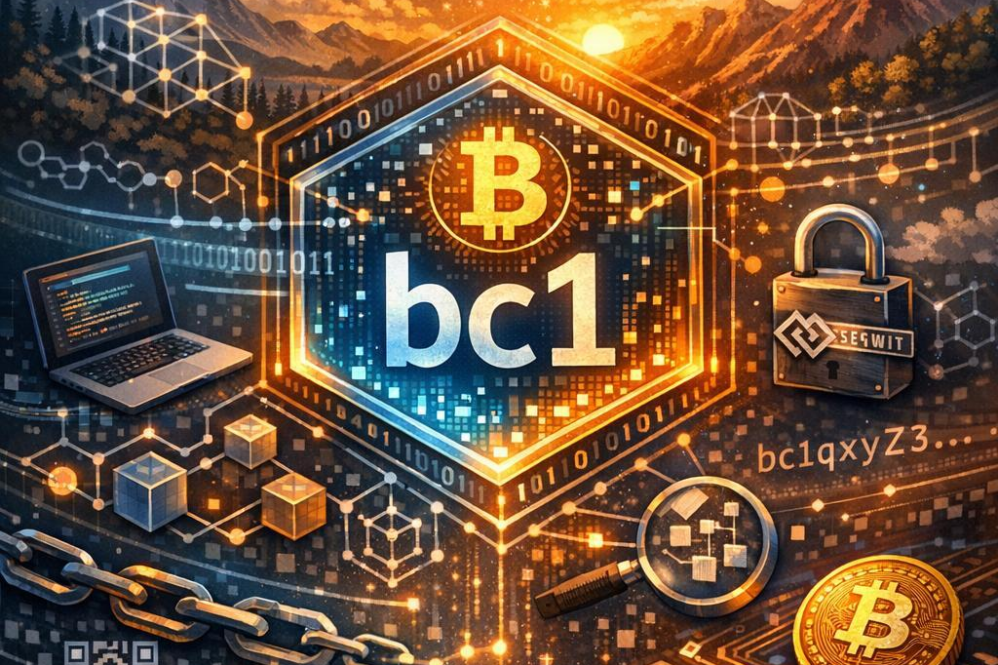
Understanding the Structure and Format of Bech32 SegWit Addresses
Bech32 SegWit addresses represent an important evolution in bitcoin’s transaction addressing, designed to optimize performance and readability. They are distinguished primarily by their lowercase alphanumeric format starting with “bc1”, wich clearly sets them apart from legacy addresses. These addresses make use of a specialized encoding scheme that reduces the likelihood of transcription errors and enhances error detection capabilities. This format is not only more user-friendly but also contributes to more efficient blockchain processes.
The structure of these addresses involves three main components: the human-readable part (HRP), the separator, and the data part. The human-readable segment, “bc1”, indicates the network and address type, serving as an immediate identifier. Following this is the separator character “1”, which acts as a clear delimiter. The data part encodes the witness version and the witness program,which are core to Segregated Witness (SegWit) functionality. Together, these elements form a highly robust and streamlined configuration that benefits both users and the network.
| Component | Purpose | Example |
|---|---|---|
| Human-Readable Part (HRP) | Identifies the network as bitcoin mainnet | bc1 |
| Separator | Divides HRP from the data section | 1 |
| Data Part | Encodes witness version and program | qxyz0sr… |
- Lowercase only: Reduces confusion with similar characters.
- Checksum embedded: Enhances the detection of input errors.
- Supports SegWit: Enables faster transaction processing and lower fees.
The Advantages of Using Bech32 Addresses in bitcoin Transactions
enhanced Efficiency and Lower Fees
Bech32 addresses considerably reduce transaction size thanks to their optimized encoding format, which translates to lower fees for users. By minimizing the amount of data needed to represent the address, bitcoin transactions become more efficient, making Bech32 especially attractive for frequent traders and those transacting small amounts. This efficiency helps maintain the network’s scalability and decreases congestion-a critical benefit as bitcoin adoption grows globally.
Improved Error Detection and User Experience
The Bech32 format incorporates a robust checksum feature designed to catch errors that commonly occur when addresses are manually entered or shared. Unlike older formats, Bech32’s checksum can detect and prevent errors such as mistyped characters or missing parts before a transaction is broadcast, reducing the risk of lost funds. this error-resilience also enhances usability by supporting a wider range of characters without the confusion caused by ambiguous letter-case distinctions.
future-Proofing bitcoin with Native SegWit Support
Utilizing Bech32 addresses aligns with bitcoin’s long-term roadmap by natively supporting Segregated Witness (SegWit) – a protocol upgrade that improves block capacity and transaction malleability. This compatibility offers several advantages:
- Faster confirmation times by optimizing block space usage
- Greater network security via reduced transaction malleability
- Smoother integration with Lightning Network and other layer-two solutions
The adoption of Bech32 is a clear step toward modernizing bitcoin’s infrastructure, promoting sustainability, and enabling innovative use cases within the ecosystem.
Technical Breakdown of the bc1 Prefix and Its Significance
the bc1 prefix marks the beginning of bitcoin addresses encoded in the Bech32 format, specifically designed for Segregated Witness (SegWit) transactions. This sets them apart from the legacy Base58Check addresses by introducing an improved checksum mechanism and enhanced error detection capabilities. The prefix “bc1” signifies the network (bitcoin mainnet) and signals to wallets and nodes that the address utilizes SegWit technology,which facilitates smaller transaction sizes and thus lowers fees.
Beyond its role as a simple marker, the bc1 prefix contributes to several technical advantages. Bech32 addresses using this prefix:
- Eliminate ambiguous characters (such as 0, O, I, and l), reducing the risk of user input errors.
- Support longer address lengths, allowing for future upgrades in scripting capabilities while maintaining consistent encoding rules.
- Improve QR code scanning thanks to the case-insensitive and alphanumeric-only character set, making transaction processes smoother and more reliable.
| Feature | bc1 (Bech32) Address | Legacy Address |
|---|---|---|
| Prefix Indicator | bc1 | 1 or 3 |
| Checksum Type | Bech32 with strong error detection | Base58Check |
| Character Set | Alphanumeric (no 0,O,I,l) | Base58 (ambiguous characters included) |
| Transaction Efficiency | Optimized for SegWit’s reduced size | Less efficient |
How Bech32 Addresses Improve Transaction Efficiency and Security
Bech32 addresses,recognizable by their distinctive bc1 prefix,offer a significant leap forward in optimizing transaction efficiency on the bitcoin network. Unlike previous address formats, Bech32 utilizes a more compact encoding scheme which reduces the overall size of transaction data. This compression results in lower transaction fees and faster verification times, making bitcoin transfers more cost-effective and swift. Moreover, the lower data overhead enhances block space utilization, allowing more transactions to fit into each block and improving network throughput.
From a security outlook, Bech32 addresses excel by incorporating a robust checksum mechanism. This innovative checksum design is dramatically more effective at detecting and preventing errors caused by mistyped or corrupted characters, significantly reducing the risk of funds being sent to invalid or unintended destinations. Additionally, the all-lowercase Bech32 format minimizes user confusion, avoids visually ambiguous characters, and contributes to safer transaction processes.
| Feature | Bech32 address | Legacy address |
|---|---|---|
| Prefix | bc1 |
1 or 3 |
| Character Set | Lowercase alphanumeric (no ambiguous chars) | Mixed case with ambiguous chars |
| Transaction Data Size | Smaller & more efficient | Larger & less efficient |
| Error Detection | Stronger & catch more typos | Weaker checksum |
Bech32 addresses represent a critical evolutionary step in bitcoin’s growth, enhancing both the speed and security of transactions, while paving the way for broader adoption and scalability within the network.
Compatibility and Wallet Support for Bech32 SegWit Addresses
Bech32 segwit addresses, recognizable by their distinctive “bc1” prefix, represent a critically important advancement in bitcoin’s address format. However, despite their growing adoption, it’s crucial to understand their level of compatibility across various platforms and wallets to ensure smooth transaction experiences. Most modern wallets now offer full support for sending and receiving funds using Bech32 addresses, reinforcing their role in facilitating lower transaction fees and enhanced network efficiency.
While the majority of popular wallets such as Ledger, Trezor, and software wallets like Electrum and Wasabi have integrated native SegWit support, legacy wallets and some exchanges may still face challenges processing these addresses due to older protocol implementations. Typically, these wallets default to compatibility with the base58 addresses that start with “1” or “3”. It’s always advisable to verify wallet compatibility before attempting transactions involving Bech32.
| wallet Type | Supports Bech32 “bc1” Address | Notes |
|---|---|---|
| Hardware Wallets | Yes | Full native SegWit support; recommended for security. |
| Software Wallets | Mostly | Popular wallets updated for Bech32 compatibility. |
| Exchanges | Variable | Check exchange guidelines; some still limit to legacy addresses. |
| Mobile Wallets | Increasingly | Many mobile apps now support Bech32, but confirm app version. |
For developers or those managing multi-wallet environments, leveraging the Bech32 standard offers clear benefits in transaction cost reduction and error detection during address entry.However, ensuring that all components in the transaction chain, from wallet to exchange endpoint, support this format is essential for a seamless bitcoin experience.
Best Practices for Safely Using and Verifying bc1 bitcoin Addresses
When dealing with bc1 bitcoin addresses, precautionary measures are essential to ensure both security and transaction accuracy. These addresses, leveraging the Bech32 format, provide improved error detection capabilities. Though, users must still
- Double-check the address for accurate transcription, especially when copying manually.
- Utilize QR codes carefully,confirming the scanned address matches the intended recipient.
- Prefer wallet software that supports native Bech32 address validation to minimize human error.
Moreover, validating the authenticity of a bc1 address involves more than simple visual checks. One effective method is using trusted blockchain explorers or wallet tools with built-in Bech32 decoding to verify the address format. since these addresses are specifically encoded to include checksums, even minor typos will result in invalid address notifications, a valuable security guardrail.
| Common Security Check | Description | benefit |
|---|---|---|
| Checksum Verification | Automatically validates the address integrity | Detects any typos or corruption |
| Use of Trusted Wallets | Only transact using wallets with Bech32 support | Reduces risk of sending to unsupported or wrong addresses |
| Confirm on Multiple Platforms | Cross-verify address via different explorers or apps | Ensures data consistency and trustworthiness |
Ultimately, abiding by these practices enhances the safety of transactions involving bc1 addresses, capitalizing on their design benefits while mitigating risks inherent to digital currency transfers. Employing a combination of technological tools and thorough verification can substantially protect users from costly errors or fraud.
![Facebook moves into cryptocurrency | joe rogan podcast to have bitcoin [btc] expert | coinbase [news]](https://ohiobitcoin.com/storage/2019/01/LTY4ao.jpg "Facebook moves into cryptocurrency | joe rogan podcast to have bitcoin [btc] expert | coinbase [news]")
