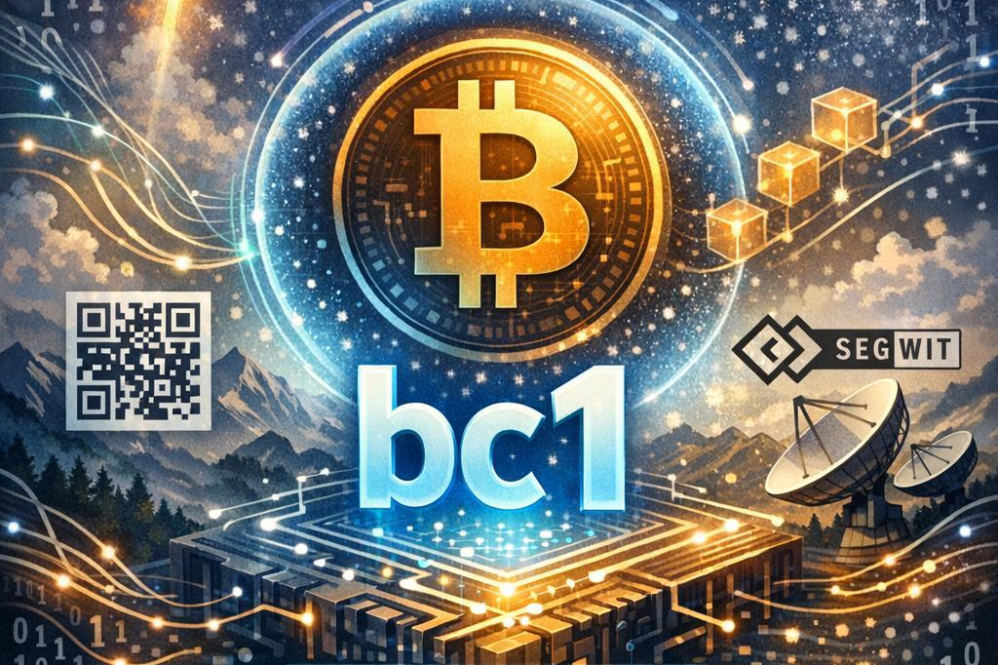
Understanding the Technical Structure of Bech32 SegWit Addresses
Bech32 addresses represent a fundamental evolution in how bitcoin encodes Segregated Witness (segwit) outputs to enhance both usability and efficiency. Unlike legacy addresses, these addresses begin with the prefix bc1 and use a specialized encoding scheme that segregates the witness data from the transaction’s main structure. This separation reduces transaction fees and increases block capacity by compressing the witness data, which is critical for scaling the bitcoin network. Bech32’s design also improves error detection by employing a checksum that can identify and correct common typing mistakes, thus significantly reducing the risk of sending funds to invalid or mistyped addresses.
The technical underpinning of Bech32 lies in its use of a 32-character set (hence “Bech32”) and a case-insensitive format, making it easier to read and transcribe. These addresses consist of three key components: the human-readable part (bc1 for bitcoin mainnet), the separator character (1), and the data part representing the witness program in a 5-bit group encoding. This encoding supports future adaptability through versioning and varied program lengths, enabling forward-compatible upgrades that legacy encoding schemes do not support.
| Component | Description | Example |
|---|---|---|
| Human-Readable Part (HRP) | Network identifier | bc1 (bitcoin Mainnet) |
| Separator | Delimiter between HRP and data | 1 |
| Data Payload | Witness program, 5-bit groups | qrz3y08lt0j4us |
Ultimately, this structured approach enhances security, reduces ambiguity, and optimizes transaction size. Developers appreciate Bech32 for its robustness in transaction validation processes, while users benefit from enhanced wallet compatibility and reduced transaction fees.As SegWit adoption continues to grow, understanding the technical nuances of Bech32 addresses becomes essential for navigating bitcoin’s evolving ecosystem.
Comparing Bech32 Addresses to Legacy and P2SH Formats
To fully appreciate the evolution of bitcoin address formats, it’s essential to explore how Bech32 addresses stack against their predecessors: Legacy (P2PKH) and P2SH addresses. Legacy addresses, recognizable by their “1” prefix, were the original standard, while P2SH addresses, starting with a “3,” introduced greater flexibility by enabling script-based transactions such as multisignature wallets. Bech32, distinguished by its “bc1” prefix, represents a complex leap designed specifically for SegWit, providing efficiency, error detection, and enhanced usability.
One of the moast important advantages of Bech32 over Legacy and P2SH formats lies in its improved error detection and correction. The Bech32 encoding scheme employs a case-insensitive alphanumeric set, which simplifies human readability and reduces the likelihood of transcription errors. This leads to safer transactions, as mistyped characters are easier to catch before confirmation. Furthermore, Bech32 addresses omit ambiguous characters, streamlining the user experience in wallet interfaces and printed QR codes.
| Address Type | Typical Prefix | SegWit Compatible | Key Benefits |
|---|---|---|---|
| Legacy (P2PKH) | 1 | No | Broadly supported; simple structure |
| P2SH (nested SegWit) | 3 | yes (via script) | Backward compatibility with some SegWit benefits |
| Bech32 (Native SegWit) | bc1 | Yes | Lower fees, better error detection, native SegWit support |
Moreover, the native SegWit nature of Bech32 addresses translates into tangible improvements in transaction efficiency. By segregating signature data, transactions appear smaller, reducing the size and lowering the associated fees.While Legacy and P2SH addresses can support SegWit through nested scripts,Bech32’s native implementation maximizes these advantages. This not only reduces costs but also contributes to network scalability, further positioning Bech32 as the future-forward choice for bitcoin users and developers alike.
The Advantages of Using Bech32 for bitcoin Transactions
Bech32 addresses drastically improve the efficiency and security of bitcoin transactions. Unlike legacy address formats, Bech32 eliminates the risk of ambiguity caused by mixed case letters, as its design uses only lowercase alphanumeric characters. This boosts error detection during manual entry or transcription, reducing the likelihood of lost funds due to typographical mistakes. Moreover, Bech32 addresses are inherently more compact, delivering smaller transaction sizes which contribute to lower fees and faster processing times on the network.
The integration of Bech32 also enhances the scalability of the bitcoin network by fully supporting Segregated Witness (SegWit) features. SegWit reduces the data size of each transaction, enabling more transactions to be included in each block, thus improving overall throughput. This format further offers improved compatibility with modern wallet software and hardware,facilitating seamless adoption across the ecosystem. Many wallets now prioritize Bech32 addresses to optimize user experience and transaction cost efficiency.
| Advantage | Impact |
|---|---|
| Error Detection | Improved checksum reduces transaction errors |
| Low Fees | Smaller transaction size lowers network fees |
| Network Efficiency | Supports SegWit for faster processing |
| User-Kind | Consistent lowercase format simplifies sharing |
adopting Bech32 addresses contributes significantly to a safer, cost-effective, and more scalable bitcoin network. By choosing addresses starting with bc1, users not only gain technological advantages but also future-proof their transactions as the ecosystem evolves. This format stands as a cornerstone in bitcoin’s ongoing efforts to enhance usability and performance without compromising its foundational security principles.
How to Safely Generate and Use Bech32 SegWit Addresses
To generate Bech32 SegWit addresses safely, it is essential to use trusted wallet software that supports this modern address format. Bech32 addresses, starting with bc1, provide enhanced error detection capabilities and reduced transaction fees. Always ensure your wallet is up to date as updates often include security patches and improved SegWit compatibility.Avoid using online address generators or unknown applications that coudl compromise your private keys or generate incorrect addresses.
When sending funds to a Bech32 SegWit address, double-check the address string carefully. unlike legacy addresses, Bech32 is case-insensitive but highly sensitive to character placement errors. A single mistyped character can lead to permanent loss of funds. Use wallet features that support QR code scanning or copy-paste validation to minimize human errors during transactions. Confirm compatibility with the recipient’s wallet, as some older wallets may not yet support Bech32 addresses.
The table below summarizes key safety practices when working with Bech32 SegWit addresses:
| Safety Practice | Description |
|---|---|
| Use Trusted Wallets | Only generate addresses on reputable software with SegWit support. |
| Verify Address Format | Ensure the address starts with bc1 and contains only valid characters. |
| Validate Transactions | Confirm address correctness via QR code or copy-paste before sending funds. |
| Check Compatibility | Make sure both sender and receiver wallets support Bech32 SegWit. |
Common Challenges and Troubleshooting Tips for Bech32 Users
Users transitioning to Bech32 addresses often encounter initial compatibility issues. While most modern wallets and exchanges support the bc1 format, some legacy systems still do not recognize these SegWit addresses, causing transaction rejections or delays. Ensuring your wallet software is fully updated is critical. Additionally, confirming the recipient’s platform supports Bech32 before sending funds can prevent unnecessary transaction failures.
Another frequent challenge lies in address transcription and QR code scanning errors. The longer and more complex Bech32 addresses can be prone to manual input mistakes, especially as thay only use lowercase letters and digits but exclude similar-looking characters to reduce errors.Users should double-check pasted addresses and, whenever possible, use QR codes for accuracy. A simple but effective tip is to verify the address checksum that Bech32 inherently provides, which can alert users to typos before sending.
| Challenge | Symptoms | Tips |
|---|---|---|
| Wallet Compatibility | Transaction rejected or not recognized | Update wallet software; confirm platform support |
| Address Input Errors | Funds sent to wrong address or lost | Use QR codes; verify address checksum before sending |
| Slow Confirmation | Delayed transaction confirmations | Check network fees; increase priority if needed |
Best Practices for Enhancing Security with bc1 Addresses
To maximize the security of transactions involving bc1 addresses, always ensure your wallet software and node implementations are up to date. These updates often include crucial patches that enhance the underlying SegWit protocol protections. Utilizing hardware wallets compatible with Bech32 addresses is also a key step, as they offer offline key storage that mitigates exposure to malware and phishing attempts. Furthermore, when manually entering bc1 addresses, double-check the address to prevent costly mistakes, since the Bech32 format, while error-resistant, can still be vulnerable if copied or typed incorrectly.
Privacy considerations are equally important when interacting with bc1 addresses. As these addresses support SegWit, they enable more efficient transaction aggregation and reduce data leakage through advanced scripting capabilities. To further elevate privacy, use coin control features in wallets to manage and consolidate inputs judiciously. This practice minimizes address reuse and helps obfuscate transaction trails, an essential factor for users focused on enhancing pseudonymity on the bitcoin network.
| Security Measure | Description | Benefit |
|---|---|---|
| Wallet Updates | Regularly update wallet software | Patched vulnerabilities & improved compatibility |
| Hardware Wallets | use devices supporting bc1 addresses | Offline private key protection |
| Address Verification | Double-check bc1 addresses before sending | Prevents costly transaction errors |
| Coin Control | Manage inputs and avoid address reuse | Enhances privacy and network fungibility |
Combining these strategies creates a robust framework for engaging with bitcoin’s modern address format. By prioritizing wallet integrity, cautious address handling, and privacy-conscious transaction management, you minimize risk and strengthen your overall security posture in the evolving crypto landscape.