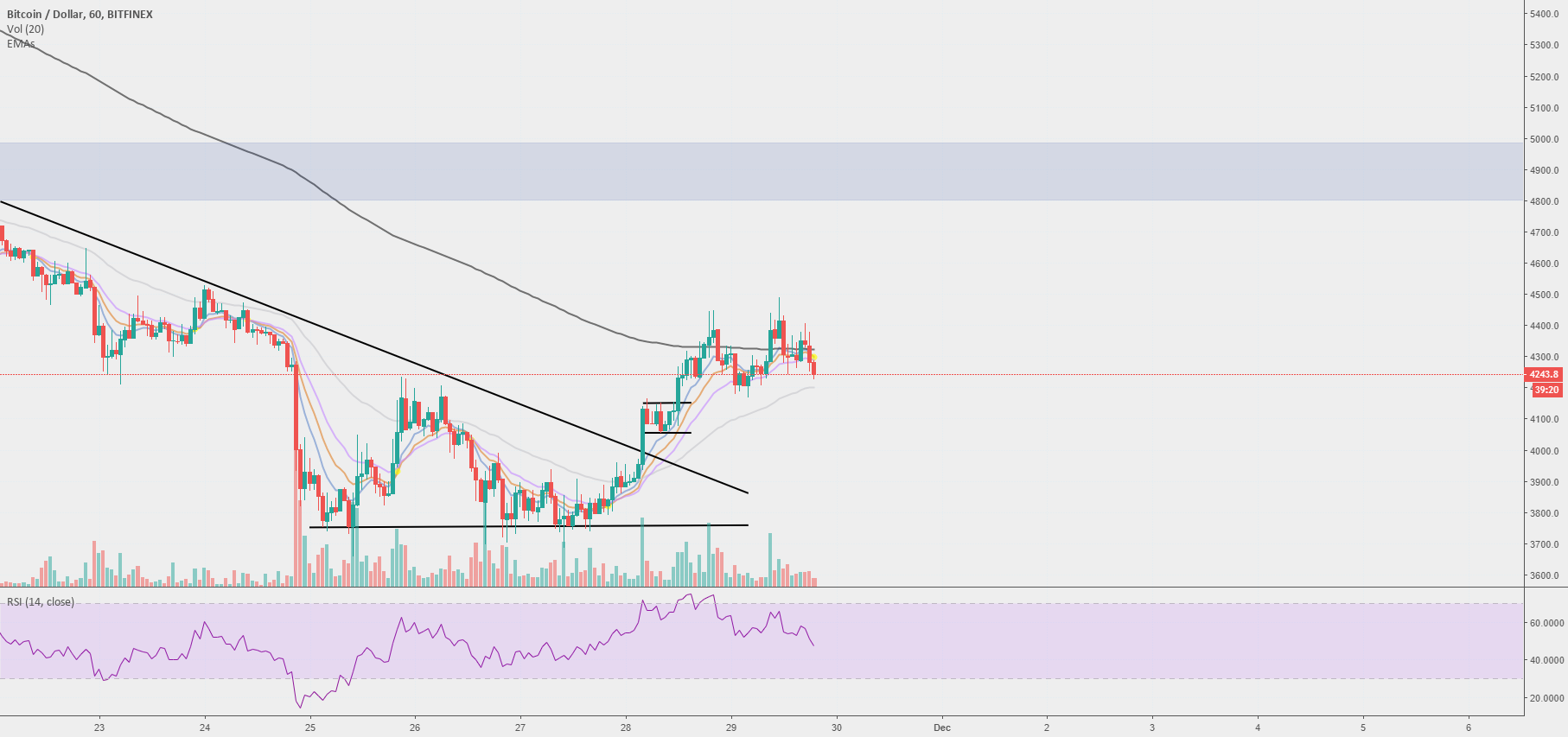
bitcoin,the first and largest decentralized digital currency,enables users to transfer value directly to one another without relying on a central authority such as a bank or government,using a publicly verifiable ledger known as the blockchain . As bitcoin’s adoption and economic significance have grown worldwide , so too has the need for more robust security and flexible control over how coins can be spent. One of the most crucial tools that has emerged to address this need is the “multisig” (multi‑signature) transaction.Multisig transactions allow bitcoin to be locked to multiple cryptographic keys instead of just one. Funds can then be spent only when a predefined number of these keys provide valid signatures, such as 2-of-3 or 3-of-5. This mechanism underpins a wide range of real‑world use cases, including secure custody for individuals, shared corporate wallets, escrow arrangements, and more advanced smart contract-like constructions on bitcoin.
This article explains what bitcoin multisig transactions are, how they work at the protocol level, and why they matter for security, governance, and risk management. It will also outline common practical setups, typical use cases, and important trade‑offs to consider when deciding whether multisig is appropriate for a particular bitcoin holding or workflow.
Conceptual Foundations of bitcoin Multisig and How It Differs from Single Key Wallets
At the most basic level, a standard bitcoin wallet is controlled by a single private key that can authorize spending from its corresponding address. In this model, whoever holds that key can independently create valid transactions broadcast to the decentralized bitcoin network, where nodes verify signatures and record them on the public blockchain ledger. Multisignature (multisig) wallets extend this concept by requiring a predefined combination of keys to sign a transaction, such as 2-of-3 or 3-of-5, before the network will recognise it as valid. The underlying cryptography is the same-based on digital signatures tied to public keys-but the spending policy is encoded in a script that demands multiple approvals rather than just one.
Conceptually, multisig transforms a bitcoin address from being a single lock-and-key mechanism into a programmable access structure. Rather of assuming that one device, one person, or one company can stay secure forever, multisig lets you distribute trust over several entities or locations. This can be used to reflect real-world governance models, such as shared custody between business partners or family members, or a blend of self-custody and institutional custody. The blockchain enforces these rules at the protocol level, so no central authority or intermediary can override them, consistent with bitcoin’s peer-to-peer, non-custodial design.
From a risk perspective, the difference between single key and multisig wallets can be summarized in how they handle loss, theft, and internal misuse. A single key wallet concentrates all risk: losing the key or having it compromised generally means complete loss of funds. Multisig,by contrast,allows you to design flexible policies such as:
- Redundancy – e.g., 2-of-3 keys so that a lost key does not lock funds forever.
- Separation of duties – e.g.,multiple team members must approve large payments.
- Geographical dispersion – keys stored in different physical locations or jurisdictions.
- Role-based control – combining personal devices, hardware wallets, and institutional co-signers.
| aspect | single Key Wallet | Multisig Wallet |
|---|---|---|
| Control Model | One key, one signer | Several keys, threshold of signers |
| Failure Mode | Single point of failure | Distributed, configurable failure conditions |
| Use Case Fit | Simple, personal use | Shared custody, higher-value storage |
| Protocol Integration | Basic script, single signature | Multisig script enforcing multiple signatures on-chain |

Common Multisig Schemes in Practice and Their Security Trade Offs
In real-world bitcoin deployments, a few multisig patterns appear again and again because they balance security, convenience and cost in different ways. A typical setup is the 2-of-3 scheme, ofen used by individuals and small businesses. Hear, three keys exist (for example: user, hardware backup, and a service provider), but only two are required to spend. This offers resilience against single-key loss and basic protection against key theft, yet it introduces a trust trade off: if two collaborating parties become malicious or compromised, they can move the funds without the third. On-chain, these setups are widely supported by common wallet software and custody platforms, making them a pragmatic default for many users.
Larger organizations frequently adopt 3-of-5 or 4-of-7 designs to reflect internal governance structures and regulatory requirements. More keys and higher thresholds reduce the chance that a single rogue actor can push through an unauthorized transaction, but they also increase operational friction and coordination overhead. As a notable example, arranging signatures across multiple time zones or departments can delay urgent payments, and operational mistakes, such as failing to refresh backups when staff change, can silently erode safety. In practice, businesses weigh these issues against threat models like insider collusion, legal compulsion, and physical coercion, and then choose a scheme that mirrors their corporate approval workflows.
There is also a clear distinction between custodial, co-custodial, and self-custodial multisig arrangements. In a co-custodial model, a company might hold one key while the user holds the others, enabling recovery services without granting unilateral spending power. By contrast, fully self-custodial setups keep all keys under the user’s control, eliminating third-party risk but demanding disciplined key management and secure storage hardware. Key distribution strategies commonly include:
- Geographic separation (different cities or countries)
- Media diversity (hardware wallets, air-gapped devices, metal backups)
- Role-based keys (finance, security, executive sign-off)
To make these design choices more concrete, the table below summarizes how some common multisig schemes trade off security, convenience and failure risk:
| Scheme | Typical Use Case | Security Level | Convenience | Main Trade Off |
|---|---|---|---|---|
| 2-of-3 | Power user / small team | High vs. single key | High | Two keys can collude |
| 3-of-5 | SME treasury | Very high | Medium | More coordination needed |
| 4-of-7 | Corporate or fund | Institutional-grade | low-Medium | Complex operations, higher error risk |
| 2-of-2 | Escrow / joint control | Context-dependent | Medium | Locked funds if one party disappears |
Step by Step workflow of a Multisig Transaction from Creation to Confirmation
Every multisig payment journey starts with defining the spending rules and constructing the output that will later receive the funds. Participants first agree on a M-of-N policy (for example, 2-of-3) and generate their individual public keys using standard bitcoin wallets that support multisig. These keys are combined into a single locking script (often wrapped in P2SH or P2WSH for efficiency) that specifies how many signatures are required to unlock the funds.Once the script is created, a multisig address is derived, and bitcoins can be sent to this address exactly like any other bitcoin transaction on the network . At this stage, the coins are locked by the policy, not by any single participant.
To initiate spending, one participant constructs a transaction template that references the multisig UTXOs as inputs and defines the desired outputs (recipient address, change address, and fees). This raw transaction is then shared with the other signers through a secure channel. The transaction includes:
- Inputs: UTXOs sent to the multisig address
- Outputs: Recipient(s) and change back to a new multisig or single-sig address
- Fee: Calculated based on size and network conditions
Each signer verifies critical details (amounts, addresses, and fee) to ensure the template has not been tampered with before they attach their signature.
Signing usually happens sequentially or in parallel, depending on the coordination tools. Each authorized participant uses their private key to produce a partial signature over the same transaction data, without ever revealing their key.These signatures are then combined into a final,valid unlocking script once the required threshold (M signatures) has been collected. Many modern wallets handle this aggregation automatically, but in more advanced setups, a coordinator may collect and assemble the signatures manually. The result is a fully signed transaction where the scriptSig or witness field now proves that the policy set in the original multisig script has been satisfied.
After aggregation, the fully signed transaction is broadcast to the bitcoin network, where nodes validate it against consensus rules and the original multisig script stored in the blockchain . miners may then include it in a block, at which point the payment receives its first confirmation and becomes part of bitcoin’s public, append-only ledger . As more blocks are added, the transaction gains additional confirmations, making it increasingly tough to reverse. From a workflow perspective, the lifecycle is complete only when participants verify on-chain that: the funds have moved to the correct destination, the number of confirmations matches their security policy, and the new UTXOs (if any) are controlled by the intended script or address.
designing a Multisig Policy That Matches Your Risk profile and Use Case
Before choosing a multisignature setup, it is essential to clarify who is involved, how often funds will move, and what kinds of failures you are trying to defend against. A long‑term saver parking bitcoin offline may prioritize resilience against theft and hardware failure, whereas an active trader on a platform like Coinbase may rather value fast approvals and simple operational flows for frequent transfers .Start by mapping out where your keys will live (hardware wallets, phones, or servers), who will control them (individuals, departments, or third‑party cosigners), and what would happen if any one of those elements disappears or is compromised.
From there, you can translate your risk appetite into specific threshold rules. For personal storage, a common pattern is a 2‑of‑3 scheme where one key stays at home, one in a secure off‑site location, and one with a trusted recovery provider; any two can move funds, so a lost device does not mean lost bitcoin. Corporate treasuries or funds managing significant balances might favor 3‑of‑5 or higher, distributing keys across executives and security teams to prevent unilateral movement. In both cases, the goal is to align the number of required signatures with the practical likelihood of collusion, coercion, or accidental loss in your real‑world surroundings.
| Use Case | Typical Policy | Priority |
|---|---|---|
| Long‑term savings | 2‑of‑3, keys in separate locations | Durability |
| Active trading | 2‑of‑2 with warm wallet + cold backup | Speed |
| Corporate treasury | 3‑of‑5 with role separation | Governance |
a well‑designed configuration includes operational policies around the on‑chain rules. Document who can propose transactions, how signers verify payment details, and what emergency procedures apply if a key is lost, a signer leaves the organization, or a device is seized. Consider adding layered controls such as:
- Amount thresholds (small payments use a lighter path, large payments require extra review)
- Time‑based rules (waiting periods before large withdrawals are broadcast)
- Geographic or role separation (keys held in different regions or by different teams)
By combining bitcoin’s native multisig capabilities with procedural constraints and regular key‑rotation drills, you can create a policy that reflects both the open, peer‑to‑peer nature of the network and the practical realities of how your organization or household actually handles money.
Operational Best Practices for Managing Keys Devices and Backups in Multisig
Multisig security lives or dies by how well you manage the individual keys and the devices that hold them. Each signing device should be sourced from trusted vendors,initialized offline,and upgraded only after verifying firmware signatures from the manufacturer.Avoid connecting signing wallets directly to internet-facing machines unless the design explicitly requires it, and prefer air-gapped devices where the transaction is moved via QR codes or SD cards. Rotate devices proactively when vendors publish critical security advisories, and document the process so that any key holder can follow it under pressure without improvising.
Redundancy must be intentional and limited. Each key should have at least one secure backup, but avoid uncontrolled duplication that increases your attack surface. Store backups in physically separated locations with distinct risk profiles (for example, different countries or at least different cities) so a single regional disaster cannot compromise the quorum. practical locations can include:
- Professional vaults with documented access logs
- Law firms or trustees under well-defined legal agreements
- Purpose-built home safes bolted and hidden from casual discovery
Written procedures are as critically important as the cryptography. Establish clear operational playbooks for daily use,emergency recovery,and key rotation,and test them with dry runs that simulate lost devices or compromised keys. Limit who knows the full architecture of your setup; separation of knowledge reduces the chance that one insider or social-engineering event can reconstruct the entire signing set. Consider creating a simple internal policy document that covers topics like authorized signers, transaction size thresholds, and escalation rules before extra cosigners are involved.
| Aspect | Good Practice | Bad practice |
|---|---|---|
| Key Storage | Distributed, offline, labeled | All keys in one safe |
| Backups | Verified, periodically tested | Never restored or checked |
| Devices | Firmware-verified, air-gapped | Shared laptops or phones |
| Procedures | Documented and rehearsed | Only “in someone’s head” |
Avoiding Common Pitfalls in Multisig Setup Recovery and Inheritance Planning
Many multisig owners underestimate how fragile their recovery assumptions are until a key is lost or a cosigner becomes unreachable. To reduce this risk, clearly document where each seed phrase, backup device, and descriptor/xpub is stored, and test that at least one full recovery path works using your chosen wallet software and a small amount of bitcoin first. Always verify that all signers can independently reconstruct their signing setup from their backups; relying on a single shared device or cloud account defeats the purpose of a distributed multisig. Because bitcoin operates on a public, open network without a central authority to reset or restore funds, any gap in your recovery plan can result in permanent loss of coins .
Another frequent mistake is mixing recovery data in ways that create single points of failure. Such as, storing all seed phrases in one location, or keeping hardware devices and written seeds in the same safe, concentrates risk. A more robust approach is to separate elements across different places and mediums, such as keeping seed phrases offline, device PINs memorized, and wallet configuration files stored on encrypted digital media. Consider using a simple checklist like this to review your setup periodically:
- Location separation: No more than one key or seed per physical location.
- Medium diversity: Combine paper,metal backups,and encrypted digital copies when appropriate.
- Tested recovery: Perform a dry-run recovery annually with a test wallet.
- Access controls: Ensure no single person can unilaterally bypass agreed security rules.
| Risk | Cause | Mitigation |
|---|---|---|
| Unspendable funds | lost seeds / devices | Redundant, tested backups |
| Family confusion | Technical jargon | Plain-language instructions |
| Coercion or theft | Single key access | Distributed signers, thresholds |
Inheritance planning introduces another layer of complexity: heirs must be able to access funds without gaining the power to bypass you while you are alive. This often involves placing some keys with trusted individuals or entities-such as a lawyer, executor, or corporate trustee-while you and other family members hold the remaining keys. Because bitcoin is a bearer asset whose transactions are final on the network , legal documents (wills, trusts, letters of instruction) must align with the actual cryptographic structure of your multisig. Use clear, non-technical descriptions of where keys and instructions are stored, and avoid revealing full seed phrases in legal paperwork that might become part of a public record.
To prevent common pitfalls, map out time-based or event-based access paths that are simple enough to execute under stress. As an example, you might design a scheme where your heirs only need to assemble two of three keys, with the final key held by a professional entity that releases it upon receiving proper documentation. Keep instructions concise and organized,such as a sealed envelope containing: a high-level diagram of the multisig layout,a list of devices and their locations,and step-by-step guidance for a recommended wallet interface (e.g., a reputable exchange or wallet provider that supports multisig and recovery workflows ).Periodically review and update this plan as your holdings, family situation, and applicable regulations evolve, ensuring that both operational security and practical accessibility remain balanced over time.
Evaluating Wallet Software and Hardware Support for Reliable Multisig Deployment
Choosing the right combination of wallet software and hardware devices determines how practical and safe a multisig setup will be in daily use. Beyond basic feature checklists, it is indeed essential to evaluate how wallets handle descriptor-based setups (e.g., BIP48, BIP67, and output script descriptors), PSBT (Partially Signed bitcoin Transaction) workflows, and backup formats. Multisig is only as reliable as its weakest link, so compatibility across devices, operating systems, and signing flows should be tested before committing significant funds.
When assessing options, examine how each tool manages key generation, storage, and export, as well as its ability to enforce policies you care about (such as minimum signer thresholds, spending limits, or time-delayed withdrawals). Look for:
- standards support: Robust handling of PSBTs, descriptors, and common derivation paths.
- interoperability: Smooth operation between different vendors’ hardware devices and multiple software coordinators.
- Backup and recovery: Clear, documented procedures for recreating the multisig wallet from seeds, xpubs, and descriptors.
- Auditability: Ability to view and verify all cosigners, paths, and scripts without needing to trust a single interface.
Hardware wallets serve as dedicated signing devices, isolating private keys from internet-connected machines. Their multisig support varies widely: some allow importing and displaying all cosigners’ extended public keys and descriptors, while others provide only minimal PSBT signing with limited verification on-screen. A reliable deployment typically uses heterogeneous devices (for example, mixing vendors and firmware lineages) to reduce correlated failure risks such as shared bugs or supply-chain issues. Simultaneously occurring, all devices must be simple enough for every signer to operate correctly under pressure, including during incident recovery.
| Aspect | Software Wallet | hardware Wallet |
|---|---|---|
| User interface | Rich policies, history views | Minimal, security-focused |
| Key exposure risk | Higher, online environment | Lower, isolated device |
| Verification | Script & descriptor inspection | On-device address & amount checks |
| Portability | Runs on many platforms | Physical device needed |
Operational reliability also depends on how your chosen tools handle updates, bugs, and edge cases. Review each project’s release cadence, security disclosure practices, and track record of handling critical vulnerabilities.test key workflows end-to-end on small amounts of bitcoin: creating the wallet from scratch, simulating device loss, restoring from seeds and descriptors, and verifying that all cosigners can still authorize a spend. By validating these processes ahead of time, you ensure that your multisig configuration is not only secure in theory but also resilient and manageable in the real-world conditions where you will actually use it.
Regulatory Tax and Compliance Considerations When Using Multisig for Custody
Using a multisig setup for bitcoin custody does not exempt holders from regulatory and tax obligations; instead, it reshapes how those obligations are interpreted and documented. From a tax perspective, authorities typically focus on beneficial ownership rather than which party holds which key. If you control the economic benefit of the coins in a multisig wallet, taxable events such as sales, swaps or spending must still be reported based on fair market value at the time of each transaction, which can be referenced from reputable market data providers and exchanges that track real‑time BTC/USD prices and historical charts. This makes accurate record‑keeping essential, especially where multiple signers are involved across different tax jurisdictions.
Compliance obligations become more complex when multisig is used in institutional or semi‑institutional contexts. Exchanges, custodians and professional asset managers that implement multisig frequently enough fall under AML/KYC, travel rule and sometimes securities or investment services regimes, depending on how the product is structured and marketed. To remain compliant, organizations should clarify in their internal policies whether they act as a full custodian, a co‑signer with limited discretion, or a purely technical service provider. Clear delineation of roles helps determine who must perform customer due diligence, monitor transactions, and respond to regulatory requests related to suspicious activity or asset freezes.
| Multisig Role | Likely Status | Key Compliance Focus |
|---|---|---|
| Retail user with 2-of-3 wallet | individual holder | Capital gains tax; record‑keeping |
| Exchange using 3-of-5 cold storage | Regulated custodian | AML/KYC, travel rule, audits |
| Corporate treasury multisig | Business asset holder | Accounting standards, governance |
Practical implementation also raises questions about jurisdictional risk and cross‑border regulation. When signers are spread across multiple countries, local regulators may assert oversight based on where keys, personnel or primary business operations are located. To mitigate ambiguities, organizations commonly adopt measures such as:
- Documenting which entity legally owns the coins and which merely holds keys.
- Aligning key locations and signers with the primary regulatory jurisdiction.
- Using written signing policies and on‑chain labeling to distinguish proprietary, client and operational funds.
These governance controls help demonstrate that a multisig framework is not being used to obscure ownership or circumvent reporting duties.
any entity using multisig for client or third‑party funds should integrate the wallet architecture into its audit, reporting and risk frameworks. This includes mapping each address to specific accounts, defining how loss of a key is handled, and specifying escalation procedures for regulatory inquiries or court orders.Custodial businesses that promote bitcoin and other digital assets as part of broader investment offerings increasingly rely on compliant infrastructure, including secure multisig wallets and transparent reporting tools, to satisfy both investors and regulators as adoption grows. By treating multisig not just as a security feature but as a regulated control system, holders can better align their technical setup with evolving tax and compliance expectations worldwide.
Q&A
Q: What is bitcoin?
A: bitcoin is a digital currency (cryptocurrency) that enables peopel to send value directly to each other over the internet without relying on banks or other intermediaries. It uses a decentralized network of computers (nodes) that collectively maintain a public ledger of all transactions,called the blockchain.
Basics of Multisig
Q: What does “multisig” mean in bitcoin?
A: “Multisig” (short for multi-signature) refers to a way of locking bitcoin so that spending it requires more than one cryptographic signature. Rather of a single private key controlling a set of coins, a multisig setup can require, for example, 2 out of 3 possible keys to authorize a transaction.
Q: How is a multisig transaction different from a regular (single-signature) bitcoin transaction?
A: In a regular bitcoin transaction, one private key is sufficient to sign and spend the coins. In a multisig transaction, spending requires multiple valid signatures according to a predefined rule (such as “M-of-N”: M required signatures out of N possible keys). This changes the authorization model but not how the bitcoin network validates and records the transaction: it is indeed still just another transaction stored on the blockchain.
Q: What is an M-of-N multisig scheme?
A: An M-of-N scheme defines how many signatures are required to spend coins from a multisig address:
- N = total number of authorized keys
- M = minimum number of those keys that must sign to spend
Examples:
- 2-of-3: any 2 of 3 key holders must sign
- 3-of-5: any 3 of 5 key holders must sign
This provides flexibility and redundancy while reducing single points of failure.
Why Use Multisig?
Q: What problems does multisig solve?
A: Multisig primarily addresses:
- Single-key risk – If one private key is lost or stolen in a single-signature setup, the funds are at risk. Multisig spreads control across multiple keys.
- Shared ownership – It enables multiple people or entities to jointly control funds, enforcing shared decision-making.
- Operational controls – It can enforce internal policies for companies (e.g., multiple approvals for large payments).
Q: What are common use cases for bitcoin multisig?
A:
- Personal security with redundancy
- Example: 2-of-3 setup where keys are stored in separate places (home, safe deposit box, hardware wallet) so that loss of one key does not lose the funds.
- Corporate / organizational wallets
- Example: 3-of-5 board members must sign to move company funds, reducing the risk of a single rogue employee.
- Escrow and dispute resolution
- Example: 2-of-3 involving buyer, seller, and neutral arbitrator. Any two parties can release funds, enabling resolution without full trust in a single party.
- Inheritance planning
- Example: 2-of-3 where one key is with the holder, one with a trusted family member, and one with a lawyer or executor for recovery or inheritance.
How Multisig Works Technically
Q: How are multisig funds represented on the bitcoin blockchain?
A: At the protocol level, bitcoin uses a scripting system (bitcoin Script). Multisig is implemented using scripts that specify conditions like “require M valid signatures from these N public keys.” The output (UTXO) created by such a script can only be spent when a transaction includes the required number of valid signatures that match the specified public keys.
Q: What is a multisig address?
A: A multisig address is a bitcoin address that corresponds to a script requiring multiple signatures to spend. Historically, many multisig wallets used “P2SH” (Pay to Script Hash) addresses that start with “3”. Newer setups can use native SegWit descriptors (like P2WSH) with addresses that start with “bc1”. Regardless of the format, the key characteristic is that spending requires multiple keys.
Q: Who holds the keys in a multisig setup?
A: this depends on the use case:
- Self-custody multisig: One individual or entity holds multiple keys in different places/devices for security and redundancy.
- Shared custody: Different people or organizations each hold a key (e.g., company signers, buyer/seller/arbitrator).
- Collaborative custody with a service provider: The user holds at least one key, and a service holds one or more additional keys for backup or co-approval without ever having full control alone.
Security and Risk considerations
Q: Is multisig more secure than a single-signature wallet?
A: It can be more secure if implemented correctly. Multisig:
- Reduces the risk of a single key compromise leading to total loss
- Enables geographic and device separation of keys
- Makes insider theft more difficult in organizations
However, complexity increases, which can introduce new risks, such as misconfiguration, poor key management, or user error.
Q: what are the main risks or downsides of using multisig?
A:
- Complexity: More difficult to set up, manage, and back up compared to single-key wallets.
- Key management risk: Losing too many keys (more than N−M) makes funds permanently inaccessible.
- Coordination overhead: When multiple people must sign, transactions can be slower and require communication.
- Software compatibility: Not all wallets and services fully support all multisig types or descriptor formats.
Q: What happens if one of the keys in a multisig setup is lost?
A: Provided that the number of remaining keys is at least M (in an M-of-N setup), the funds are still spendable. Such as, in a 2-of-3 setup, losing one key still leaves 2 keys, which is enough. If you lose too many keys and can no longer reach M signatures, the funds are permanently locked.
Practical Use and Setup
Q: How do users typically create a bitcoin multisig wallet?
A: Common steps include:
- Generate separate key pairs (often on different devices or hardware wallets).
- Exchange public keys between the parties or devices.
- Construct a multisig ”descriptor” or script (e.g., 2-of-3 with those keys).
- Derive and verify the multisig receiving address(es).
- Securely back up the necessary information (seed phrases, public keys, descriptors, and derivation paths).
Wallet software that supports multisig can automate much of this.
Q: Can multisig be combined with hardware wallets?
A: Yes. Hardware wallets are commonly used in multisig setups. Each hardware wallet can hold a separate key. Transactions are created on one device, then passed to each hardware wallet for signing, enhancing physical security and separation of keys.
Q: How does a multisig transaction get signed and broadcast?
A: Typical flow:
- One participant constructs an unsigned transaction and shares it (e.g., a partially signed bitcoin transaction file).
- Each required signer reviews the transaction details and signs with their private key.
- The final combined transaction, containing at least M valid signatures, is broadcast to the bitcoin network.
- Nodes validate the signatures against the multisig script and,if valid,include the transaction in a block.
Costs, privacy, and Policy
Q: Are multisig transactions more expensive in fees?
A: Often yes. Multisig transactions can be larger in data size because they include multiple signatures and a more complex script,which can lead to higher transaction fees (fees are based on size in bytes). Modern script types and segwit help reduce this overhead, but multisig is still typically larger than simple single-signature spending.
Q: Does multisig affect privacy?
A: Multisig can impact privacy in several ways:
- On-chain, conventional multisig outputs can be distinguishable from standard single-signature outputs, potentially revealing that a multisig scheme is used.
- In organizational contexts, the need to coordinate signatures can create metadata about who participated and when.
Some modern techniques and script types aim to make multisig transactions appear more uniform on-chain, improving privacy, but in general, classic multisig is less private than simple single-key transactions.
Q: Can multisig be used for regulatory or internal policy compliance?
A: Yes. Organizations can use multisig to enforce internal controls (e.g., “two officers must sign for any transaction above a certain amount”). Regulators and auditors can verify on-chain that funds are held under multisig structures, supporting governance, segregation of duties, and risk management.
Choosing and Managing a multisig Setup
Q: How should someone choose the right M-of-N configuration?
A: Consider:
- Risk tolerance and threat model: More signers and higher M increase resilience but also complexity.
- Operational needs: How quickly must funds be accessible? How many people need to be involved?
- Recovery planning: Ensure that loss of one or more keys does not make funds inaccessible, but also that a single compromised key cannot move funds alone.
For many individuals, 2-of-3 is a commonly recommended balance between security, redundancy, and usability.
Q: What are best practices for multisig key storage and backups?
A:
- Store keys in physically separate locations.
- Use different device types (e.g., multiple hardware wallets, not all on one computer).
- Back up seed phrases securely and consider encrypting backups.
- Document the multisig configuration:
- Number of keys (N) and required signatures (M)
- Public keys or xpubs
- Script/descriptor format and derivation paths
- periodically test recovery with small amounts before relying on the setup for large holdings.
Q: Is multisig suitable for all bitcoin users?
A: Not necessarily. While multisig offers strong security and shared control features, it also adds complexity. It is more suitable for:
- Users holding significant value
- Organizations and businesses
- Individuals with some technical comfort and willingness to manage more elaborate backups
For small amounts or casual use, a well-secured single-signature wallet may be simpler and adequate.
Summary
Q: In simple terms, why should someone understand bitcoin multisig transactions?
A: bitcoin is a decentralized digital currency that lets users transact without central intermediaries, relying on a global network and cryptography for security. Multisig is a core tool within this system that enhances security, enables shared control over funds, and supports advanced arrangements like escrow and corporate governance. Understanding multisig helps users design safer, more robust ways to hold and move bitcoin.
The Conclusion
multisignature (multisig) transactions extend bitcoin’s core design-peer‑to‑peer payments recorded on a public blockchain-by distributing control of funds across multiple keys rather than a single private key. This simple change enables more robust security practices, clearer internal controls, and flexible governance structures for both individuals and organizations operating on the bitcoin network .
By requiring several independent signatures to authorize a spend, multisig can considerably reduce the risks associated with key theft, single points of failure, and insider misuse. Simultaneously occurring, it remains fully compatible with bitcoin’s existing infrastructure: multisig policies are encoded in standard bitcoin scripts, enforced by every validating node, and settled on the same global ledger that underpins all bitcoin transactions .
As bitcoin’s role evolves from a purely speculative asset into a broader tool for payments, custody, and treasury management , understanding mechanisms like multisig is essential. Whether you are designing a simple 2-of-3 backup scheme for personal savings or a complex signing policy for a business, a solid grasp of how multisig works-and its trade-offs in terms of security, usability, and privacy-will help you construct more resilient and transparent bitcoin workflows.