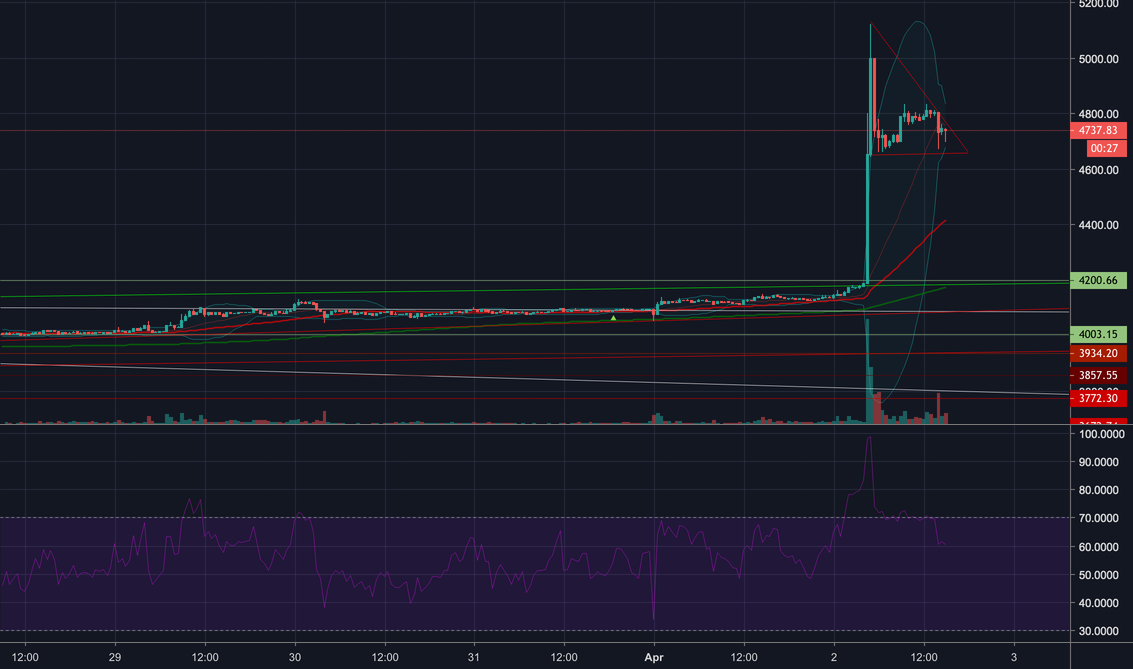
bitcoin futures are standardized contracts that allow traders and institutions to speculate on, or hedge against, the future price of bitcoin without transacting in the underlying asset. Listed and tracked on major financial platforms-such as the CME’s front-month futures series and data services that aggregate quotes,charts,and ancient performance-these instruments have become a focal point for price revelation and risk management in crypto-linked markets .
This introduction outlines what bitcoin futures are, why thay matter for both speculation and hedging, and where market participants follow real-time and historical activity. From complete dashboards and news coverage to live charts and returns data, investors can monitor contract dynamics across providers to inform decisions in a highly volatile asset class .
What bitcoin Futures Are And How Price Speculation Contracts Work
bitcoin futures are standardized exchange-traded contracts that let traders agree today on a price to buy or sell bitcoin at a specified future date. rather than moving coins, most contracts settle on price differences, making them a flexible tool for both hedging and speculation on regulated venues such as the CME, with live charts, news, and historical data widely accessible to market participants .
| Position | Price Move | Outcome |
|---|---|---|
| Long (buy) | BTC rises | Profit (sell higher later) |
| Long (buy) | BTC falls | Loss (mark-to-market) |
| Short (sell) | BTC falls | Profit (buy back lower) |
| Short (sell) | BTC rises | Loss (margin required) |
Here’s how the speculation mechanism typically unfolds: daily mark-to-market credits or debits realize gains and losses as the reference price changes, while margin (initial and maintenance) provides leverage and risk control. Traders can open long or short exposure without owning bitcoin, use spreads to structure views across expiries, and roll positions forward before expiry to maintain exposure without delivery.Real-time and historical tick-level data feeds help participants monitor price, liquidity, and volatility in these contracts .
Key elements to watch when trading:
- contract month and tick size (affects sensitivity to price moves)
- Margin requirements (leverage cuts both ways)
- Basis (futures-spot gap; contango/backwardation)
- Liquidity and news flow (volume, open interest, catalysts)
For timely pricing, volume, and news on CME-linked bitcoin futures, traders commonly reference market dashboards and live charts that aggregate intraday and historical information .
Contract Specifications Expiration Settlement And Tick Details Investors Must Know
Contract unit defines your exposure: CME’s primary bitcoin contract represents 5 BTC, while the Micro version scales that to 0.1 BTC. Price quotation is in U.S. dollars per bitcoin, and each trade reflects multiples of the contract unit. These exchange-listed derivatives trade electronically and track the market continuously, enabling institutional-grade access to bitcoin price moves without handling the underlying asset directly. For live prices, charts, and continuous front-month views of CME-listed bitcoin futures, see Google Finance and TradingView .
| Contract | Unit | Min tick | Tick value | Quote |
|---|---|---|---|---|
| BTC (CME) | 5 BTC | $5 per BTC | $25 per contract | USD per BTC |
| Micro BTC (MBT) | 0.1 BTC | $5 per BTC | $0.50 per contract | USD per BTC |
Expiration follows a monthly cycle, with contracts rolling from the front month to the next. The continuous front-month symbol (e.g.,CME: BTC1!) is commonly used to view price action as contracts approach maturity and roll over to the next listing . Final settlement is cash-based: at expiry you receive or pay the cash difference versus a regulated reference price-no on-chain delivery is involved. This structure allows traders to target directional views, hedges, or basis strategies while keeping operational complexity low .
Tick mechanics determine P&L granularity.For outright trades, the minimum price fluctuation is typically $5 per bitcoin. that means a one-tick move is $25 on the standard 5 BTC contract and $0.50 on the Micro (0.1 BTC). Margin is set by the exchange and brokers, scales with volatility, and is marked to market daily-ensure your buying power can withstand adverse intraday swings. For context and historical behavior around roll dates and volatility clusters, consult intraday and historical charts and data resources .
- Trading hours: Nearly 24×5 on CME Globex with a short daily maintenance break; expect liquidity peaks during U.S. and Europe hours .
- Settlement: Cash-settled to a benchmark reference rate at expiry; daily variation margin credits/debits your account accordingly .
- Monitoring: Use live quotes, depth, and historical context to calibrate tick risk, slippage, and roll timing .
Pricing Mechanics Basis contango Backwardation And Their Impact On Returns
Basis in bitcoin futures is the difference between the futures price and the spot price (F − S). When futures trade above spot, the curve is in contango (positive basis); when below spot, it’s in backwardation (negative basis). Although bitcoin doesn’t incur classic storage costs, the basis still reflects funding and financing frictions: USD interest rates, margin requirements, borrow availability for BTC, custody and capital charges, as well as demand for leverage and hedging. As contracts approach expiry, basis typically converges toward zero, pulling futures toward spot.
Curve shape is a live signal of market conditions. In contango, abundant long-leverage demand, elevated USD rates, or constrained arbitrage capital can keep deferred contracts rich; in backwardation, urgent hedging (e.g., miners, structured-product dealers) or risk aversion can cheapen them.Key drivers include:
- Financing: fiat rates, BTC borrow costs, and margin/collateral frictions
- Liquidity/flows: leverage demand, ETF and miner hedging, market-maker inventory
- Arbitrage capacity: balance-sheet room to run cash-and-carry or reverse trades
- Microstructure: fee tiers, rebates, and venue-specific tick/lot sizes
The curve’s shape directly affects realized returns via roll yield. Rolling a long futures position in contango typically realizes a negative roll yield (sell cheaper near, buy richer far), causing underperformance versus spot; in backwardation, longs often enjoy a positive roll yield. Classic trades anchor on this: a cash-and-carry (long spot/short futures) harvests positive basis in contango, while a reverse cash-and-carry (short spot/long futures, where borrow is feasible) monetizes negative basis in backwardation. The cadence of payments and roll timing can shape trader behavior around expiries-an echo of broader pricing research showing that the timing and structure of payments influence usage and decision patterns .
| Market state | Basis | Long futures roll yield | Short futures roll yield | Arb focus |
|---|---|---|---|---|
| Contango | F > S | Negative | Positive | Cash-and-carry |
| Backwardation | F < S | Positive | Negative | Reverse cash-and-carry |
| Near expiry | Basis → 0 | Converges | Converges | Close hedges |
execution details matter: fees, rebates, and slippage can swing the economics of roll yield and arbitrage. Communication and guardrails around pricing mechanics help stabilize expectations and reduce avoidable frictions-principles highlighted in dynamic-pricing research that emphasize clear rules and override policies to avoid adverse reactions and instability .Likewise, ”races to the bottom” on fees or aggressive undercutting across venues don’t always produce durable edge and can even distort the curve temporarily-paralleling insights that indiscriminate price wars are often counterproductive .
Leverage Margin And Liquidation Practical Guidelines For Position Sizing
Leverage multiplies your BTC exposure, while margin is the capital buffer that keeps a position alive. Two thresholds matter: initial margin (capital required to open) and maintenance margin (minimum equity to avoid forced closure). Liquidation happens when adverse price moves consume that buffer. In plain terms, “margin” is a boundary or limit-once crossed, continuation becomes unacceptable, which mirrors how futures positions are liquidated when limits are breached .
Size positions by risk, not by desire. A practical flow is: choose a fixed % of account equity to risk, define a data-driven stop distance, compute notional size from those two inputs, and then pick the lowest leverage that lets you hold that notional with your available capital. Leverage doesn’t change your dollar risk if you size by stop; it affects how much margin you must post. The arithmetic is ratio-based-thinking in percentages and solving for the missing variable (risk, size, or distance) is similar to how margin/percentage calculators walk you through inputs step-by-step .
- Risk cap: Equity × Risk% (e.g., $5,000 × 1% = $50)
- Notional size: Risk cap ÷ Stop distance (e.g., $50 ÷ 2% = $2,500)
- Initial margin needed: Notional ÷ Leverage
- Checkpoint: Liquidation distance should be multiple(s) of your stop
| Profile | Equity | Risk% | stop Dist. | Notional | Leverage | Init. Margin | Est. Liq.Dist. |
|---|---|---|---|---|---|---|---|
| Conservative | $5,000 | 1% | 2% | $2,500 | 5× | $500 | ≈19% |
| Balanced | $5,000 | 1% | 1.5% | $3,333 | 10× | $333 | ≈9% |
| Aggressive | $5,000 | 0.5% | 0.5% | $5,000 | 20× | $250 | ≈4.5% |
Interpretation: the stop should be well inside your liquidation buffer-ideally the liquidation distance is at least 3-5× your stop distance so that a normal stop-out happens long before a margin call. If your target size requires high leverage that compresses this buffer, reduce notional or widen the stop based on volatility (then re-solve size). Remember that maintenance margin, funding, and fees shrink the effective liquidation cushion, so always leave headroom beyond the textbook threshold .
Actionable guardrails for day-to-day execution:
- Use isolated margin on tactical trades to ring-fence loss; avoid cross unless you understand portfolio effects.
- Pre-calculate size from risk and stop; only then select leverage to meet margin needs (ratios thinking helps) .
- Keep buffer: set alerts when equity approaches 2× maintenance; do not let funding/fees drag you into liquidation.
- Volatility-fit stops (e.g., ATR-based) and scale notional down as volatility rises to keep risk constant.
- No averaging down in leveraged positions; if invalidated, exit-don’t turn a stop into a margin call.
Exchange Selection Liquidity And Fees Criteria For Choosing Where To Trade
Liquidity determines whether your bitcoin futures idea becomes a clean fill or an expensive lesson. Prioritize venues with deep order books, tight spreads, and sustained open interest across the contract you’ll trade (perpetuals vs. dated quarterly). Evaluate liquidity at the hours you execute, not just daily averages-crypto markets are 24/7 but depth can thin out by region. Check recent slippage on your order size during volatility spikes and confirm the exchange’s position limits and circuit breakers won’t choke your strategy when it matters.
- What to inspect: top-of-book size, average spread in ticks, 1% market impact cost for your order size, open interest stability, and historical uptime during high-volume windows.
- contract nuances: index composition for perpetuals, delivery mechanics for quarterlies, tick value, and fee rebates for providing liquidity (maker).
Market integrity and collateral safety are non-negotiable. Review how the venue handles margin (isolated vs. cross), collateral haircuts, and liquidation waterfalls (insurance fund, auto-deleveraging). Prefer exchanges with obvious bankruptcy procedures, clear documentation on index/mark prices, and robust matching engines. Examine status pages for outages, incident postmortems, and throughput under load; a fast API is meaningless if it stalls during stress.
- Risk controls: margin methodology (SPAN/portfolio margin vs. fixed tiers), liquidation throttles, partial closeouts, and clawback policies.
- Operational resilience: latency to your region, co-location options, and data integrity (full-depth feeds, gap-free historicals).
Fees and total cost of execution go beyond maker/taker. Add up trading fees,funding payments on perpetuals,delivery/settlement fees on dated futures,and withdrawal costs. Don’t ignore the implicit costs: spread, market impact, liquidation penalties, and borrow/stablecoin conversion friction. Model your strategy’s net edge after fees-e.g., a 6 bps alpha disappears fast against a 5-8 bps taker and ± funding. Volume tiers, VIP programs, and maker rebates can materially change outcomes if you provide liquidity.
| Venue Type | Maker | Taker | Funding (Perp) | Settlement Fee | Withdrawal |
|---|---|---|---|---|---|
| Perp venue | 0.02% | 0.06% | ±0.01% / 8h | n/a | Network + small fixed |
| Quarterly Venue | 0.02% | 0.05% | n/a | 0.01% | Network + small fixed |
| Regulated Futures | $0.50-$1.50/ct | $0.50-$1.50/ct | n/a | Exchange/clearing fee | bank/wire fee |
Fit-to-strategy and logistics complete the checklist. Confirm you have the order types you need (post-only, reduce-only, OCO, IOC/FOK), reliable API and real-time risk via WebSocket, and portfolio margin if you run multi-leg or delta-neutral books. Validate KYC/geo rules,tax reporting,fiat on/off-ramps,and supported collateral (USD,USDC,BTC) with haircuts that won’t erode margin efficiency. Before committing, dry-run with a small allocation to benchmark slippage, funding drift, and operational latency, then codify a venue failover plan for incidents.
- Practical checks: sandbox availability, kill-switches, cancel-on-disconnect, iceberg orders, and per-API key rate limits.
- Governance: clear fee schedules, auditable change logs, and responsive support/SLA during market stress.
Trading Strategies Directional Hedging And Basis Trades With Entry And Exit Rules
Directional futures trades aim to capture moves in BTC, typically against the highly liquid BTC/USD market. Traders choose bias based on momentum, structure, and macro context while recognizing bitcoin’s global trading and divisibility that enable both micro and large-position sizing . Scarcity narratives can inform longer-horizon bias (21M cap), but rules-based entries and exits keep execution objective .
- Long breakout: Entry above a confirmed range high after volume expansion; Exit on close back inside range or at predefined risk multiple.
- Trend pullback: Entry at prior demand zone/MA confluence; Exit if structure breaks (lower low) or at trailing stop.
- Mean-reversion short: Entry on overextended spikes into resistance; Exit at VWAP/median reversion or time stop before illiquid hours.
- Rules: Use volatility-adjusted size (e.g., ATR), place hard stops at invalidation, and predefine profit targets to avoid discretionary drift.
Hedging aligns futures with spot exposure to stabilize P&L. Holders (e.g., treasuries, payment processors, miners) can neutralize downside by shorting futures against spot BTC; in practice, a near-1.0 hedge ratio targets delta neutrality, adjusted for contract specs and basis. The underlying asset settles on a decentralized network with a public ledger, which contributes to continuous global participation and liquidity in the BTC market , traded broadly versus USD .
- Static hedge: Entry when BTC is acquired; size short futures to target exposure; Exit at sale/delivery of BTC or when risk threshold improves.
- dynamic hedge: Entry with initial short; adjust hedge ratio as price moves or volatility shifts; Exit via gradual unwind into strength/weakness.
- Event hedge: Entry before known catalysts (earnings for proxy firms, macro prints, protocol events); Exit post-event once gap risk passes.
- Controls: Monitor margin, basis slippage, and execution latency; avoid over-hedging during fast markets.
Basis trades monetize the spread between futures and spot. In contango (futures above spot), a cash-and-carry sells the rich future and buys spot; in backwardation, reverse the legs. Entries require the annualized basis to exceed all-in costs (funding, borrow, fees) with buffer; exits target convergence, expiry, or stop-outs on adverse basis moves.
| Strategy | Entry | Exit | Notes |
|---|---|---|---|
| Cash-&-Carry | Buy spot, short futures when basis > cost + buffer | At convergence or expiry roll | Earn basis in contango |
| Reverse C-&-C | short spot/borrow, long futures in backwardation | When basis normalizes | Watch borrow availability |
| Funding Harvest (Perp) | Oppose rich side of funding | When funding compresses | Funding variability risk |
| Calendar spread | Long/short different expiries on term-structure kinks | On curve mean reversion | Lower directional beta |
Risk and execution rules bind all strategies: define max leverage, margin buffers, and daily loss limits; pre-trade compute cost stack (fees, funding/interest, borrow), slippage assumptions, and basis thresholds.Use hard stops at invalidation, time stops when momentum dies, and trailers to lock gains. Rebalance hedge ratios on volatility shifts; roll futures ahead of liquidity cliffs; and size positions to the liquidity profile of BTC/USD, taking advantage of divisible contract exposure for micro-precision when needed . Continuous monitoring is essential given bitcoin’s 24/7 market participation via its peer network and public ledger .
Risk Management Playbook Volatility Scenarios Stop Losses And Collateral Allocation
bitcoin futures magnify both upside and drawdown potential, so the foundation is a purposeful control framework, not a hunch.At its core, risk management is the process of identifying, assessing, and addressing financial and security threats to your trading operation . It equips you with tools to surface risks early and act decisively; once a risk is clearly identified, mitigation becomes far easier and decision-making improves .
Translate an enterprise-grade process into desk-ready rules: identify exposures, analyze their probability and impact, prioritize what matters, implement controls, then monitor relentlessly through the life of each position . Use this loop pre-trade, at entry, and while positions are open to govern leverage, collateral, and exits.
- Identify: map exposures (directional delta, basis vs. spot, funding-rate shocks, liquidity gaps, counterparty/clearing, and operational/API risk).
- Analyze: Stress-test with volatility scenarios (e.g., 3× 20‑day ATR moves), order book depth, margin impact, and slippage in gap conditions.
- Prioritize: rank by impact × likelihood; escalate items that threaten solvency, margin calls, or cascading liquidations.
- Implement: Codify stop-losses,cap leverage,diversify expiries,pre-fund buffers,and set auto-hedges.
- Monitor: Track margin utilization, unrealized P/L, basis drift, and volatility; adjust sizing and stops as conditions change .
Stop-loss engineering should be volatility-aware and liquidity-sensitive. Combine structure-based levels with volatility-weighted distances (e.g., multiples of ATR or rolling standard deviation) and cap per‑trade loss as a percent of equity; size positions inversely to stop distance so the cash-at-risk stays constant. These controls directly “address” your threat landscape and operationalize the implementation step of the process .
| Volatility Regime | Leverage Cap | Stop Width | Collateral Buffer | Action Cue |
|---|---|---|---|---|
| Calm (<2% avg daily) | 2-3× | 1.0-1.5× ATR | +10-15% over IM | Scale entries; trail stops |
| Choppy (2-5%) | 1-2× | 1.5-2.5× ATR | +20-30% over IM | Reduce size; widen stops |
| Spike (5-10%) | ≤1× | 2.5-3.5× ATR | +40-60% over IM | Hedge or flatten partial |
| Shock (>10%) | 0-0.5× | Flat or hard kill | +75-100% over IM | De‑risk; pause entries |
Collateral allocation turns margin math into survivability. Segregate operating collateral (to meet initial/maintenance margin) from contingency buffers sized to volatility regimes, avoid single-venue concentration, and pre-fund for stress so forced liquidations don’t set your exit. Clear rules create a basis for sound decisions under pressure , while continuous monitoring and timely adjustments close the loop and keep the playbook alive as markets evolve .
Regulatory compliance and Tax treatment Documentation Recordkeeping And Reporting
Compliance obligations for bitcoin futures attach primarily to the venues and intermediaries you use. As bitcoin itself is decentralized, open-source, and operates without a central authority, oversight typically concentrates on exchanges, clearing members, and brokers that list or intermediate the contracts . As the underlying asset functions like internet-native cash secured by cryptography-preventing double-spending at the protocol level-regulators focus on KYC/AML controls, market integrity, disclosures, and custody of collateral at the on- and off-ramps to the network . Expect onboarding checks, leverage and margin rules, trade surveillance, and standardized risk warnings across regulated venues.
Tax treatment of bitcoin futures varies by jurisdiction and investor profile.Authorities may characterize gains and losses differently depending on whether positions are exchange-traded or over-the-counter, cash-settled or physically settled, and whether the activity is deemed investment, trading, or business income. In practice, you should track and classify the following potential taxable flows with precise timestamps and cost basis:
- position P&L at close, expiration, or early assignment
- Funding/financing and interest on collateral or margin balances
- Fees (commissions, exchange, clearing, borrowing)
- Liquidations and margin-call outcomes
- Rollover adjustments when migrating between contract months
Documentation and recordkeeping should be systematic, searchable, and audit-ready. Maintain raw and normalized datasets,preserve immutable proofs where possible,and align retention with local law. Use the matrix below to standardize your archive:
| Record Type | What to Store | Why It Matters |
|---|---|---|
| Trade Confirms | Order ID, fills, price, size, fees | PnL, tax lot, dispute resolution |
| Position Ledger | Entries/exits, rolls, expiries | Exposure and performance tracking |
| collateral/Margin | Deposits, withdrawals, balances | Solvency and source-of-funds |
| Funding/Interest | Rates, timestamps, amounts | Income/expense classification |
| Compliance Files | KYC/KYB, attestations, approvals | Regulatory evidence of controls |
| Communications | Broker/exchange notices | AUDIT trail and policy adherence |
Reporting workflows benefit from disciplined cycles: daily reconciliations between venue exports and your internal ledger; month-end statements with realized/unrealized PnL; and year-end summaries formatted for your local tax forms. Define calculation methods (FIFO/LIFO/Specific ID), fix a reference timezone, and document parameter choices. To protect sensitive data, enforce role-based access, encrypt PII and keys, and keep verifiable backups. Since bitcoin operates via a peer-to-peer network without central ownership or control, regulators and tax authorities rely heavily on the accuracy of your venue reports and self-kept records-ensure they are complete, consistent, and provable .
Q&A
Q: What are bitcoin futures?
A: bitcoin futures are standardized contracts that let traders agree today on a price to buy or sell bitcoin at a specified future date. They enable speculation on price movements and hedging without needing to hold the underlying asset. Major regulated venues list multiple bitcoin futures products, including CME Group’s offerings such as Spot-Quoted bitcoin futures .
Q: How do bitcoin futures work?
A: You can go long (benefit if price rises) or short (benefit if price falls). Positions are margined, meaning you post collateral and gains/losses are settled daily via variation margin. Contracts expire on set dates; many traders “roll” positions before expiration to maintain exposure.
Q: What are Spot-Quoted bitcoin futures?
A: Spot-Quoted bitcoin futures from CME Group are small-sized futures contracts quoted at the current spot price, designed to provide more affordable access to the bitcoin market relative to larger contracts .Q: Why might a trader choose spot-quoted contracts over traditional contracts?
A: Smaller contract size and quoting at or near the current spot price can make position sizing simpler and capital requirements more accessible, which is useful for precise hedging or incremental speculation .
Q: How are bitcoin futures priced relative to spot bitcoin?
A: Futures prices typically reflect the spot price plus a “cost of carry” (funding, interest, and other factors). Markets can be in contango (futures above spot) or backwardation (futures below spot) depending on supply/demand and funding conditions.Q: What are common use cases for bitcoin futures?
A: – Speculation on short- or long-term price moves without holding bitcoin
– Hedging spot bitcoin exposure
– Basis trading (capturing differences between spot and futures prices)
- Portfolio diversification and risk management
Q: Where can I get real-time and historical bitcoin futures market data?
A: Market data providers like dxFeed offer real-time, delayed, and historical tick-level data for bitcoin futures and crypto spot prices, along with controlled replay and hosted analytics .
Q: Where can I view live charts for bitcoin futures?
A: Public charting portals such as Live Index provide live, intraday, and historical charts for bitcoin futures, as well as additional features like buy/sell signals and news streams .
Q: How do margin and leverage work in bitcoin futures?
A: Exchanges and brokers set initial and maintenance margin requirements. Leverage magnifies both gains and losses; if equity falls below maintenance margin, you may face a margin call or liquidation.
Q: What happens at expiration?
A: Depending on the contract, expiration may result in cash settlement against a reference price or, less commonly in regulated venues, physical delivery of the asset. Many traders close or roll positions prior to expiration to avoid settlement.Q: What are the key risks of trading bitcoin futures?
A: – High volatility and rapid price swings
– Leverage risk and margin calls
– Liquidity and slippage around market events
– Basis risk when hedging spot holdings
– Roll costs when maintaining long-term exposure
Q: How do I access CME Group bitcoin futures?
A: You need a brokerage account that supports futures trading on CME Group. CME lists multiple products,including its Spot-Quoted bitcoin futures designed for more affordable,small-sized exposure at the current spot price .Q: How are data from futures markets different from crypto spot exchanges?
A: Futures market data reflect trading on regulated derivatives venues, frequently enough with centralized clearing and standardized contracts. Providers like dxFeed distribute both futures and spot crypto data, enabling combined analysis across markets .
Q: Are there tools to analyze historical performance and signals?
A: Yes. Data vendors offer historical tick-level datasets and analytics for backtesting strategies , and charting sites provide historical charts and technical indicators; some also publish buy/sell signals, which should be evaluated critically .
Concluding Remarks
Understanding bitcoin futures means understanding how to translate a market view into a standardized contract, how basis forms between futures and spot, and how leverage and margin amplify both returns and risk. If you choose to trade them, treat it like any professional derivatives program: define your objective (hedging, speculation, or basis/arbitrage), select the right contract and venue (expiry, settlement type, tick size, liquidity), size positions to your risk limits and margin thresholds, and pre-plan entries, exits, and contingencies.
Because futures pricing responds to the underlying spot market, maintain a real-time view of bitcoin’s spot price and liquidity using reliable data sources and trackers . Combine that market awareness with disciplined risk management and compliance with your jurisdiction’s rules. In a volatile asset class, clear process and dependable data-not just conviction-are what sustain long-term results.