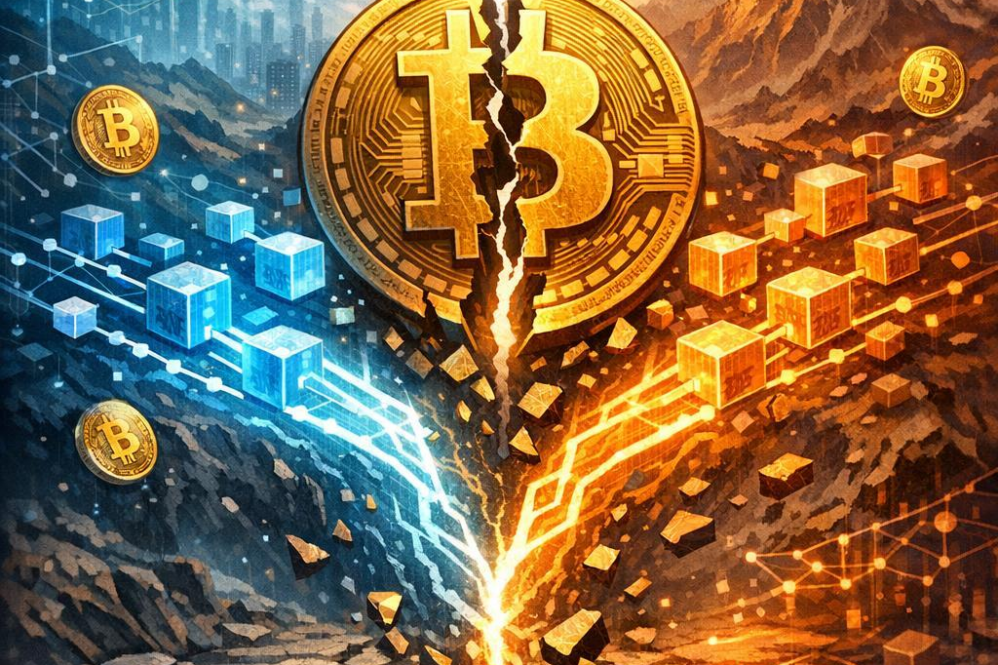
Understanding the Technical foundations of bitcoin forks
At its core, a fork in bitcoin’s blockchain represents a divergence in the digital ledger, occurring when the network’s nodes adopt different versions of the protocol rules. This divergence is not accidental but rather a technical consequence of how consensus is negotiated across decentralized participants. Forks are generally categorized into two types: soft forks, which maintain backward compatibility, and hard forks, which create an entirely separate pathway requiring unanimous adoption to remain integrated. Understanding these technical distinctions is crucial for grasping how the bitcoin ecosystem evolves amidst innovation and disagreement.
the underlying mechanism behind forks lies in the blockchain’s immutable chain of blocks containing transaction data. When developers propose changes to improve scalability, security, or functionality, these modifications are implemented through software updates. Though, if some nodes fail or refuse to upgrade, the blockchain splits as some miners continue on the original chain while others follow the new rules. This split results in two parallel chains with potentially divergent transaction histories and sets of rules, effectively generating a new digital currency or variant of bitcoin.
| Fork Type | Compatibility | Network Impact | Example |
|---|---|---|---|
| Soft Fork | Backward-compatible | minor disruption | SegWit |
| Hard Fork | Not backward-compatible | Chain split | bitcoin Cash |
Each fork represents a pivotal moment of consensus or conflict that redefines the network’s future path. the technical underpinnings extend beyond just code upgrades to include complex considerations such as miner support, node distribution, and economic incentives. Consequently, forks are not mere software events but socio-technical phenomena where technology meets governance, economics, and community psychology on the best path toward bitcoin’s ongoing growth.
Evaluating the Economic Implications of Blockchain Splits
Blockchain splits have significant economic repercussions that ripple through both individual investors and the broader cryptocurrency ecosystem. When a fork occurs, two parallel chains emerge, ofen creating distinct tokens with unique market values. This division can lead to market volatility as investors rapidly reassess the value and utility of each chain’s cryptocurrency. For some, forks offer an prospect to gain a stake in a new asset at no additional cost, but they also introduce uncertainty that can undermine confidence and slow adoption.
From an industrial perspective,companies involved in blockchain technology must carefully navigate the costs and benefits of supporting competing chains. Investment in infrastructure, software updates, and community engagement can double, as firms may need to allocate resources across both blockchains or choose which to back. Network effects play a critical role: the chain that attracts more developers, users, and merchants often consolidates economic power, whereas the other may experience diminishing returns and reduced liquidity.
| Economic Factor | Impact on Original Chain | Impact on New Chain |
|---|---|---|
| Token Value | May drop due to uncertainty or gain stability | Initially volatile but potential for growth |
| Investor Sentiment | Shaken if split is contentious | Excited yet cautious |
| Infrastructure Cost | Increased due to dual maintenance | High initial investment |
| Market Liquidity | Potentially reduced | Generally lower but growing |
Ultimately, the economic implications of blockchain splits extend beyond simple asset valuation. They force a reallocation of resources, influence user behavior, and redefine trust within the digital economy. Understanding these dynamics is crucial for anyone navigating the evolving landscape of decentralized finance and digital assets.
Assessing the Security Risks and opportunities in Forked Networks
When a blockchain undergoes a fork,whether soft or hard,it disrupts the established consensus protocol,presenting unique security challenges.The divergence results in two or more competing versions of the ledger, increasing the risk of replay attacks, double-spending, and temporary network instability.Participants in forked networks must be vigilant about the integrity of their transactions and the reliability of nodes, as inconsistent rules or delayed updates can be exploited by malicious actors. Ensuring robust cryptographic protections and consensus mechanisms during and after a fork is crucial to maintaining network trust.
However, forks also unlock significant opportunities to enhance the blockchain ecosystem. New forks can introduce innovative features, improved scalability, and updated governance models without compromising the original chain’s value. Participants can benefit from newly created tokens or coins on the forked chain, potentially increasing their portfolio’s diversity and growth potential. Moreover, forks facilitate experimentation, enabling developers to trial upgrades and optimizations in a live environment before mainstream adoption.
| Security Risks | opportunities |
|---|---|
| Replay Attacks | Token Airdrops |
| Double-Spending Vulnerabilities | Protocol Upgrades |
| Network Fragmentation | Community Governance Innovation |
| Consensus Inconsistencies | scalability Improvements |
Careful planning and clear communication among developers,miners,and users are essential to turning the risks associated with forked networks into fruitful opportunities. Stakeholders must coordinate to minimize disruptions and maximize the potential for technological advancement and economic gain.
Strategic Recommendations for Investors Navigating bitcoin Forks
Assess Technological Fundamentals and Developer Activity
Investors shoudl prioritize understanding the technological rationale behind any proposed fork. Not all forks signal enhancement; some may fragment communities or introduce security risks. Evaluating the development team’s credibility, existing codebase contributions, and the clarity of the fork’s objectives can provide critical insight. Active developer engagement and transparent governance frequently enough indicate a higher probability of long-term viability.
Diversify Exposure but Manage Risk
Rather than committing fully to one side of a fork, prudent investors consider a diversified approach. Holding assets in both the original and forked cryptocurrencies can capture potential value from either outcome. However, this strategy requires careful risk management, including monitoring market sentiment, liquidity, and the potential for replay attacks or network instability. Employing stop-loss orders or setting clear exit strategies can mitigate unexpected volatility.
Stay Updated with Regulatory and Community Dynamics
regulatory responses to forks can be unpredictable, varying widely by jurisdiction and potentially impacting valuation drastically. investors should keep abreast of legal developments and how exchanges and wallets support the forked tokens. Moreover, community consensus frequently enough shapes the success or failure of a fork-watching forums, social media, and technical discussions offers real-time signals useful for timely decisions.
