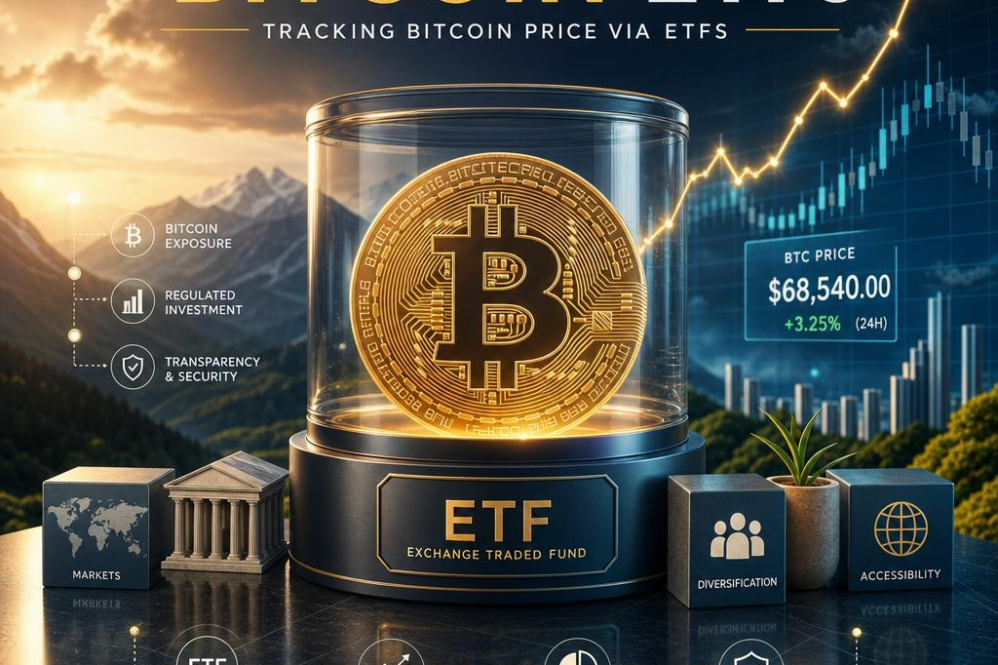
Understanding the Mechanism of bitcoin ETFs and Their Role in Cryptocurrency Investment
bitcoin Exchange-Traded Funds (ETFs) serve as innovative financial instruments that allow investors to gain exposure to bitcoin’s price movements without the need to directly purchase or hold the cryptocurrency itself. By tracking the underlying value of bitcoin, these ETFs provide a regulated avenue to engage with the volatile digital asset through traditional brokerage accounts.This mechanism simplifies the complexities of cryptocurrency custody,security,and wallet management,making bitcoin investment accessible to a broader audience.
These ETFs operate by either holding bitcoin directly or through derivatives such as futures contracts that replicate bitcoin’s price performance. The fund’s share price closely mirrors bitcoin’s market value,though minor discrepancies can occur due to management fees or tracking errors. Investors can trade these shares on established stock exchanges during regular market hours,benefiting from liquidity,transparency,and standardized regulatory oversight that are ofen absent in direct cryptocurrency trading.
Key features of bitcoin ETFs include:
- Elimination of the need for private keys or crypto wallets
- Regulatory protection and oversight by financial authorities
- Easy portfolio diversification with exposure to bitcoin
- Traditional brokerage integration facilitating tax reporting and compliance
| ETF Type | Underlying Asset | Risk Level | Trading venue |
|---|---|---|---|
| Physically Backed | bitcoin held by fund | Moderate | Stock Exchange |
| Futures-Based | bitcoin futures contracts | Higher | Stock Exchange |
Analyzing the Correlation Between bitcoin ETF Performance and Underlying bitcoin Price Movements
The relationship between bitcoin ETFs and the underlying bitcoin price is complex yet crucial for investors seeking exposure without directly holding the cryptocurrency. bitcoin ETFs aim to replicate the price movements of bitcoin by holding either the asset itself or related derivatives. However, the performance of these ETFs does not always mirror bitcoin’s price perfectly due to factors such as management fees, tracking errorsand market liquidity. Understanding these nuances allows investors to gauge potential advantages and limitations inherent in ETF investments.
Several key factors influence the correlation observed between bitcoin ETFs and the underlying price movements:
- Management Fees: Annual expenses reduce overall returns compared to holding bitcoin directly.
- Tracking Error: Discrepancies arise from the ETF provider’s ability to precisely replicate bitcoin prices, especially during volatile market conditions.
- Market Demand and Liquidity: ETF shares may trade at premiums or discounts due to supply and demand imbalances, affecting their short-term correlation.
| Factor | Impact on Correlation | example |
|---|---|---|
| Management Fees | Reduces ETF returns relative to bitcoin | Annual fee of 0.75% lowers cumulative gains over time |
| Tracking Error | Causes deviation during rapid price swings | ETF lags bitcoin price by 1-2% in high volatility phases |
| Liquidity Variations | Creates price discrepancies in ETF shares | Shares trade at 0.5% premium during heavy buying |
Evaluating the Benefits and Risks Associated with investing in bitcoin ETFs
Investing in bitcoin ETFs offers an accessible gateway to the volatile cryptocurrency market without the need to directly purchase or store bitcoin.Among the primary advantages are simplified trading through traditional brokerage accounts, enhanced liquidityand exposure to bitcoin’s price fluctuations without the complexities of digital wallets. For investors seeking diversification, bitcoin ETFs provide a regulated vehicle that integrates seamlessly into existing portfolios, fostering broader adoption and reducing entry barriers.
However, the risks tied to bitcoin ETFs cannot be overlooked. The intrinsic volatility of bitcoin frequently enough translates into sharp price swings for ETFs,posing meaningful risk for unprepared investors. Additionally, ETF structures may introduce tracking errors whereby the fund’s performance deviates from the actual bitcoin price due to fees, management strategiesor collateralization methods. Regulatory uncertainty also looms large; shifting policies could impact ETF operations or restrictions, adding layers of unpredictability beyond the cryptocurrency’s own market dynamics.
Below is a concise comparison of key benefits versus risks associated with bitcoin ETFs:
| Benefits | Potential Risks |
|---|---|
| Easy access through traditional brokers | Price volatility akin to direct bitcoin holdings |
| Regulated investment environment | tracking error affecting returns |
| Portfolio diversification | Regulatory and legal uncertainties |
| Lower technical barrier for investors | Management fees reducing net gains |
Strategic Recommendations for Investors Considering bitcoin ETFs as Part of a Diversified Portfolio
Investors eyeing bitcoin ETFs should prioritize a thorough understanding of how these products mirror the dynamics of bitcoin’s price while navigating regulatory and market nuances.Given the volatile nature of cryptocurrencies, a strategic approach involves evaluating how well a particular ETF tracks bitcoin’s value through various mechanisms such as futures contracts, physical holdingsor synthetic replication.This scrutiny ensures that investors avoid unintended discrepancies between the ETF’s price performance and the underlying asset, safeguarding against tracking errors that might or else diminish returns.
Diversification remains a cornerstone of managing risk when integrating bitcoin etfs into a broader portfolio. While bitcoin ETFs offer a simplified conduit to crypto exposure without direct ownership, they should complement rather than dominate investment allocations. Consider pairing bitcoin ETFs with traditional asset classes like equities, bondsand commodities, which provide counterbalancing volatility profiles. By doing so, investors balance potential high returns from crypto-linked assets against stability and income from established financial instruments, ultimately enhancing portfolio resilience.
When constructing a diversified portfolio inclusive of bitcoin ETFs, attention to cost structure and tax implications is essential. Expense ratios,trading fees,and potential capital gains distributions all impact net investment performance. Below is a simplified comparison of key factors influencing decision-making for bitcoin ETF investors:
| Factor | Impact | Strategic Note |
|---|---|---|
| Expense Ratio | Reduces returns | Choose lower-cost ETFs for long-term holding |
| Tracking Method | accuracy of price replication | Prefer physically-backed ETFs to minimize tracking error |
| Tax Efficiency | After-tax returns | Account for local tax treatment of crypto-related funds |
- Regularly review ETF structure and holdings to stay ahead of regulatory changes.
- Incorporate ETFs gradually within a well-balanced asset allocation framework.
- Engage with financial advisors proficient in cryptocurrency and ETF markets to tailor strategies.