bitcoin Addresses Explained: The Significance of the Initial ‘1
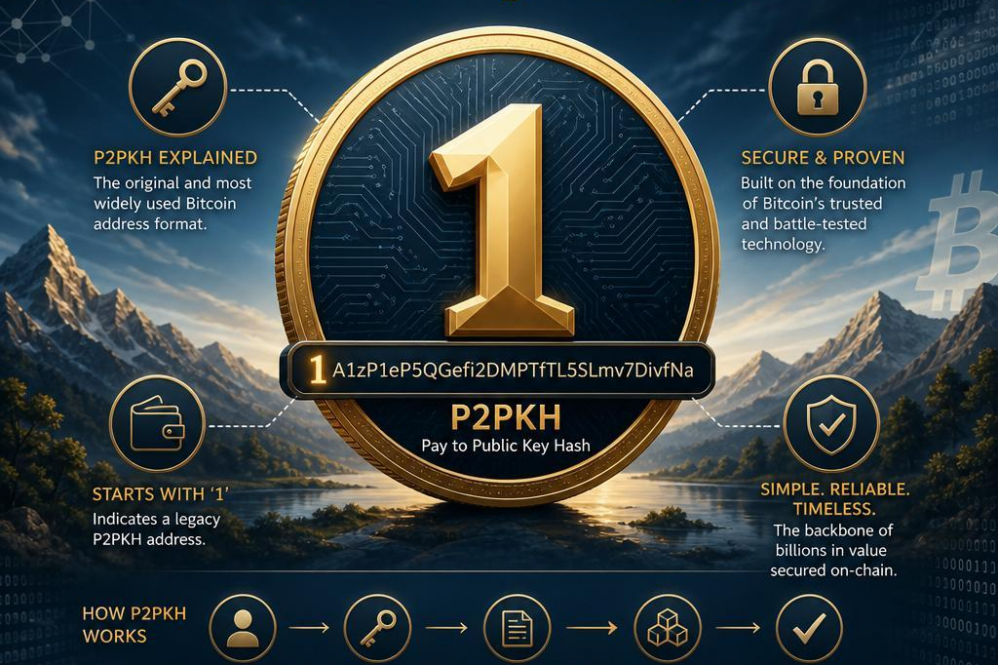
When dealing with bitcoin addresses, one of the first peculiarities you’ll notice is their alphanumeric nature and specific pattern denoted by a prefix letter.For traditional bitcoin addresses, this prefix is always a ‘1’, which indicates the use of the Pay-to-PubkeyHash (P2PKH) format. This format is a cornerstone of the bitcoin network and serves as a fundamental piece of the puzzle for understanding bitcoin address creation and validation.In the P2PKH format, each bitcoin address starts with a ‘1’ as of the way addresses are generated and their purpose within the bitcoin ecosystem. This prefix serves as a swift identifier for the wallet software, letting it know how to handle the address and interact with the bitcoin blockchain. Beyond this initial indication, the subsequent characters make up a hash of the public key associated with the address, which ensures the address’s integrity and security. This process of generating a human-readable format from the technical data underpins the usability of bitcoin across the globe.
To break it down further, understanding the structure helps clarify why the ‘1’ is crucial. An address starting with ’1′ is hashed from a public key that has undergone specific cryptographic steps, resulting in the creation of a checksum to prevent errors. This checksum is incorporated into the addressand along with the version byte (which is ‘1’ for P2PKH addresses), it ensures the address is both secure and unambiguous. Without this ‘1’ prefix,software would not recognize the address as a P2PKH type,leading to potential confusion or incorrect handling of transactions.
| Prefix | Format | Description |
|---|---|---|
| 1 | P2PKH | Pay-to-PubkeyHash for standard bitcoin addresses. |
| 3 | P2SH | Pay-to-ScriptHash for addresses that include more complex scripts. |
Delving Into the P2PKH Format: How It Shapes bitcoin Transactions
bitcoin addresses that begin with the digit ‘1’ are a hallmark of the Pay-to-PubKey-Hash (P2PKH) format, which is deeply rooted in the earliest days of bitcoin’s growth. This format is designed to make bitcoin transactions more secure and user-pleasant by abstracting away the complexities of public and private keys. In a P2PKH transaction, the recipient’s public key is hashed, and the resulting hash is embedded within the bitcoin address, ensuring that only the rightful owner can access the funds associated with that address. This hashing process is vital for the integrity and security of the bitcoin network, as it ensures that only the owner of a private key can prove ownership of funds sent to a P2PKH address.
Understanding the inner workings of P2PKH addresses involves grasping the concept that these addresses aren’t just sequences of letters and numbers but are, actually, pointers to a cryptographic puzzle. When someone sends bitcoin to a P2PKH address,they are essentially locking the value within a cryptographic box that can only be unlocked by the correct private key. The complexity of retrieving the funds is safeguarded by the elliptic curve digital signature algorithm (ECDSA),which underpins the security of bitcoin transactions. This algorithm uses the private key to sign transactions, proving ownership of the funds without revealing the private key itself. The P2PKH format allows users to manage their funds with relative ease, without needing to broadcast their public keys to the network-a practice that could expose them to security risks.
To illustrate the difference between P2PKH addresses and other bitcoin address formats, consider a simple comparison. P2PKH addresses, with their characteristic ‘1’ prefix, are part of the Base58Check encoding scheme, designed specifically for bitcoin addresses. By contrast, newer bitcoin address formats like Pay-to-Script-Hash (P2SH) or Bech32, which is used for SegWit addresses, employ different encoding methods to add additional layers of security or functionality. For example, SegWit addresses start with the prefix ‘bc1’ and offer improvements such as reduced transaction fees and faster confirmations. The P2PKH format, while older, remains a cornerstone of bitcoin’s robustness and security, serving as a reliable method for transferring value on the network.
The Role of Public Keys in Generating Traditional bitcoin Addresses
Public keys, those long strings of letters and numbers, play a crucial role in the creation of bitcoin addresses. When a user generates a bitcoin address, the process starts with their public key, which is derived from their private key without revealing any part of the private key itself. Essentially, the public key acts as a point of entry for others to communicate with the system, while the private key remains safely hidden to ensure the security of the user’s funds. This dual-key system, known as asymmetric cryptography, is the backbone of bitcoin’s security and privacy.
Creating a bitcoin address involves hashing the public key twice, first with SHA-256 and then with RIPEMD-160, to produce a shorter identifier, commonly referred to as a hash. Following this, a checksum is added to the shorter hash to form a new structure. This structure is what we recognize as a bitcoin address, distinctively denoted by its starting digit ‘1’.For P2PKH addresses, this checksum is essential as it prevents errors in the transmission of the address; it verifies the legitimacy of the address, much like a digital signature. Though not visible to the naked eye in the address, the checksum ensures that any minor typing errors or mishaps in the transmission process are caught and corrected.
To summarize the creation process,public keys are vital for the formation of bitcoin addresses. Here’s a simple breakdown:
- Derive the public key from the private key.
- Hash the public key using SHA-256 and then RIPEMD-160.
- Add a checksum to ensure the address’s integrity.
Note: This sequence might seem complex at a glance, but it ensures the security and accuracy of bitcoin transactions.By following these steps, each bitcoin address with a ‘1’ becomes a unique identifier, accessible only to its rightful owner and immune to impersonation or duplication.
Why Security Matters: The Advantages of P2PKH for Wallets
Security is paramount in the world of cryptocurrenciesand bitcoin addresses starting with ‘1’ are notably noteworthy for their robust security features. These addresses use the Pay-to-Public-Key-Hash (P2PKH) format, which is the standard address format for bitcoin transactions. One of the key advantages of P2PKH is its ability to provide a secure and efficient way to send and receive funds. Unlike other address formats, P2PKH hashes the public key to create a shorter, more manageable address that still retains all the necessary security properties.
The reliability of P2PKH transactions lies in its underlying cryptographic principles, which ensure that only the rightful owner of the public key corresponding to the address can spend the funds associated with it. This makes it arduous for hackers to exploit and manipulate transactions. the P2PKH format simplifies the process of creating and verifying transactions, making it accessible to a broader range of users without compromising on security. In this sense, P2PKH not only protects users from potential security threats but also enhances the overall usability and openness of the bitcoin network.
To further understand the benefits of P2PKH, it’s helpful to compare it with other address formats. While P2PKH is the most common and widely adopted for basic bitcoin transactions, newer formats like P2SH and P2WPKH offer additional features. However, P2PKH remains the gold standard for its straightforward security model. Here’s a simple comparison:
| Comparison of bitcoin Address Formats | |
|---|---|
| Format | Key Benefit |
| P2PKH | Simple and Secure |
| P2SH | Multisig Support |
| P2WPKH | Efficient and Faster |
Moving Forward: Emerging Trends Beyond the ‘1’-Prefix Addresses
As the cryptocurrency world evolves, the landscape of bitcoin addresses is expanding beyond the familiar territory of ‘1’-prefix addresses. While the P2PKH (Pay-to-Pubkey-Hash) addresses, which begin with a ‘1’, have been a cornerstone of bitcoin transactions for many years, newer and more versatile address formats are coming to the fore. These formats not only enhance security but also support additional functionalities within the bitcoin network.One of the most prominent emerging formats is the bech32 format, which starts with the prefix ‘bc1’. This format offers several advantages over the traditional P2PKH addresses. Primarily, it provides enhanced security through native segwit (segregated witness) technology. Segwit addresses allow for more efficient and secure blockchain transactions by separating the witness data from the traditional transaction data.This not only reduces the size of transactions but also enhances scalability within the network. the bech32 format supports the creation of more complex and secure scripts within the native segwit habitat,further broadening the capabilities of bitcoin addresses.
With the emergence of these new address formats, the future of bitcoin transactions looks promising. However, there are still challenges to overcome, such as the need for wider adoption and user education. While the P2PKH addresses continue to be used, the transition towards more advanced formats is gradually underway. As bitcoin evolves to meet the demands of a growing user base and changing network requirements, keeping up-to-date with these trends is essential for both users and developers. Understanding and embracing these new address formats will be crucial for maintaining optimal security, efficiencyand functionality in the world of bitcoin transactions.