Understanding the Structure and Format of Legacy bitcoin Addresses
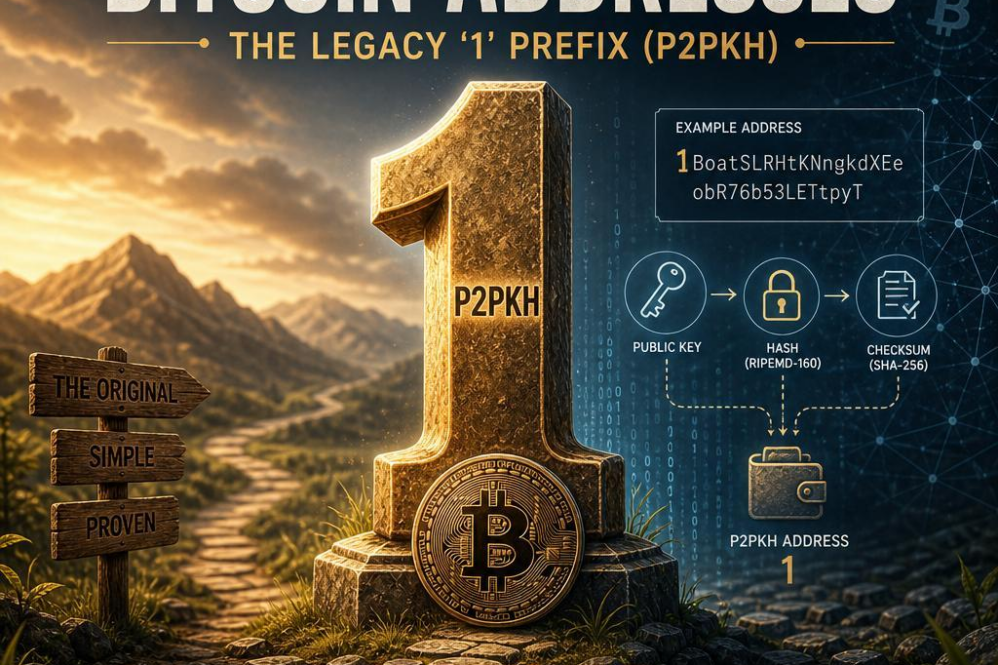
The legacy bitcoin addresses, often recognized by their distinctive ‘1’ prefix, represent one of the earliest formats of bitcoin transaction endpoints. These addresses are based on the Pay-to-Public-Key-Hash (P2PKH) design, a method that hashes a user’s public key into a shorter address string. This structure ensures both security through cryptographic hashing and ease of use by reducing the length of the public key representation. The base58check encoding used in these addresses helps to prevent confusion between similar characters and includes a checksum to catch typographical errors.
From a technical standpoint, a legacy address begins wiht the character ‘1’ and is followed by a string of alphanumeric characters, typically 26 to 35 characters in length. These addresses are derived from the RIPEMD-160 hash of the SHA-256 hash of a public key. The resulting hash is then prefixed with a version byte of 0x00,indicating a P2PKH address,before undergoing Base58Check encoding. This process not only guarantees a compact, user-kind format but also maintains backward compatibility with the earliest bitcoin software implementations.
| Component | Description |
|---|---|
| Prefix | ‘1’ indicating legacy P2PKH address |
| Public Key Hash | RIPEMD-160(SHA-256(public key)) |
| Version Byte | 0x00 for P2PKH addresses |
| Encoding | Base58Check (includes checksum) |
understanding the legacy address format is crucial for anyone working within the bitcoin ecosystem, especially when dealing with wallets or transactions that support a wide range of address types. while modern addresses such as P2SH and Bech32 offer improvements in efficiency and scalability,the legacy ‘1’ prefix addresses remain an integral part of bitcoin’s history and infrastructure.
Cryptographic Foundations of Pay-to-Public-Key-Hash Transactions
The backbone of the Pay-to-Public-Key-Hash (P2PKH) transaction model lies in its reliance on cryptographic principles designed to ensure security and authenticity.At its core, the mechanism uses a hash of the public key, rather than the public key itself, to create a bitcoin address. This approach enhances privacy by preventing direct exposure of the full public key until a transaction is spent and together strengthens security by reducing the attack vector for potential breaches.
When a user initiates a P2PKH transaction, the bitcoin network verifies that the spending party holds the private key corresponding to the hashed public key embedded in the address. This is accomplished through a digital signature process, where the spender’s signature is validated against the known public key hash. Should this verification fail, the network rejects the transaction, ensuring only legitimate owners can move funds. This relationship between keys and hashes forms a essential trust model without the need for intermediaries.
Key features of P2PKH transactions can be summarized as follows:
- Address Format: Begins with the legacy ‘1’ prefix, signaling a P2PKH address model.
- Security Layer: Utilizes SHA-256 followed by RIPEMD-160 hashing to generate the address hash.
- Transaction Script: Employs a standard script template that requires a public key and signature for validation.
- Backward Compatibility: Widely supported across wallets and exchanges due to its original design from bitcoin’s inception.
| Component | Function |
|---|---|
| SHA-256 | Initial hashing algorithm applied to the public key |
| RIPEMD-160 | Secondary hashing to produce the public key hash |
| Base58Check Encoding | Encodes the hash into a user-friendly bitcoin address with checksum |
Security Implications and Vulnerabilities Associated with Legacy Addresses
“`html
Legacy bitcoin addresses, distinguished by their ‘1’ prefix, operate under the Pay-to-Public-Key-Hash (P2PKH) scheme, which while reliable in the early days, now present several critical security concerns. One major vulnerability stems from the outdated cryptographic standards embedded within these addresses. As an example, their hash functions, although robust originally, are not as resilient against modern brute-force and collision attacks when compared to newer address types like SegWit. This discrepancy can possibly expose funds if emerged computational advances exploit these relative weaknesses.
Another significant risk associated with these legacy addresses is their inefficiency in handling transaction malleability. Since P2PKH addresses do not benefit from Segregated Witness (SegWit) enhancements, transactions involving them are more susceptible to malleability attacks, where transaction IDs can be altered before confirmation. This not only complicates transaction tracking but also creates openings for double-spending attempts and other fraudulent activities within the bitcoin network.
Below is a concise comparison illustrating key differences in security traits between Legacy (‘1’ prefix) and more modern bitcoin address types:
| Feature | Legacy P2PKH (‘1’) | SegWit P2SH (‘3’) / Bech32 (‘bc1’) |
|---|---|---|
| Transaction Malleability | High risk | Mitigated |
| Hash Algorithm Strength | Moderate | Strong (SHA-256 & RIPEMD-160 reinforcement) |
| fee Efficiency | Lower | Higher |
- Increased attack Surface: Legacy addresses remain a tempting target for attackers exploiting older cryptographic assumptions.
- Compatibility Trade-offs: While widely supported, continued use can hinder security upgrades.
- Encouragement to Upgrade: Transitioning to SegWit addresses bolsters security and network efficiency.
Comparative Analysis of Legacy Addresses Versus Modern Formats
The legacy bitcoin addresses, identifiable by their ‘1’ prefix, represent the P2PKH (Pay-to-Public-key-Hash) format. These addresses were the pioneering standard in the bitcoin ecosystem and are still recognized universally for their simplicity and robustness.Constructed by hashing a public key and encoding it in Base58Check, these addresses ensure backward compatibility and straightforward transaction validation.
In contrast, modern address formats-such as those starting with ‘3’ or the Bech32 format beginning with ‘bc1’-offer advanced features like multisignature support and native SegWit benefits. The legacy ‘1’ prefix addresses lack these enhancements,which impacts transaction fees and speed. However, their extensive adoption means thay remain vital in the decentralized network, especially for older wallets and exchanges that haven’t fully transitioned.
| Feature | legacy (P2PKH ‘1’ Prefix) | Modern (P2SH & Bech32) |
|---|---|---|
| Address Prefix | 1 | 3 / bc1 |
| Transaction Type | Single Signature | Multi-signature / SegWit |
| Fee Efficiency | Higher | lower |
| Compatibility | Universal | Growing |
- Security: Legacy addresses maintain proven security but lack newer protocol enhancements.
- Cost: Transactions from legacy addresses generally incur higher fees due to larger data size.
- Adoption: Legacy addresses are still widely accepted, but modern formats are gradually becoming the norm for their efficiencies.
Best Practices for Managing and Securing Legacy bitcoin Addresses
Legacy bitcoin addresses,recognizable by the ‘1’ prefix,operate on the Pay-to-Pubkey-Hash (P2PKH) standard. While widely used during bitcoin’s early years, these addresses have distinctive management characteristics that must be respected to maintain the highest level of security. Given their structure and compatibility, it remains crucial to implement diligent best practices when handling these addresses to safeguard your funds against evolving threats.
Frist and foremost, always ensure your private keys associated with these legacy addresses are stored in secure, offline locations. Cold storage solutions, such as hardware wallets or encrypted paper wallets, minimize exposure to online threats. Additionally, keep multiple secure backups in geographically dispersed locations to prevent loss due to hardware failure or physical damage. Never share your private keys or seed phrases, as unauthorized access results in irreversible loss.
When managing multiple legacy addresses, effective record-keeping is essential. Consider the following organizational strategies:
- Use encrypted digital ledgers to catalogue addresses and their transaction history.
- Label each address with contextual metadata, such as purpose and creation date.
- Regularly audit address balances and transaction patterns for irregularities.
| Best Practice | Reason | Recommended Tools |
|---|---|---|
| Offline Key Storage | Reduces risk of hacking | Hardware wallets, Paper wallets |
| Backup Management | Prevents loss from disasters | Encrypted USB drives, Vaults |
| Transaction monitoring | Detects suspicious activity | Blockchain explorers, Alert services |
By embracing these precautions and maintaining a disciplined approach, users can effectively protect their historical bitcoin holdings while leveraging the legacy ‘1’ prefix addresses with confidence and security.
Future Prospects and Transition Strategies Away from Legacy Address usage
As the bitcoin network evolves, so too do the standards for address formats. The shift away from legacy ‘1’ prefix addresses (P2PKH) is driven by the demand for enhanced security, reduced transaction feesand improved scalability. Modern address formats such as SegWit (starting with ‘3′ for P2SH and ‘bc1′ for bech32) not only enable more efficient use of block space but also offer better protection against common vulnerabilities. Transitioning away from legacy addresses is increasingly viewed not just as an option, but as a necessary strategic move for future-proofing bitcoin usage.
Successful migration strategies emphasize user education, tool compatibility, and gradual adoption. Wallet providers and exchanges have taken significant steps by supporting new address formats and encouraging users to migrate their funds through clear prompts and guides. Meanwhile, developers and service providers are building backward-compatible systems to maintain seamless interoperability, minimizing disruptions during this transition.Importantly, legacy addresses will continue to function for years to come; however, the community consensus points toward newer formats as the cornerstone for bitcoin’s long-term resilience.
Here is a comparison of key characteristics influencing the transition:
| Address Type | Prefix | Fee Efficiency | Security Features | Adoption Status |
|---|---|---|---|---|
| Legacy (P2PKH) | 1 | Lower | Basic | Legacy & Supported |
| SegWit (P2SH) | 3 | Moderate | Enhanced | Widely Adopted |
| Native SegWit (bech32) | bc1 | Highest | Advanced | Rapidly Growing |
Key considerations for transition include:
- Ensuring wallet infrastructure supports new formats.
- Educating users on benefits and migration methods.
- Maintaining backward compatibility during the transition phase.