Understanding the technical Structure of Bech32 SegWit bitcoin Addresses
the Bech32 SegWit bitcoin address format, distinguished by the “bc1” prefix, represents a important evolution in wallet and transaction design. Unlike legacy or P2SH addresses, Bech32 addresses utilize a fully lowercase alphanumeric string constructed through a modified base32 encoding scheme. This not only enhances readability and reduces user error during manual entry, but also facilitates checksum verification through robust error detection capabilities inherent to the format’s design. These properties culminate in an address format fully optimized for modern bitcoin network upgrades.
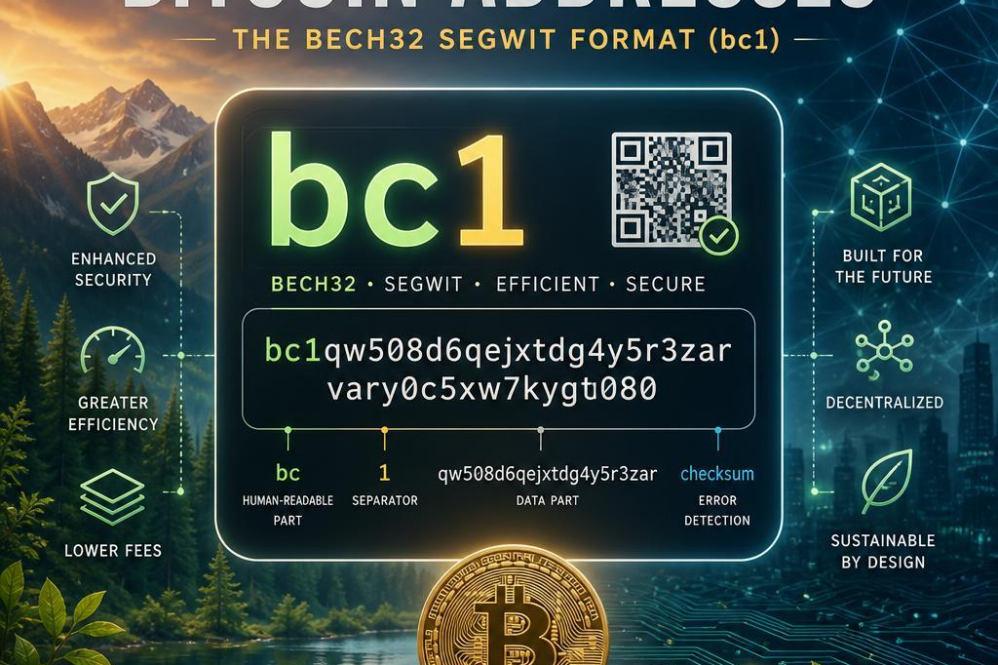
At the core of this structure is the segregation of witness data – the component introduced by Segregated Witness (SegWit). The address is composed of a human-readable part (HRP), which for mainnet is “bc1,” followed by a separator “1”and a data part encoding the witness version and witness program. The witness program itself encodes the hash of a public key or script, allowing for diverse transaction conditions. This modular formatting not only decreases transaction size but supports future enhancements to bitcoin’s scripting capabilities without necessitating a change to the fundamental address format.
Key characteristics of Bech32 addresses include:
- Case insensitivity: The all-lowercase encoding prevents confusion arising from case-sensitive errors common in other formats.
- Improved error detection: The checksum algorithm detects up to 4 errors and 2-character transpositions, considerably reducing the risk of loss from mistyped characters.
- Native SegWit support: Direct encoding of SegWit witness data results in lower transaction fees and better network efficiency.
| Component | Description | Exmaple |
|---|---|---|
| HRP (Human-Readable Part) | prefix signifying network and encoding | bc1 (bitcoin mainnet) |
| Separator | Divides HRP and data part | 1 |
| Data Part | Encodes witness version & program | wqx7xw3qzq0hs |
Advantages of Bech32 Addresses over Legacy Formats for bitcoin Transactions
Bech32 addresses represent a significant leap forward in the evolution of bitcoin transactions by offering a format optimized for the SegWit protocol. One of their standout advantages lies in their enhanced error detection capabilities. Unlike legacy addresses, which use Base58 encoding, Bech32 utilizes a checksum method that is more robust and allows for the detection of more errors in a single transaction address. This innovation greatly reduces the risk of sending funds to invalid or mistyped addresses, heightening security for users.
Another key benefit of this format is its efficiency in data depiction. Bech32 addresses are designed to be case-insensitive and contain only lowercase letters and digits, which simplifies manual entry and QR code scanning. Additionally, their shorter length compared to legacy addresses decreases transaction size, leading to lower fees and faster confirmation times on the blockchain. This efficiency translates to more economical and streamlined bitcoin use, especially for users conducting high volumes of transactions.
| Feature | Legacy Format | Bech32 Format |
|---|---|---|
| Error Detection | Moderate (Base58 checksum) | High (Advanced checksum, less error-prone) |
| Address Length | Longer (34+ characters) | Shorter (typically 42 characters) |
| Case Sensitivity | Case-sensitive | Case-insensitive |
| Transaction Cost | Higher (due to larger size) | Lower (due to SegWit efficiency) |
moreover, Bech32 addresses facilitate greater future-proofing within the bitcoin ecosystem. Their SegWit compatibility ensures that users benefit from ongoing protocol improvements such as scaling solutions and soft forks without changing addresses again. this longevity not only provides a smoother user experience but also fosters broader adoption by promoting interoperability and reduced complexity in wallet and exchange implementations across the network.
Detailed Breakdown of the bc1 Prefix and Its Significance
The bc1 prefix marks a pivotal advancement in bitcoin’s address system by identifying addresses formatted with the Bech32 encoding scheme. Unlike legacy formats, these addresses start with “bc1,” explicitly signaling that the address supports Segregated Witness (SegWit) transactions. This prefix not only enhances compatibility between wallets and nodes but also reduces transaction fees by minimizing data size and optimizing blockchain resource usage.
Addresses beginning with bc1 carry several distinctive attributes that elevate the overall efficiency of bitcoin transactions. These include:
- Error Detection: Bech32 encoding has built-in error detection, significantly decreasing the risk of transcription errors during manual entry or copy-pasting.
- Lower Transaction Costs: The SegWit structure encoded with bc1 addresses allows for reduced witness data, resulting in smaller transaction sizes and therefore lower fees.
- Enhanced Security: As a SegWit-compliant format, bc1 supports advanced features like signature malleability fixes, paving the way for innovations such as the Lightning Network.
| Address Format | Prefix | Main Feature | Typical Fee Impact |
|---|---|---|---|
| Legacy (P2PKH) | 1 | Original format | Higher |
| Nested SegWit (P2SH) | 3 | Compatibility-focused SegWit | Moderate |
| Native SegWit (Bech32) | bc1 | Optimized SegWit transactions | Lowest |
Security Enhancements and Error Detection Features in Bech32
Bech32’s design is a leap forward in bitcoin address security, incorporating a refined error detection mechanism that drastically reduces user entry mistakes. This mechanism uses a strong, built-in checksum system that is capable of detecting up to four errors or even a single substitution of two characters. Unlike traditional Base58 addresses that are prone to ambiguous characters and visual similarity (such as ‘0’ and ‘O’), Bech32’s alphanumeric scheme excludes easily confusable letters, which contributes significantly to accurate manual entry and scanning reliability.
Another key security enhancement lies in the encoding method itself. Bech32 applies a polymod checksum algorithm, which not only validates the entire address string but also ensures the integrity of the version and witness program data. This layered validation means that any subtle corruption or unauthorized modification of the address will be promptly identified, preventing accidental or malicious transaction errors before they propagate to the blockchain.
For practical understanding, the error detection capability can be summarized as follows:
| Type of Error | Detection Probability | Impact |
|---|---|---|
| Single character substitution | 100% | prevents address confusion |
| Single deletion or insertion | 100% | Blocks incomplete or extended addresses |
| Two character substitution | ~99.5% | Safeguards against near-miss typos |
| Multiple random errors | Very high | Maintains overall transaction integrity |
This robust error detection framework is an essential feature that enhances user confidence in bitcoin transactions, minimizes failures due to human errorand underscores the technical advancement brought by the Bech32 SegWit format.
Best Practices for Generating and Using Bech32 bitcoin Addresses
When generating Bech32 bitcoin addresses, it is indeed crucial to rely on trusted wallets and software that fully support the SegWit protocol. Using well-vetted tools minimizes the risk of errors during address creation and ensures compatibility across the bitcoin network. Always double-check the address format-a correct Bech32 address starts with bc1 and contains only lowercase alphanumeric characters, reducing confusion with other address types.
To maximize security, consider the following best practices:
- Use hardware wallets that natively support Bech32 addresses for offline key storage.
- Verify addresses via QR code scanning or manual entry to prevent phishing attacks or typos.
- Perform smaller test transactions when sending funds to a new Bech32 address before transferring large amounts.
Below is a swift reference comparison of address types and their main characteristics:
| Address Type | Prefix | SegWit Support | Advantages |
|---|---|---|---|
| Legacy | 1 or 3 | No | Wide compatibility, older format |
| P2SH | 3 | Partial | Supports SegWit, backward-compatible |
| Bech32 (SegWit) | bc1 | Yes | Lower fees, error detection, future-proof |
Compatibility Considerations and Wallet Support for Bech32 SegWit
Bech32 SegWit addresses, starting with the “bc1” prefix, represent a modern format optimized for efficiency and error detection. However, despite their advantages, compatibility can be a concern for some users, especially those interacting with legacy systems or less frequently updated wallets. It’s critically important to note that while most major wallets and exchanges have embraced Bech32, certain older platforms still do not fully support it, potentially leading to failed transactions or misinterpretations of the address format.
Wallet support for Bech32 SegWit addresses has seen rapid adoption in recent years. Popular wallets like Electrum, Ledger, Trezorand bitcoin Core provide native support, allowing users to send and receive funds using bc1 addresses seamlessly. mobile wallets such as BlueWallet and Trust Wallet also offer full compatibility. However, users should verify their wallet’s version and capabilities before making transactions, especially when dealing with larger amounts, to avoid compatibility issues.
Below is a quick reference of wallet compatibility status for Bech32 SegWit addresses:
| Wallet | Support Status | Notes |
|---|---|---|
| bitcoin Core | Full Support | From v0.16.0 onwards |
| Electrum | Full Support | Default since v3.0 |
| ledger Nano S & X | Full Support | Requires updated firmware |
| Mycelium | Partial Support | May require manual address input |
| Exchanges (varied) | Mixed Support | Always check before withdrawal |
Being aware of these compatibility nuances ensures smoother transactions and leverages the full benefits of Bech32’s technological advancements without disruption.