March 11, 2026

Capitalizations Index – B ∞/21M

UK’s Crypto-Accepting Mosque Raises more Cryptocurrency Donations than Cash

Uk’s crypto-accepting mosque raises more cryptocurrency donations than cash

UK’s Crypto-Accepting Mosque Raises more Cryptocurrency Donations than Cash


Shacklewell lane mosque cryptocurrency
Advertisement

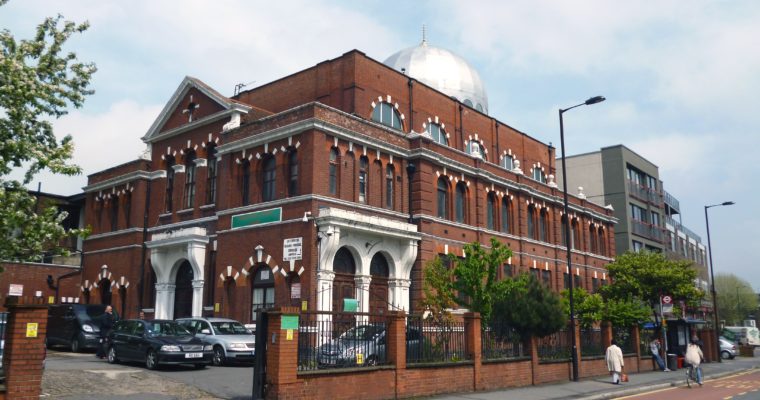
Barely two months after announcing that it would start accepting donations in cryptocurrency, East London’s Shacklewell Lane Mosque has received more contributions in cryptocurrency compared to cash.

According to iNews, the Dalston, East London-based mosque collected donations amounting to approximately £13,983 in cryptocurrency. This was four times more than the value of contributions that were received in cash – £3,460. During the Muslim fasting period of Ramadhan, 24 cryptocurrency donations were received by the mosque. One individual gave as much as £5,200 in cryptocurrencies. Per the mosque’s website, the accepted cryptocurrencies are bitcoin and Ethereum.

Doubters Proved Wrong

The chairman of the mosque, Erkin Guney, expressed excitement at the initiative’s success despite the fact that there was a lot of skepticism initially.

“When the donations started to flow in, we were blown away. We received four times more in cryptocurrency donations than in cash from our local worshippers during Ramadan, and we are still receiving cryptocurrency Sadaqah [voluntary donations]. It is amazing!” Guney told iNews.

Shacklewell Lane Mosque first announced that they would be experimenting with cryptocurrency donations on May 21, a few days after the annual fasting period had started.

While Sadaqah is voluntary, Zakat is obligatory for all financially able Muslims with the qualifying members of the faith required to give 2.5% of their wealth annually to assist the less fortunate in the society.

Convenience and Wider Reach

According to Guney, the idea of accepting cryptocurrencies came about when Gurmit Singh, the founder of blockchain firm Combo Innovations, suggested that it would benefit the mosque to welcome such donations since a lot of Muslims were using crypto anyway.

And by allowing contributions to be made in cryptocurrencies it would be convenient for donors who already held digital assets since they wouldn’t have to go through the hassle of converting their holdings into U.S. dollars or Sterling pounds prior to giving. The mosque also saw an opportunity of being able to receive donations from across the globe.

At the time, the local financial institutions didn’t have cryptocurrency expertise and the responsibility fell on Singh to offer the necessary advice on receiving, storing and selling cryptocurrencies. As CCN has previously reported, the blockchain technology firm Combo Innovation undertook the implementation of Crypto Zakat and Crypto Sadaqah. The main Islamic advisor of Shacklewell Lane Mosque, Zayd al Khair, was also heavily involved.

The cryptocurrency donations that Shacklewell Lane Mosque has received will go towards feeding and sheltering the homeless in the local area as well as conducting needed mosque repairs.

Featured image from Geograph/ Dr Neil Clifton.

Follow us on Telegram or subscribe to our newsletter here.
Join CCN’s crypto community for $9.99 per month, click here.
Want exclusive analysis and crypto insights from Hacked.com? Click here.
Open Positions at CCN: Full Time and Part Time Journalists Wanted.

Advertisement


Published at Tue, 17 Jul 2018 09:26:55 +0000

Accepts bitcoin
Previous Article

‘More Durable’: CFA Institute Bullish On Bitcoin As It Adds Crypto To 2019 Exams

Next Article

1 Kilo Koala Proof Coin, 2 oz Proof 12 coin collection

You might be interested in …

EY Report: How the Wealth Management Industry Could Benefit from the Blockchain

E&Y Report: How the Wealth Management Industry Could Benefit from the Blockchain

Blockchain technology has morphed from a popular buzzword to a technology that is in the process of revamping a wide range of operational and business processes within the financial service industry. A segment of the financial industry that could benefit greatly from the implementation of the distributed ledger technology is the wealth and asset management sector.

The global accountancy firm Ernst & Young published a report on the benefits of blockchain technology for the wealth and asset management industry titled ‘Blockchain Innovation in Wealth and Asset Management.’ The report states that the implementation of blockchain technology would likely result in reduced operational expenses, elimination of redundant yet time consuming functions and more opportunities to better the client experience. More specifically, using blockchain technology in important areas such as the client onboarding process, the creation of model portfolios, the settling and clearing of trades and compliance processes related to AML regulations can all be improved by implementing distributed ledger technology-based solutions in the wealth management industry.

Blockchain Use Cases in Wealth Management

In this report, Ernst & Young highlights two use cases as examples of the benefits of the blockchain.

Firstly, blockchain technology can be applied to digitize and streamline the customer onboarding and profiling process. Strict regulatory requirements require wealth managers to collect information such as proof of identification, marital status, residency, sources of wealth and political ties from new potential clients. This can be a cumbersome, long-winded and, therefore, costly process.

If, instead, high net-worth individuals’ data were to be stored on a distributed ledger to which permissioned parties could gain access with the individual’s approval, then this would greatly reduce the time and cost of onboarding a new customer. Furthermore, due to the immutability and auditability of the blockchain, an audit trail could easily be kept for each client.

Secondly, the blockchain could facilitate the creation of portfolios and the communication of portfolio changes to clients. Currently, wealth managers use a variety of different platforms to create and maintain portfolios and most of these platforms do not enable direct communication with the client.

Hence, by developing and implementing a blockchain solution that allows wealth managers to create and manage portfolios according to clients’ stored investment constraints that also allows for direct communication with regarding portfolio changes, the entire investment process would be made substantially more efficient and client relationships could be deepened due to an increase in direct communication between the wealth manager and its clients.

There Will Be Hurdles for Adoption but First-Movers Will Benefit

The report also highlights the challenges of adoption that the technology is likely to encounter. Scalability, interoperability with legacy systems, security and accordance with technology standards were the largest issues raised by the firms polled by Ernst & Young.

In addition, wealth and asset management funds do not exist in a bubble and are usually interconnected with other firms. Therefore, a wide-scale adoption would likely take a long time, considering there would have to be a consensus as to what type of blockchain solutions the whole financial industry chooses to adopt. Due to these factors, most firms are currently only willing to test blockchain technology on a small scale before considering a broader adoption of the tech.

Ernst & Young, however, believes that firms that are the first to adopt blockchain technology will reap the lion’s share of its benefits. As the success of financial blockchain solutions depends on its participants, E&Y encourages firms to begin the innovation process early as first-movers are likely to benefit the most.

The post EY Report: How the Wealth Management Industry Could Benefit from the Blockchain appeared first on Bitcoin Magazine.