July 30, 2026

Capitalizations Index – B ∞/21M

Tyler Winklevoss to Bill Gates: ‘Put Your Money Where Your Mouth Is’

Tyler winklevoss to bill gates: ‘put your money where your mouth is’

Tyler Winklevoss to Bill Gates: ‘Put Your Money Where Your Mouth Is’

Tyler winklevoss to bill gates: ‘put your money where your mouth is’

One half of famed bitcoin proponents, the Winklevoss twins, has responded to Bill Gates’ comments about shorting bitcoin.

In a tweet posted today, Tyler Winklevoss explained to the billionaire Microsoft founder that there is already an option to short the digital currency using the Cboe Futures contracts launched last December.

Winklevoss: “Put Your Money Where Your Mouth Is!”

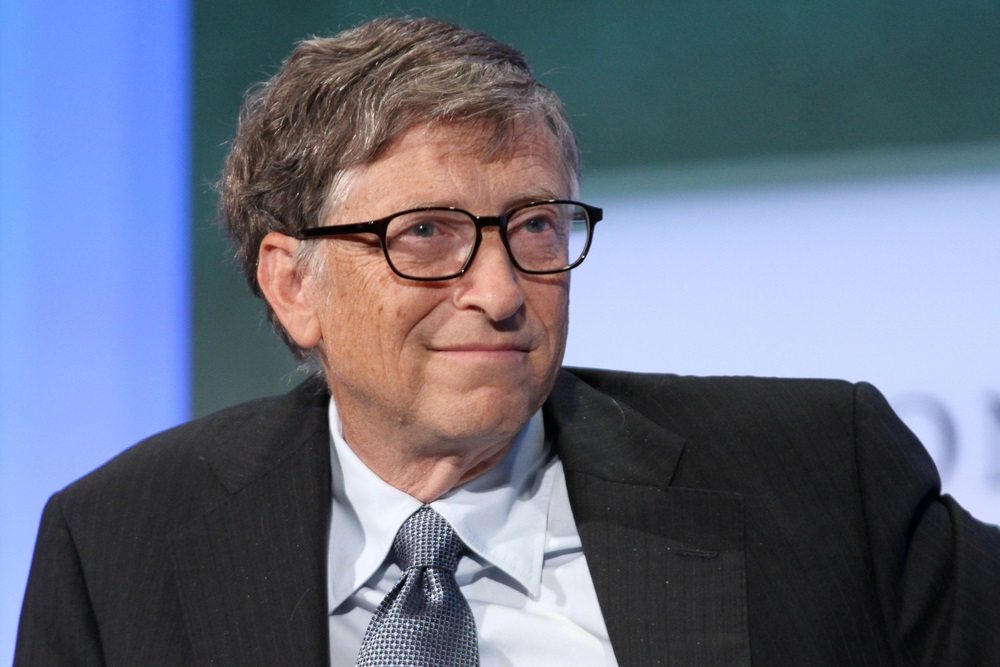
Yesterday, we reported on an interview hosted by CNBC’s ‘Squawk Box.’ During the conversation with Bill Gates, Warren Buffet, and Charlie Munger, Gates was asked about whether he owned any bitcoin. He replied:

“Somebody gave me some for my birthday then a few years later I thought, ‘hey I’m going to sell that,’ so, no.”

He then went on to talk about the current speculative nature of bitcoin before surmising that if there was an easy way to short bitcoin then he would do exactly that.

Evidently, Gates hasn’t heard that bitcoin Futures can be traded at the Chicago Board Options Exchange (Cboe). Fortunately Tyler Winklevoss was at the ready to set the anti-bitcoin billionaire right. The co-founder of the Gemini cryptocurrency exchange platform tweeted directly to Gates with the tip about the Cboe Futures contracts being available to bet on the price of bitcoin decreasing, along with some encouragement for him to put his money where his mouth is.

Cboe launched their bitcoin Futures contracts to great anticipation last December. Whilst many in the bitcoin community lauded the move for the legitimacy it would supposedly bring to the cryptocurrency space, the reality is that they haven’t proved anywhere near as popular as people hoped. Many institutional investors still remain wary of digital currencies such as bitcoin.

Tyler and his twin brother Cameron are the founders of the aptly named Gemini cryptocurrency exchange. It’s their platform’s prices that the Cboe Futures exchange uses to settle their contracts each day. The two famously invested heavily into bitcoin back in 2013. They originally entered the market when each coin was priced at around $120. Their $11 million investment has since multiplied in value many times and, assuming they haven’t converted any back to fiat, is currently worth about $834.17 million at today’s price of $9,192 per bitcoin.

Earlier this year, Tyler expressed his frustration with regulatory bodies treatment of cryptocurrency. He said he felt that they had not moved quickly enough to deal with the emerging financial technology and that a considered approach from institutions such as the U.S. Securities and Exchange Commission (SEC) would allow digital currencies to flourish whilst discouraging scammers.

Featured image from Shutterstock.

Published at Tue, 08 May 2018 17:00:59 +0000
bitcoin

Previous Article

Bitcoin Bodysuit, Bitcoin Infant Bodysuit, Crypto Baby Infant Bodysuit, Bitcoin Baby Bodysuit, Future Miner Bodysuit, Bitcoin Baby Clothes

Next Article

Bitcoin ABC Patches Critical Vulnerability in Bitcoin Cash Mining Software

You might be interested in …

How do i back carry in the ergobaby carrier?

How Do I Back Carry in the Ergobaby Carrier?

How Do I Back Carry in the Ergobaby Carrier? This Ergobaby video is here to tell you all about How to Back Carry with any Ergobaby carrier. All Ergobaby carriers have 3 Ways To Carry: […]

Bitcoin be different 11oz coffee mug

Bitcoin Be Different 11oz Coffee Mug

bitcoin Be Different 11oz Coffee Mug * 11 oz ceramic coffee mug * Microwave and dishwasher safe * High Quality Print will NEVER Chip Or Fade! * Our own design * Artwork on both sides! […]

Palestine May Launch Its Own Cryptocurrency as Sovereign Legal Tender

Palestine Plans Cryptocurrency as Sovereign Legal Tender

Palestinian officials are planning for the region of Palestine to receive its own digital currency within the next five years. The motivation for this stems from concerns about potential Israeli interference, Azzam Shawwa, Governor of the Palestinian Monetary Authority (PMA), told the news agency Reuters.

Palestinians have no sovereign currency of their own and use a combination of different currencies, including the euro, the dollar, the Jordanian dinar and the Israeli shekel, to conduct their daily financial transactions.

Due to the lack of a sovereign currency, Palestinian officials have little control over money supply and inflation. This is why the Palestinian Monetary Authority wants to introduce a bitcoin-like digital currency as the territory’s new legal tender, which will be called “the Palestinian Pound,” according to Shawwa.

It is the Palestinian Monetary Authority’s goal to become a fully-fledged and internationally recognized central bank for an independent Palestine. However, it is still unclear how a digital sovereign currency for Palestinians would sit with the 1994 Paris Protocol agreement. The protocol agreement gives the Palestinian Monetary Authority the functions of a central bank; however, it has not granted the institutions the right to issue its own currency. The Paris protocol recommends the use of the shekel in the region and, thereby, effectively provides Israel with a veto over the establishment of a Palestinian currency.

A sovereign digital currency, though, would make sense for Palestine. Not only would it allow the PMA to have more control over the country’s money supply and inflation, but it would also circumvent the practical challenges of delivering hard currency into the country as the PMA has no money-printing facilities.

“If we print currency, to get it into the country you would always need clearance from the Israelis and that could be an obstacle. So that is why we don’t want to go into it,” Shawwa explained to Reuters.  

While the digital Palestinian pound is planned to be issued within the next five years, this will be no easy task for Palestinian authorities, given that the Palestinian Monetary Authority has been trying for over a decade to become an internationally recognized central bank.

Another option for the Palestinian monetary situation would be to keep the current status quo of the four above-mentioned currencies in use or to officially recognize one of the these currencies as the territory’s legal tender. However, a digital sovereign currency would be the preferred choice for Palestine, according to Shawwa.

The post Palestine May Launch Its Own Cryptocurrency as Sovereign Legal Tender appeared first on Bitcoin Magazine.