 Fig. 1: Trinity Wallpaper (Source: Trinity Tech Homepage)
Anyone, who deals with the topic of blockchain now, knows what Neo is. This project is regarded in the media as an upcoming, big Chinese competitor for Ethereum. Technically, Neo is superior to the Ethereum blockchain. Looking at the transactions, that can be processed in a second on these block chains alone, the difference becomes clear: While Ethereum achieves 15 TPS, Neo achieves 1000 (theoretically the potential is significantly higher, namely 10,000 TPS).
But that alone is not the reason, why Neo has so much potential. The vision of the founder Da Hongfei is to build an entire ecosystem around the Neo-Blockchain. And this is no longer just a vision, it is already being realized, when we think of Ontology, Deepbrain, QLink, Nex and many other projects. All these are closely connected with the Neo-Blockchain. No other blockchain works as focused as Neo to build an ecosystem of applications for all kinds of uses (Exchange, Finance, Artificial Intelligence Development, Identity Verification, Gaming, etc.) around its own blockchain.
Where Trinity comes into play…
But at this point there is still a problem. If Neo wants to implement its big plan, it must be able to handle significantly more than 1000 or 10,000 transactions per second. But the solution will come and has two names: Zilliqa and Trinity. While Zilliqa is an onchain solution with sharding (i.e. the number of transactions per second is increasing; further explanations can be found in other articles on the net) and has been hyped a lot in recent weeks (currently on coinmarketcap.com around 40th place), not many people yet know the Trinity protocol, which in my opinion has immense development potential. But why?
First the name…
If you remember the movie Matrix, you’ll remember that the main character and hero of the plot is called Neo. But Neo would never have become a hero, if the agent Trinity hadn’t awakened him from his dream world and led him into reality.
And that’s exactly, what Trinity wants: to make the dream of the great Neo-ecosystem come true and bring it to life, so to speak.
Who’s behind Trinity?
David Li is the founder. As a former neo-manager, he led the global token sale camaign in 2016. He is also co-founder of FourierPR, a well-known marketing and consulting firm for crypto-economy projects. Guangfeng Zhang is one of the co-founders. As an expert in security and blockchain, he has worked for 15 years in the field of technology development and was involved in the development of a digital ticket platform based on digital currency and blockchain, for example. The other co-founder, Fengping Yi, is an expert in government affairs and blockchain business development. For example, he was a member of the China Ethereum community in 2015 and was responsible for business development as an official of the government. He also served as Director of Government Affairs at Onchain Technologies, whose founder is Da HongFei. This company is one of China’s largest blockchain players with huge capital potential. It cooperates with Chinese authorities and regional governments, is a strategic partner of Microsoft China and has cooperations with Alibaba. Ontology is a core project of Onchain. The members of the core development team also have several years of experience in software delivery and technology development. In addition, the whitepaper includes advisors, who have supported early blockchain projects such as Vechain. There is also a current Onchain manager.
What does this information show us? The Trinity project has an incredible amount of experience in blockchain development, marketing and government affairs. All these qualities are needed to be successful in China and beyond. Furthermore, the close relationship with Da HongFei and Onchain becomes clear. The team works closely with them to make the blockchain ecosystem around Neo and Ontology successful. This background makes it clear to me that the possible success of the Trinity project is planned systematically and professionally. David Li and his team are not amateurs, both knowhow and the necessary relationships seem to have been established.
But how exactly will Trinity realize its plan?
Unlike Zilliqa’s on-chain solution, the Trinity protocol is an off-chain solution for Neo. This means that some of the processes or transactions are handled on the Trinity protocol and are moved to the Neo-Blockchain after finishing.
The Trinity protocol consists of three independent layers, each offering appropriate solutions for different practical applications, e.g. for DAPPs for C2C instant payment (customer-to-customer), high-frequency data capture, B2B (business-to-business) /B2C instant payment, IoT, gateway services for light clients, network-wide data capture, gaming, etc.
In addition to solving the scalability problem, Trinity will also enable real-time payments, low transaction fees and data privacy for neo-assets. All this is achieved by the so-called Proof of Asset (PoA), which reduces the workload on the neo-block chain. Using a simplified example, I would like to illustrate, what Proof of Asset (PoA) means:
If two traders want to do business with each other, they first lock a number of Neo-Tokens as collateral. They leave these Neo-Tokens as collaterals, so to speak. Then they can trade via off-chain payment channels. Multiple transactions can be processed in real time without time limit off-chain, i.e. outside the neo-blockchain, with TNC (Trinity Network Credit), Trinity’s currency (without traffic jams on the busy Neo-blockchain). They don´t need a smart contract on the Neo-Blockchain for each transaction conducted. After all transactions have been completed, the assets are transferred back to the main chain (Neo). To protect the privacy of both traders, both the number and amount of individual transactions made are not recorded on the main chain.
 Fig. 2: How the Trinity Protocol works (Source: Trinity Whitepaper)
I think it has become reasonably clear that the Trinity Protocol opens up immense opportunities for the Neo-Blockchain ecosystem to be applied in the real economy. And all this is probably possible in the near future, if one looks at the Trinity Roadmap on the homepage. The User App Launch will take place at the end of May. From the second half of 2018, the mentioned applications will be gradually introduced and implemented (e.g. Industry solution for gaming, crypto trading engine, Industry solution for IoT, etc.).
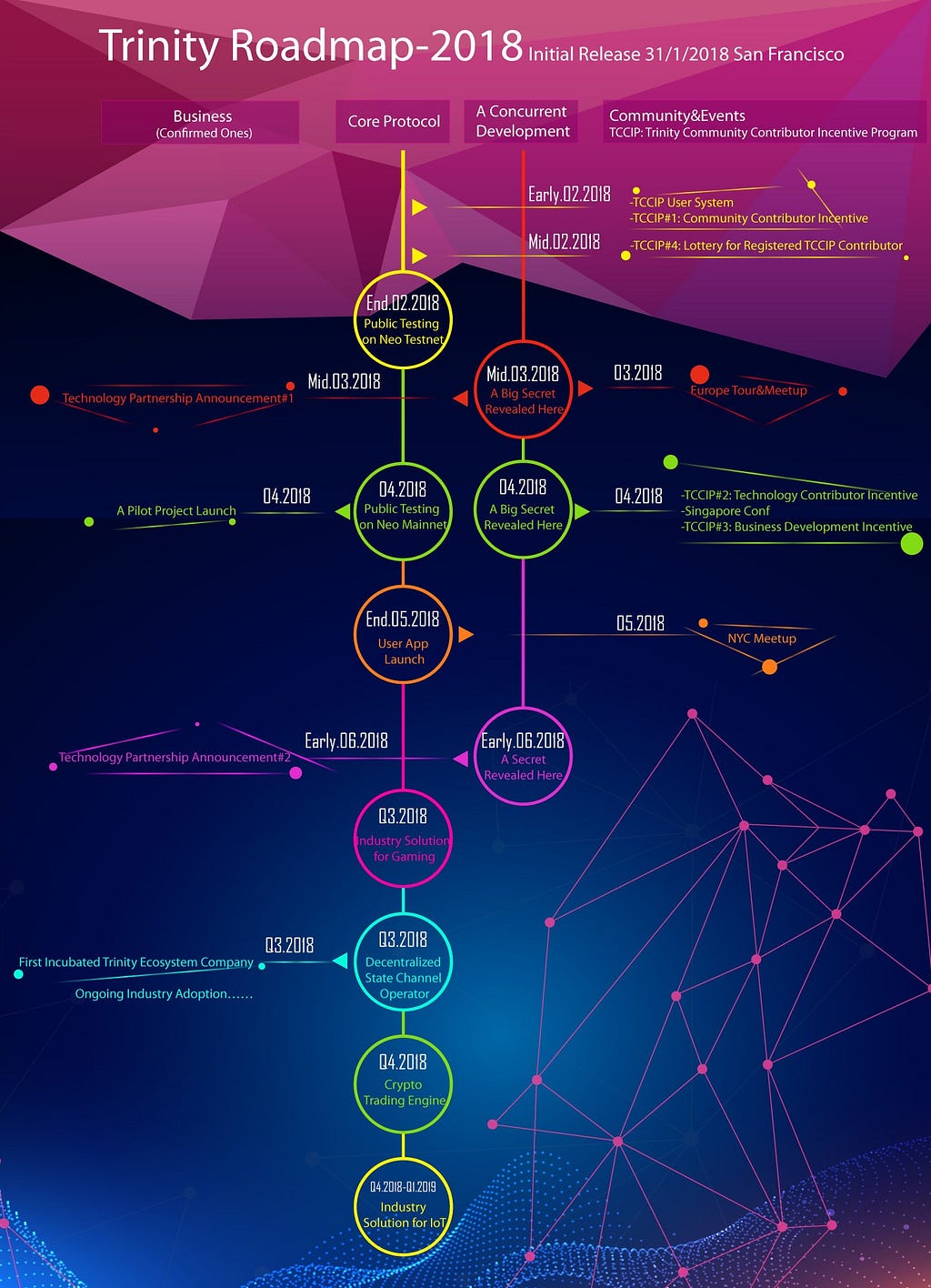 Fig. 3: Roadmap of Trinity Tech (Source: Trinity Whitepaper)And that’s not all, because…
… it gets even better: Trinity’s off-chain solution is implemented in the Neo blockchain, but it is completely independent of Neo. David Li, CEO of Trinity, plans blockchain transplants and cross-chain transaction services, e.g. the transplantation of the ontology network and asset transaction services between Neo and Ontology. And that’s not the end either: On March 24 at an event in Berlin, Li announced that Trinity is not only working on a scaling solution for NEO, but also for Ethereum and Zilliqa. The announcement of the cross-chain converter between Ethereum’s ERC-20 token and Neos’ NEP-5 token indicates that this is not just an empty promise. It could be the first step in this great project. If someone sends NEP-5 TNC tokens via the converter to an Ethereum address, ERC-20 TNC tokens should finally arrive there. The other way too, of course. This can be a major advance in trading tokens, greatly increasing liquidity and helping Trinity with its expansion plans. However, the converter is still in a development stage.
You should also be sensitive to David Li’s announcement that he wants to play a role in the process of transferring non-fungible assets through Non Fungible Tokens (NFT). In contrast to fungible assets (e.g. money, oil, electricity), non-fungible assets are unique items such as real estate or artworks that are not exchangeable or divisible. Li has the vision that all non-fungible assets can be represented and traded in tokens with a unique structure. That would be a big step for the crypto world.
Now to the conclusion…
To summarize the most important facts once again at the end: Neo needs Trinity to implement his plan of the Neo-ecosystem. By the way, the Trinity protocol is completely without competition here. Without Trinity, Neo is just one of many blockchain projects. However, Trinity is independent of Neo and has plans of its own to expand its influence to other parts of the crypto currency world, e.g. by scaling Ethereum and cross-chain trading. In the future, Trinity could be the glue that holds the world of crypto currencies together.
To get back to the film Matrix: The new main character in my eyes is Trinity.
If you like my research, please give me some claps (would be nice, if you clap 50 times!) You can also follow my brand new Twitter channel if you want to be informed about my next articles. There will come a lot more… (Twitter: coincommander @coincommander99)
Your Coincommander
Please note: This is not investment advice. Do your own research before making any investments.
Sources:
— Trinity Whitepaper
—
—
—
—

