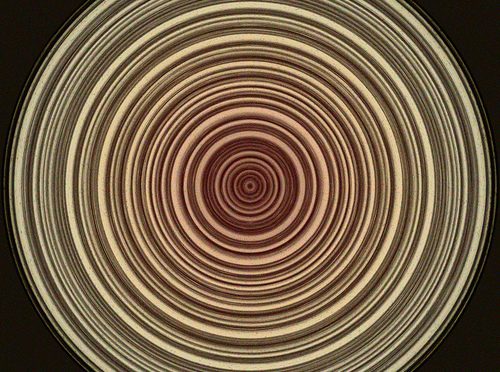
treerings color
Meant to be a tree-ring texture map base, which can be used as a component and modified and distorted as needed to produce a natural wood-grain texture.
The idea here is a kind of round-about texturing method for wood. It starts by embracing the idea of a 3D procedural texture, and texture baking, (render to texture in max etc.) but rejects or finds shortcomings in available procedural textures for wood. 3DS Max default procedural wood is garbage, and some of the best add-on procedural woods, as from DarkTree textures, are 2D, not 3D.
Its easy to make a 2D image of tree rings for planar mapping, and once you have multiple mapping coordinates figured out and can bake textures, this should give you nearly everything you need to create a pseudo procedural wood.
Now, this may be stupid, or involve too many steps, but here’s the idea.
Set up an object with at least two separate uvw coordinates. Have one be mapping channel 1, this will be the permanent texture channel, at the top of the modifier stack. The mapping method here should be unwrap, or pelt or break the uvs up into a thousand pieces by use of some algorithm, and you trust the machine to understand a texture stored in this format. Just make sure there is a minimum of distortion.
Also have a mapping channel 2, its method is planar or pass-through. It will project this ring texture along whatever axis seems most likely. You want this to be the end of your modifier stack – that is, this texture needs to be applied after all modifications and transformations.
Now comes the magic. BETWEEN these, you apply distortion to the 3D object so that the resulting map is not perfectly round. These distortions or deformations of the 3d object are 3D. So you get a 2D texture with 3D noise.
Now use texture baking, or render to texture, save only the diffuse map, repeat with a gray scale map to create a bump map or whatever. (You may use just gray scale maps and later map colors to the values either inside your 3D program or photoshop. But it is probably better to use a different, or re-mapped gray scale for the bump map.) Then delete the distortions and deformation from the 3d object, but retain mapping channel 1 coordinates, and apply baked texture.
Some examples where I have used this technique:
www.flickr.com/photos/sightrays/2292943789/
And here used with DarkTree procedural map:
www.flickr.com/photos/sightrays/10214604/
www.flickr.com/photos/sightrays/10214606/
Let me know if this is useful or if you know of a better way.
Like it? Would send me some bitcoin as a tip?
1H76GsGpfkyg2PtwnsZnTYgED3NinWgsG6
Or QR code here: www.flickr.com/photos/sightrays/8672657341/
By Electric-Eye on 2008-02-26 04:19:51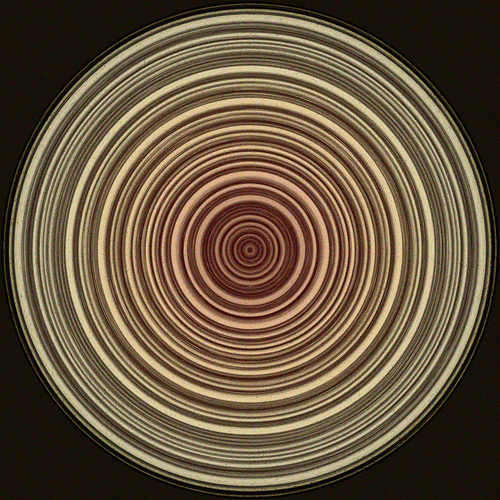 [wpr5_ebay kw=”bitcoin” num=”1″ ebcat=”” cid=”5338043562″ lang=”en-US” country=”0″ sort=”bestmatch”]