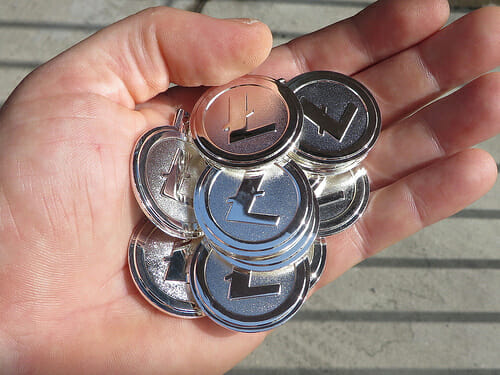
bitcoin is frequently enough described as anonymous digital cash, a reputation that has fueled both excitement and concern as its creation. In reality, every bitcoin transaction is recorded on a public ledger-the blockchain-where anyone can inspect the flow of funds in real time. This radical transparency has turned bitcoin into one of the most traceable financial systems ever built, powering an industry of blockchain analytics firms, law enforcement tools, and compliance technologies.
Yet transparency does not equal full visibility. While the blockchain reveals amounts, timestamps, and addresses involved in each transaction, it does not directly expose the real-world identities behind them. Users interact through pseudonymous addresses, and complex techniques can obscure ownership or mix transaction histories. Consequently, bitcoin sits at a complex intersection of openness and privacy: far from perfectly anonymous, but also far from fully understood.
This article examines what the bitcoin blockchain actually reveals-and what it conceals. It explains how transactions are recorded and linked, how analysts attempt to de-anonymize activity, where privacy techniques succeed or fail, and what all of this means for users, regulators, and the future of financial transparency.
How Blockchain Transparency Really Works For bitcoin Transactions
Every movement of BTC is etched into a shared, append-only ledger that anyone can inspect. When you send coins, your wallet creates a transaction that references earlier outputs (your existing balances) and designates new outputs (the recipient and usually a “change” address back to you). Miners bundle these transactions into blocks, and once confirmed, the block becomes part of a chronological chain. This structure means that, from the genesis block onward, it’s possible to trace every coin’s path across addresses, revealing a transparent-but pseudonymous-map of value flow.
What you see on-chain, however, is not people but addresses and amounts. A typical transaction includes:
- Inputs – References to previous transaction outputs being spent.
- Outputs – New locking scripts that define who can spend the funds next.
- Fees – The small difference between total inputs and outputs, paid to miners.
block explorers transform this raw script and hexadecimal data into human-readable views,showing timestamps,BTC values,and address histories. Behind the scenes, every address is controlled by one or more private keys, but those keys never appear on-chain-only the cryptographic proof that they were used correctly.
As the ledger is globally visible, patterns emerge that analysts can exploit. Exchanges, payment processors, and major services often reuse or cluster addresses in predictable ways. Over time, blockchain analysis firms identify these clusters and label them, turning a tangle of alphanumeric strings into recognizable entities. That’s how regulators, compliance teams, and even curiosity-driven researchers can follow funds from one service to another, watching BTC move through mixers, OTC desks, and custodial platforms. Transparency here is less about individual identity and more about observable behaviour at scale.
| On-Chain Element | What It Shows | What It Hides |
|---|---|---|
| Addresses | Where BTC moves | Real-world owner |
| Amounts | Value transferred | Why it was paid |
| Timestamps | When it settled | Who initiated it |
For everyday users, this design has practical consequences. Using new addresses for each payment, enabling coin control, and avoiding address reuse can reduce how much of their financial behavior is inferred by observers. Still, absolute privacy is not the goal of bitcoin’s transparency model; auditability is. Anyone can verify the total supply,confirm that coins aren’t double-spent,and observe miner rewards in real time. The system trades personal obscurity for public verifiability, proving that every unit of BTC is accounted for without ever needing a central authority to vouch for the books.
What Investigators can Actually See When Following bitcoin On chain
When an address appears on the ledger, analysts don’t see a person’s name or passport number – they see a string of characters, timestamps, amounts and relationships. Yet this sparse data is surprisingly rich. By tracing how coins move from one address to another, how often they are spent, and how they mix with other funds, investigators can build patterns that hint at user behavior. Over time, clusters of addresses begin to look less like random noise and more like the footprint of an exchange, a darknet market, or an individual who always pays at certain hours or in specific amounts.
Blockchain analysis turns these patterns into actionable insight by combining on-chain data with off-chain clues. Whenever a user interacts with a regulated exchange or a known service,they leave a breadcrumb that can be connected to an address. Once one piece of the puzzle is labeled, a web of related addresses frequently enough follows. Investigators rely heavily on:
- Clustering heuristics that link multiple addresses controlled by the same entity
- Known service tags for exchanges, mixers, gambling sites and payment processors
- Transaction graph analysis to map flows between suspects and known entities
- Timing and behavior patterns such as regular payroll-like payouts or batched withdrawals
| Data Point | What It Suggests |
|---|---|
| Many inputs, one output | Wallet consolidation by a single owner |
| One input, many outputs | Service payouts or payroll-style distribution |
| Repeating amounts | Subscription, salary, or automated payments |
| Hop through mixers | Attempted obfuscation of coin origin |
Despite this visibility, there are hard limits to what can be inferred. Investigators cannot see private keys, off-chain agreements or the real-world purpose of a payment unless those details surface elsewhere. They can observe that funds moved from Address A to Address B, via a mixer at 03:12 UTC, for 0.527 BTC – but not whether it was a ransom, a salary, or a loan between friends. This gap between technical traceability and human identity is where privacy tools, operational security, and legal processes either protect users or expose them, depending on how carefully each side plays the game.
Where bitcoin Privacy Breaks Down And How Users Are Exposed
Most people imagine they are safe as long as their real name never touches a wallet address. In reality, privacy starts to crumble the moment coins move. Every transaction links inputs and outputs in a permanent public record, allowing analysts to build behavioral fingerprints. over time,patterns such as regular payment intervals,distinctive transaction sizes,or repeated reuse of the same address become strong hints about the person or business behind the wallet,even when no obvious identity data is attached.
- Address reuse exposes long-term financial history.
- KYC exchanges tie real identities to specific UTXOs.
- On-chain patterns reveal habits,income,and counterparties.
- Network metadata can leak ips and geographic clues.
The risk escalates whenever bitcoin touches regulated on-ramps and off-ramps. Centralized exchanges, custodial wallets, and payment processors often apply KYC/AML checks, collecting names, documents, and banking details. Once coins flow from a KYC platform to a self-custodied wallet, that path can often be reconstructed, giving investigators and sophisticated adversaries a starting point. Chain analysis firms combine this with clustering heuristics and labeling of known services to map out who likely controls which group of addresses.
| Exposure Vector | What Leaks | Typical Consequence |
|---|---|---|
| Exchange withdrawals | Name, KYC data | Wallets linked to real identity |
| Merchant payments | Purchase details | Spending profile revealed |
| Address reuse | Full payment history | Income and savings exposed |
| Network layer leaks | IP, region | Physical location inferred |
Even attempts to be more private can backfire when used incorrectly. Poorly constructed CoinJoin transactions, mixing services that log user data, or combining “clean” and “tainted” coins in a single transaction can all trigger heuristics that mark funds as suspicious or deanonymize the user. Similarly, sharing single-use “private” addresses in public forums, pasting them into cloud-synced notes, or reusing them across different platforms inadvertently connects online personas with on-chain footprints, turning bitcoin’s transparent ledger into a long-lived dossier.
Techniques And Tools to Improve bitcoin Transaction Privacy In Practice
Privacy on bitcoin is less about a single magic tool and more about combining habits, techniques, and infrastructure that make your activity harder to link. At the wallet level, using Hierarchical Deterministic (HD) wallets that automatically generate new addresses helps avoid address reuse, a major leak of transactional facts. Pair this with coin control features that let you choose which UTXOs to spend, allowing you to avoid combining “clean” and “tainted” coins in the same transaction. Some advanced wallets also offer labeling of UTXOs, helping you keep track of which coins are associated with which counterparties or services.
- HD wallets to rotate addresses automatically
- Coin control to prevent unnecessary UTXO merging
- UTXO labeling to avoid cross-contaminating funds
- replace-By-fee (RBF) support to adjust fees without revealing new patterns
Network-layer privacy is just as critical as on-chain privacy.Even the most sophisticated transaction graph can be deanonymized if every broadcast is tied to your home IP. To mitigate this, privacy-conscious users route traffic through Tor or VPNs, and some bitcoin clients can connect to their own full node over Tor for an extra layer of protection. Block filters (used by some lightweight wallets) fetch only the data relevant to your addresses, reducing how much information you leak to third-party servers compared with traditional SPV wallets.
| Layer | Tool | Privacy Benefit |
|---|---|---|
| Network | Tor / VPN | Hides IP address from peers |
| Node | Own full node | Stops wallet queries from leaking |
| Wallet | Block filters | Requests fewer, more private lookups |
On-chain, the main privacy techniques revolve around how coins are moved and mixed.CoinJoin transactions allow multiple users to collaboratively build a single transaction, making it harder for observers to know which inputs map to which outputs. Wallets that implement CoinJoin frequently enough add randomized coin selection, variable output amounts, and timing randomization to avoid leaving a recognizable pattern. for users who cannot or do not want to rely on coordinated transactions, basic hygiene such as not consolidating many small UTXOs during a single spike in fee pressure (when analysis firms watch closely) can reduce exposure.
- CoinJoin-enabled wallets for collaborative, obfuscated transactions
- Randomized transaction timing to break behavioral patterns
- Avoiding address reuse for both receiving and change outputs
- Careful consolidation of UTXOs during low-scrutiny periods
integrating privacy into daily workflows requires selecting tools that support these features without compromising usability. Some users set up a tiered wallet structure: a public-facing “hot” wallet for small, frequent payments, and a more private wallet, often behind a self-hosted node, for larger balances. Merchants and freelancers can segment customer flows using unique invoices and per-client addresses, while analysts and power users might maintain separate wallets for distinct roles (trading, savings, donations). In practice, strong privacy emerges from layering these tools, separating identities, and continuously reviewing how much the chain can infer about your behavior.
Policy And Compliance Recommendations For Responsible bitcoin Tracking
Aligning investigations with clear legal bases is non‑negotiable. Anyone monitoring cryptocurrency activity-whether an exchange, analytics firm, or independent researcher-should ground their work in existing financial regulations, data protection laws, and court precedents. This means documenting why a wallet, cluster, or transaction path is being examined, how long data will be retained, and under what conditions it may be shared.Where jurisdictions overlap,the strictest applicable standard should prevail,especially around sanctions screening and customer privacy.
- Document investigative purpose and scope
- Map activities to specific laws and regulatory guidance
- Limit data retention windows and access rights
- Escalate ambiguous cases to legal/compliance teams
Effective governance frameworks separate the tools from the decisions made with them. Organizations that track on‑chain activity should maintain written policies explaining which alert thresholds trigger manual review, what evidence is needed before labeling addresses as “high risk,” and how to handle false positives. These policies should be accompanied by role‑based access controls and regular training that emphasizes that blockchain intelligence is probabilistic, not proof of wrongdoing. internal audits-ideally with independent oversight-help ensure that these rules are followed consistently.
| Control Area | Key Rule | Owner |
|---|---|---|
| Data Collection | Minimize off‑chain identifiers | Data Privacy |
| Risk Scoring | Explainable scoring models | Compliance |
| Investigations | Documented case files | Forensics |
| Reporting | Jurisdiction‑aware SAR/STR filing | Legal |
Privacy and civil liberties safeguards must be built into every tracking workflow. Blockchain data may be public, but linking it to real people introduces meaningful risks of misidentification, doxxing, and bias. To reduce harm, entities should avoid creating permanent shadow profiles, use pseudonymization for working datasets, and apply strict separation between marketing and compliance data. When leveraging external analytics vendors,contracts should clearly define data ownership,acceptable use,and deletion obligations,with privacy impact assessments conducted before deployment and whenever tools are significantly updated.
- Separate investigative and commercial data streams
- Restrict enrichment of on‑chain data with sensitive off‑chain details
- Review vendor tools for bias and overreach
- Provide internal channels to challenge or correct labels
Global consistency is increasingly essential as crypto activity crosses borders and regulators coordinate more closely. Exchanges, custodians, and service providers should align their monitoring practices with emerging standards such as the FATF Travel Rule, regional AML directives, and sector‑specific guidance from securities, commodities, and banking supervisors. Maintaining a concise, living compliance matrix that maps business activities to each regulatory regime helps avoid fragmented responses. combined with transparent disclosures to users about monitoring practices and their rights,this kind of structure supports both robust oversight and a defensible commitment to responsible,rights‑respecting blockchain analysis.
blockchain analysis shows that bitcoin is neither fully anonymous nor fully transparent in any simple sense. Its public ledger enables powerful forms of tracing that traditional financial systems often cannot match, but those same transparent records can be obscured through technical tools, careful operational behavior, and the use of off-chain intermediaries.
For policymakers and law enforcement, this duality means that bitcoin can be both a valuable source of investigative data and a persistent challenge, especially as privacy-enhancing techniques evolve. For users, it underscores that privacy is not guaranteed by default but must be actively managed-and that mistakes are permanently recorded on-chain.
As bitcoin continues to mature,the tension between traceability and privacy will remain central to debates about its regulation,legitimacy,and design. Understanding what blockchains reveal, what they obscure, and how that balance shifts over time is essential for anyone seeking to use, study, or govern this technology.