May 14, 2026

Capitalizations Index – B ∞/21M

Tokens Continue to Take a Hit: is SEC Preparing to Target Crypto Projects?

Tokens continue to take a hit: is sec preparing to target crypto projects?

Tokens Continue to Take a Hit: is SEC Preparing to Target Crypto Projects?


Sec ico cryptocurrency
Advertisement


The price of bitcoin has dropped by 10 percent over the last 24 hours following a severe sell-off. Yet, several low market cap crypto and tokens have plunged by twice that amount, posting losses in the range of 20 percent.

ERC20 tokens launched on top of the Ethereum blockchain network have performed especially poorly against both bitcoin and the US dollar over the past several days.

Waltonchain, Lisk, ICON, Ontology, Golem, VeChain, WanChain, and many other tokens backed by active developer and investor communities declined substantially in the last week. Even Basic Attention Token (BAT) and 0x (ZRX), which experienced strong short-term upward movements prior to the Coinbase listing, dropped by more than 36 percent.

Tokens continue to take a hit: is sec preparing to target crypto projects?

Is the US Going After ICO Projects?

The listing of BAT and ZRX by Coinbase confirmed that the two tokens are not considered securities under existing regulations set forth by local financial authorities in the US. Coinbase was cautious in listing tokens on its platform because in an event wherein the tokens listed by the exchange are identified as securities, Coinbase could be targeted by the US Securities and Exchange Commission (SEC) for the distribution of unregistered securities.

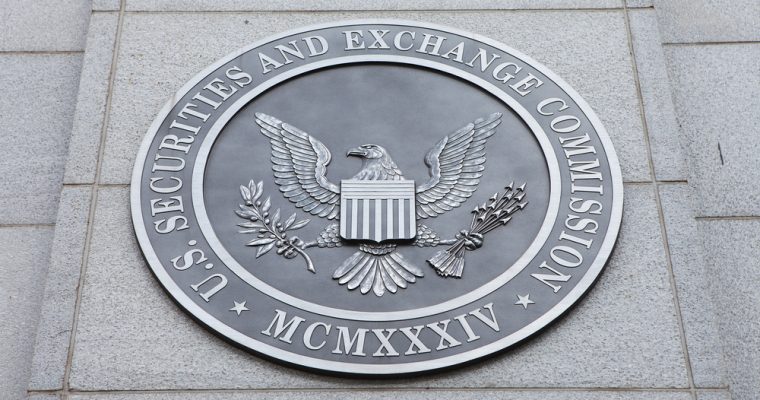
It is possible, as government enforcement defense and securities litigation attorney at Kobre & Kim, Jake Chervinsky, said, the SEC is preparing to take down many cryptocurrency exchanges and initial coin offering (ICO) projects, with many pending cases in the hands of the commission.

“Most enforcement actions are kept confidential until they’re resolved to protect both the defendant (from bad press) & the government (from losses & inconsistencies). That’s why this case was settled before it was announced. On that point, remember all those subpoenas the SEC sent out earlier this year? Just because you haven’t heard about them recently doesn’t mean there aren’t dozens of investigations going on behind the scenes. Sooner or later, the floodgates will open,” Chervinsky said.

In an official announcement, the SEC disclosed that EtherDelta co-founder Zachary Coburn agreed to pay $300,000 in disgorgement plus $13,000 in prejudgment interest and a $75,000 penalty, showing that the case was settled between Coburn and the SEC prior to the release of the statement.

At the Investment Adviser Association conference in Washington, D.C., Stephanie Avakian, co-director of the SEC’s Enforcement Division, confirmed that dozens of investigations into ICOs are underway and expects to see more in the future.

“We are very active, and I would just expect to see more and more,” she said, according to Bloomberg.

ICO Projects on Thin Ice

In the upcoming months, the cryptocurrency space is expected to see several pending cases against cryptocurrency exchanges and ICOs brought up by the SEC. The regulatory uncertainty in the ICO market surrounding tokens could lead to a decline in confidence from investors towards small market cap cryptocurrencies.

EtherDelta co-founder Zachary Coburn and the exchange were charged with the distribution of unregistered securities, which suggests that the SEC has cooperated with Coburn to understand the nature of several, if not dozens, of tokens considered securities under US regulations.

The drop in confidence from investors and the market could lead to a bleed out for tokens until the SEC provides a clear guideline to provide clarity in the space.

Featured Image from Shutterstock

Follow us on Telegram or subscribe to our newsletter here.
Who is Buying Bitcoin? Take the survey here and help us with our study.

Advertisement


Published at Wed, 14 Nov 2018 19:30:59 +0000

Previous Article

Thai SEC Urges Public to Avoid Unlicensed Crypto Exchange as Regulation Set to Take Effect

Next Article

Blockchain Technology-Based Oil and Energy Platform Primed to go Live by 2018 End

You might be interested in …

Bitcoin targets $3,593 for wave 2 low

Bitcoin targets $3,593 for Wave 2 low

bitcoin targets $3,593 for Wave 2 low EN English (UK) EN English (IN) DE Deutsch FR Français ES Español IT Italiano PL Polski SV Svenska TR Türkçe RU Русский PT Português ID Bahasa Indonesia MS […]

A New Era of Content Publishing and Licensing on the Blockchain

A New Era of Content Publishing and Licensing on the Blockchain

The internet and social media have unleashed unprecedented access to information. The time between content creation and widespread publication has become vanishingly small. Along with this ease of access and sharing, however, comes a lack of control over one’s own content. With a few clicks, content can be republished without reference to its original source, thereby obscuring who the authentic owner is.

What the internet has lacked up to this point is a network-based log of ownership that can keep pace with the exchange of information. Enter blockchain technology. While the first and currently most prominent application of this technology is an internet-based payment system, this will over time prove to be just one of many use cases.

One of the earliest non-financial applications of blockchain technology was a service called “Proof of Existence.” The service embeds a hash of a document into a block in the bitcoin blockchain. A user can use this embedded hash to prove that the document existed at the block height containing the hash without relying on a trusted third party, creating a decentralized timestamping service.

Po.et is a blockchain protocol that aims to expand on the concept of Proof of Existence to become a transformative tool for the publishing industry. In its early development, Po.et will be a platform on which written content can be timestamped using the bitcoin blockchain and be discoverable along with important metadata. Eventually, Po.et aspires to create a fully decentralized marketplace in which publishers, editors and content creators can interact with purchase and licensing agreements without the frictions that exist today.

The Inspiration

Max Bronstein, media and strategy lead for Po.et, said that the project was born out of some challenges faced at bitcoin Magazine. He stated that Po.et was designed to help answer “questions of ownership or attribution on the web,” including “who owns the work, who created it and whether or not the usage of the work is authorized.”

According to Bronstein, these questions are currently difficult to answer for many works, and the organizations that manage ownership and licensing information like Getty Images and Creative Commons often exist in silos without interoperability with other platforms.

Richard Titus, an entrepreneur who formerly helped lead digital content at BBC and the Daily Mail, joined the Po.et advisory board in July. He said, “Preserving an ecosystem of content creators, publishers and advertisers requires the establishment of ownership and Po.et is at the right stage of development to bring a true marketplace into existence.”

The Roadmap

The Po.et development team has divided their milestone iterations into three “eras”: Rosetta, Gutenberg and Alexandria.

“The Rosetta era represents Po.et’s potential to enable new understanding of written works, their authenticity, provenance and edit history through blockchain-based timestamping,” said Bronstein. The first era has already begun offering these timestamping services to publishers of written content. The document, along with standardized metadata, is stored on the BitTorrent network so that it can be discovered by any party interested in knowing its origins and authorized uses.

The second stage, the Gutenberg era, is projected to begin in April 2018. During this stage, Po.et intends to expand its platform to include custom licensing agreements for registered assets, revenue sharing and a written content marketplace. Payment channels will be utilized at this stage to enable cheap and instant micropayments for the agreements with a wide array of more than 40 publishers. One key application of these features may be an e-book metadata format that can serve as an alternative to the current costly standard for creating discoverable metadata for books: the ISBN system.

The third and final era, Alexandria, is slated to begin in July 2019. “The Alexandria era is when we expect Po.et to reach scale and become the first universal ledger for all types of digital assets, just as Alexandria was the home of the first world library and greatest repository of all human knowledge,” said Bronstein.

This stage will see the expansion of the Po.et platform beyond written content to include image, video and audio assets. Furthermore, Po.et hopes to introduce in this stage a fully decentralized marketplace open to all stakeholders with a reputation system to promote honest use of the network. In this stage, developers will be able to write and deploy smart contracts that interact with this open marketplace. One major use case of Alexandria could be brand licensing, an industry estimated to total over $250 billion in sales annually. The simplified process of verifying authenticity and negotiating terms with Po.et could open this market to smaller players.

The Early Adopters

bitcoin Magazine was the first to integrate the Po.et document timestamp into its platform — you can find a Po.et authentication badge at the top of this page. Other major digital media publishers in the blockchain space have signed on as alpha partners, including The Merkle, Crypto Insider, CoinSpeaker and ChainB.

Po.et has also forged a unique partnership with the LTB Network through which owners of the LTB Network’s LTBCOIN can swap their tokens for up to a total of 1 percent of the total Po.et tokens available.

Adam Levine, founder of the LTB Network, stated that “Po.et is an elegant solution to one of the biggest real world publishing problems. At the LTB Network, we’re excited to become one of the first fully integrated publishing platforms which will allow all written content to be published through and easily re-licensable with the Po.et project.”

Funding Po.et

Thus far, Po.et has secured financial investments from BTC Inc. and several blockchain notables, including Fenbushi Capital, led by Bo Shen, Feng Xiao and Vitalik Buterin; Simon Dixon and BnkToTheFuture; Michael Cao of block.one; and Matthew Roszak and Anthony Di Iorio.

Po.et will also be funded by a token sale taking place on August 8, 2017. At that time, 50 percent of the total supply will be sold off for bitcoin or ether.

POE tokens represent a proportional stake in the fees generated over the Po.et platform. While these fees are currently subsidized by the Po.et Foundation during the Rosetta era, they will eventually be generated by processing license payments and creating content licenses and then collected by the Po.et Foundation in future eras.

Disclaimer: bitcoin Magazine is an alpha partner of Po.et. BTC Inc., the parent company of bitcoin Magazine, is an investor in Po.et.

The post A New Era of Content Publishing and Licensing on the Blockchain appeared first on Bitcoin Magazine.