Just this week a turn of events took place in the long debate over cashless transactional . First, Mercedes Benz Stadium, home of the Atlanta Falcons, announced that it is turning to a fully cashless transaction model. Stadium officials feel this will further their business at concession stands throughout the stadium, and allow the high demand of food and drink to be met in game breaks. On the other hand, the mayor of Philadelphia, Jim Kenney, signed off on new legislation that bans most retail companies from refusing to take cash.
/ Pixabay
In the case of Mercedes Benz Stadium, owners feel that going will make the experience better for fans. They won’t have to wait in long lines or miss plays since there won’t be any need for counting change. All purchases will be made with a quick swipe.
[REITs]
Mayor Jim Kenney says businesses need to accept cash because people of lower income, or poverty level, do not always have access to bank accounts that give them debit or credit cards.
The issue for people of lower income living in a cashless retail world needs to be solved, and bitcoin is the solution. bitcoin can be purchased with cash at around Philadelphia currently. They are not regulated by banks, so it gives this form of online payment to people who can’t open a bank account. The rise of businesses going cashless may lead to more poverty level people adopting the use of bitcoin.
Sean Keefe, Managing Partner of Straight Up Capital, believes that cashless businesses can lead to the rise of bitcoin.
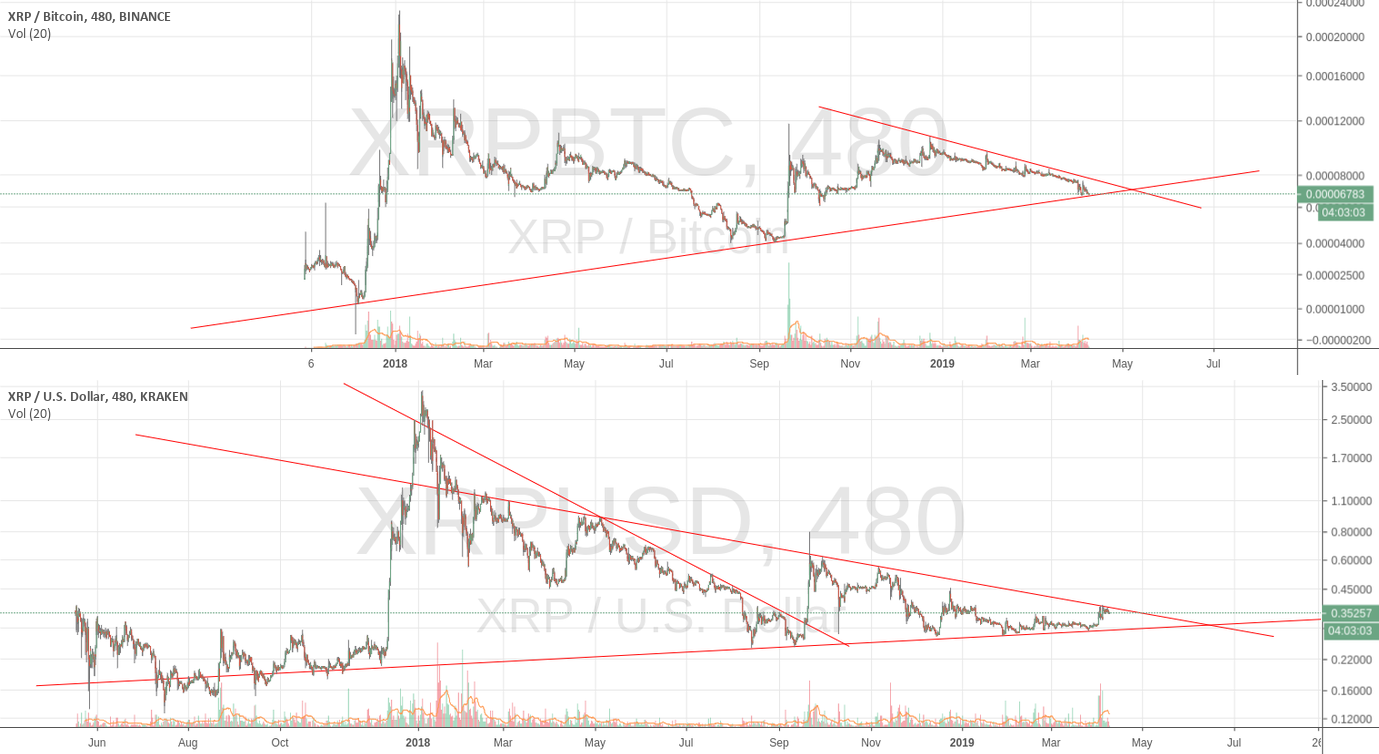
Ripple set to outperform during next bull move. Ripple is looking very good here. Clear wedges in both USD and BTC markets. BTC support now at 0.00006750 and rising with 0.36% a day. USD resistance […]
Cryptography News AS-QuadCAST 1.0 Encrypt and decrypt files using a custom password and a key strengthening algorithm to ensure extra protection against brute force attacks CAST-128 is a cryptography algorithm based on a symmetric key […]
“There’s no such thing as a safe hard fork,” lead developer Thomas Voegtlin corrected an audience member at the conference in Paris last weekend. “I would recommend to have replay protection, of course,” he added.
Community support for SegWit2x, the bitcoin spearheaded by Barry Silbert’s, was virtually absent in Paris. Whenever the “2x” part of the was discussed in the French capital, speakers and visitors overwhelmingly considered it a risk to defend against — not a proposal to help succeed.
Electrum users, for example, will not blindly follow hash power in case of a chain-split, Voegtlin explained throughout his talk; instead, they’ll be able to choose which side of such a split they want to be on. And importantly, the lightweight wallet will implement security measures to prevent users from accidentally spending funds on both chains: “replay protection” that seems unlikely to be implemented on a protocol level if SegWit2x does fork off.
“We are ready,” Voegtlin said. “If [SegWit2x] doesn’t include replay protection, the fork detection we have in Electrum will be useful.”
the successful conference format, the French bitcoin community hosted the first edition of Breaking bitcoin two blocks from the Eiffel Tower last weekend. bitcoin developers, academics and other technical-minded Bitcoiners gathered for a diverse program, but with the common denominator being bitcoin’s security.
“For the past two years, the bitcoin community has been obsessing with scale and scalability,” Kevin Loaec, managing director at and co-organizer of the event, told bitcoin Magazine. “But I’m not so worried about scale, I’m worried about mining centralization, a lack of privacy and fungibility … these kinds of things. As an industry we need to recognize there are more challenges than just scalability; hopefully this conference reflects that.”
Whereas the first Scaling bitcoin conference two years ago was a very specific reaction to a looming block size limit increase hard fork — then put forth by — this wasn’t necessarily the motivation behind Breaking bitcoin. Yet, once again, a controversial hard fork is looming on the horizon. This time imbedded in the BTC1 implementation developed by co-founder Jeff Garzik, the New York Agreement’s SegWit2x is scheduled to increase bitcoin’s “base block size limit” to two megabytes by November — an incompatible protocol change that could split the bitcoin network in two.
And it did not take much to recognize how unpopular the proposal was in Paris. Perhaps most vividly, Italian bitcoin startup led a protest campaign by distributing NO2X stickers; the Twitter hashtag was proudly added as a piece of flair to the by now well-known Make bitcoin Great Again and UASF hats. And voices critical of the project — like Voegtlin and his call for replay protection — could consistently count on rounds of applause. From a technical perspective, the proposal is often considered — quite frankly — to be reckless.
“Unfortunately, SegWit2x […] was designed to effectively be as disruptive to the minority chain,” engineer and author James Hilliard said on stage during the miner panel.
SegWit2x: The Arguments
Arguments against the 2x hard fork are diverse.
Perhaps its biggest problem, SegWit2x currently lacks basic safety measures to prevent unsuspecting users from losing funds. This includes, most importantly, the aforementioned replay protection, but a new address format would be similarly helpful.
Additionally, the three-month lead time for this specific hard fork is considered extremely short — assuming the goal is to prevent a chain-split in the first place. “If you ask any of the developers, they will typically want to see 18 months or two years lead time, for something with as wide an impact on all the software and hardware out there as a hard fork,” co-founder and inventor Dr. Adam Back noted during a Q&A session.
And if the chain does split into different networks and currencies — one following the current bitcoin protocol and one adopting the hard fork — the question becomes which of the two gets to use the name “bitcoin.” So far, proponents of the SegWit2x hard fork have shown no willingness to pick a new name.
This branding issue, contributor and co-founder Eric Lombrozo pointed out, provides yet another point of controversy.
“My personal opinion is that whomever is proposing the change, the onus is on them to demonstrate widespread support,” Lombrozo said during his talk on protocol changes. “The people that want to keep status quo don’t need to show anything. It’s the people who want to change the stuff that actually need to demonstrate there is widespread support.”
And for now, not everyone is convinced that SegWit2x does indeed have this level of support — or anything close to it. While several large mining pools, as well as a significant number of companies, have signed on to the New York Agreement, this agreement was itself drafted without any feedback from bitcoin’s technical community nor — even more important — a reliable gauge of user sentiment.
And while some bitcoin companies claim to represent their customers, this is — once again — not taken for granted by everyone.
“One debate I want to draw attention to,” venture capitalist Alyse Killeen pointed out, “is the debate whether businesses speak for their users. I think this is probably a debate you would only see now in this space because it’s pretty well established that businesses outside of this space do not speak for users, but it’s a debate we still have in our community. Of course they don’t.”
NO2X
If Breaking bitcoin in Paris can be considered at all representative of SegWit2x’s community support — which, it should be noted, is not necessarily the case — the proposal will face an uphill battle to be widely accepted in November.
Indeed, some signatories of the agreement are not so sure about the hard fork anymore: and have publicly backed out of the agreement. And, during a mining panel in Paris, CIO Alex Petrov ever so slightly opened the door to potentially withdrawing support as well, if both the original and the 2x chain manage to survive.
In fact, it’s not just that contentious hard forks are considered a threat to be defended against by bitcoin’s technical community. It goes beyond that.
In the words of bitcoin developer Jimmy Song, at the conclusion of his opening talk of the event:
“What doesn’t kill bitcoin makes it stronger. And conferences like this prove that we’re getting better at this. We’re getting immunized to all these hard forks, and it’s creating a better bitcoin as a result, and that’s a very good thing. We’re securing against a lot of these attacks, and figuring out ways to mitigate these threats.”