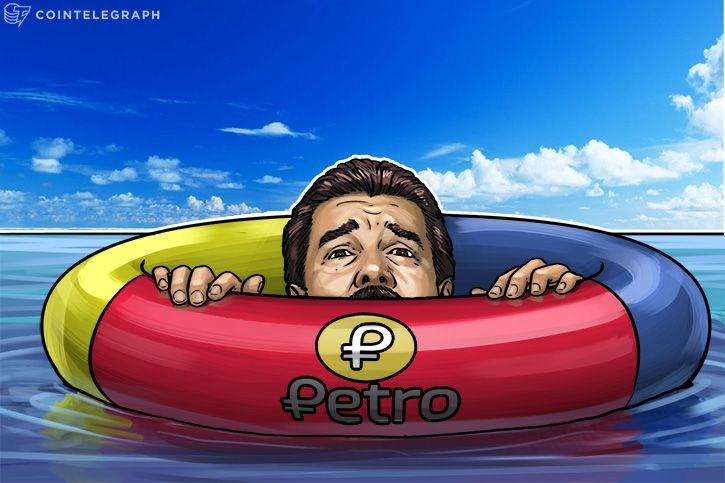
Donald Trump has made an executive order banning any American from using Venezuelan state-issued cryptocurrency. This means that the Venezuelan ICO, Petro, will not be able to be traded by US citizens. According to the executive order, it was issued “in light of recent actions taken by the Maduro regime to attempt to circumvent U.S. sanctions by issuing a digital currency.” The full executive order can be found here. ()
This could be considered an odd move on behalf of the Trump administration, considering that the decentralized nature of cryptocurrencies makes them near impossible to govern. For example, there is no real identity attached to a wallet address, making it very difficult to determine whether the Holder of the Petro in said wallet is a resident of the US or another country. There is also no way for any government to stop a holder of Petro from spending or otherwise illegally using the coin, as the underlying blockchain technology is controlled by many independent miners and node operators, rather than by any single government or organization.
This ban also raises questions of whether or not a major cryptocurrency like bitcoin could be banned in a similar way. Could the US Government effectively ban a major cryptocurrency? Would customers and exchanges actually respond? How would the market react? Listening to the after effects of this Petro ban could help us answer these questions.
According to a document released by the US Department of Treasury on March 19th, the department intends to add wallet addresses of sanctioned persons to a blacklist as a part of an effort “to combat global threats such as terrorism, transnational organized crime, malicious cyber activity, narcotics trafficking, weapons of mass destruction (WMD) proliferation, and human rights abuses.” The document can be found here. ()
It may now be the responsibility of those people and businesses who trade with cryptocurrencies to know that the people they are conducting business with are not on this blacklist, or “Specially Designated Nationals And Blocked Persons List,” or SDN. In addition, the document states that if an address of an SDN if found, that “a report with OFAC that includes information about the wallet’s or address’s ownership, and any other relevant details” should be filed.
This is unlikely to be an effective tool against the illicit use of bitcoin and other cryptocurrencies as new wallets and addresses are able to be created in a matter of seconds, and there exist tools called “Mixers” which can be used to anonymize one’s cryptocurrency. However, this is still a bold course of action taken by the Department of Treasury, as it could be seen as one of the few attempts made by the United States Government toward regulating cryptocurrencies.
By Satoshi Pearson