May 14, 2026

Capitalizations Index – B ∞/21M

This Magazine Ranked Ethereum the 2nd-Best Blockchain Protocol. Bitcoin Didn’t Make the List

This magazine ranked ethereum the 2nd-best blockchain protocol. Bitcoin didn’t make the list

This Magazine Ranked Ethereum the 2nd-Best Blockchain Protocol. Bitcoin Didn’t Make the List

This magazine ranked ethereum the 2nd-best blockchain protocol. Bitcoin didn’t make the list

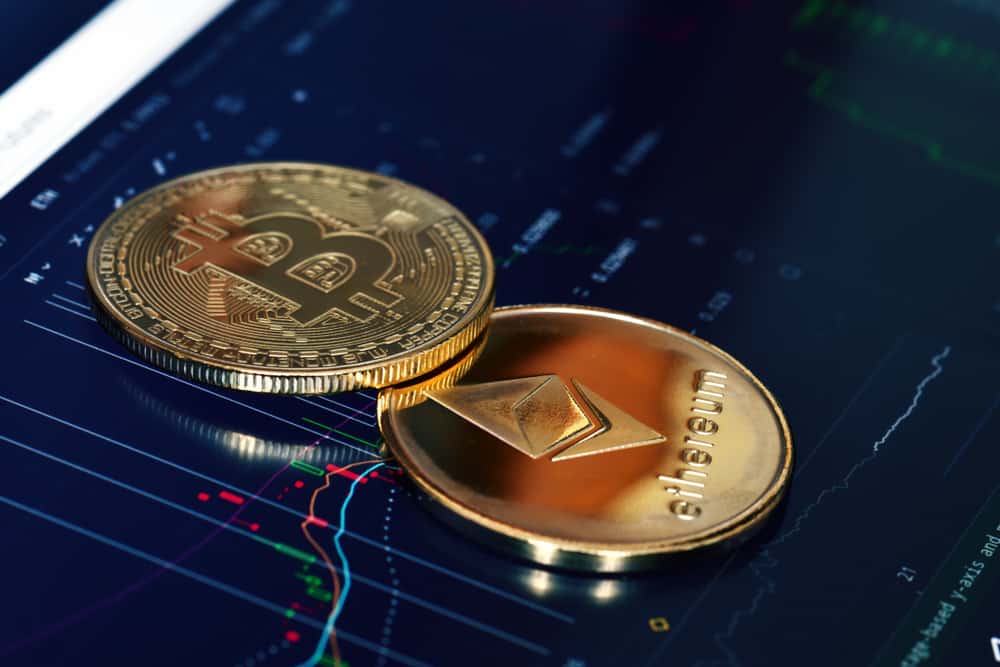
The latest issue of Rising Blockchain magazine lists the top 10 blockchain protocols, in their opinion. The list doesn’t include bitcoin.

The 10 chains/protocols listed are those the editors believe “bring the change to the world in 2019 faster than other protocols.” At the top of the list is the Graphene Protocol, on which EOS, Steem, and Bitshares are built.

BitShares and STEEM Rank Above Ethereum?

The ratings don’t include much in the way of colorful explanations. Speaking of EOS, the magazine mentions that EOS has a transaction reversal mechanism via the “Arbitration Court” concept. BitShares is listed before Steem, although Steem has arguably on-boarded more users than most platforms one can name.

BitShares, on the other hand, had a very rough year in 2018. BitUSD lost its dollar peg in a big way, for starters. Overall, BitShares has less than a quarter billion invested in it. Compared to EOS, BitShares almost shouldn’t be on the “top 10” list at all.

Ethereum came in second in the rankings. Here, though, the list of decentralized applications listed is curious.

It includes SONM, a token we haven’t covered much since its ICO in 2017. SONM’s mainnet went live last July. At press time, just 125 “deals” were active. SONM is a platform to facilitate the renting of computer resources. This reporter was very excited about it initially, but the token’s performance after ICO eventually pushed it to the back of the mind.

NEO certainly belongs on any list where Ethereum stands, although after several years since its AntChain days, it’s yet to have a major hit. However, we recently discovered that there are dozens of NEO decentralized applications that no one seems to be talking about.

CCN Is Officially The Most-Read Blockchain News Website

The magazine, which is a 100-plus page review of all things blockchain from 2018, notes that CCN is the most visited blockchain news website, ahead of CoinDesk by at least 200,000 readers per month. CCN has actually grown exponentially since the data must have been collected.

Seems it’s about time for CoinTelegraph and CoinDesk to stop claiming their “#1” status.

One thing we’d like to note is that CCN does not employ Tom Clancy.

Tom Clancy is the author we attribute press releases to. Press releases and sponsored stories are not the type of work our writers need attribution for, as the publication is paid to host them.

In the same way that some traditional businesses like real estate are required to post a notice in a newspaper, CCN allows blockchain businesses to submit their news for a fee. The news is clearly marked as a press release or sponsored story and attributed to Tom Clancy. CCN’s writers organically cover breaking news and items of interest from the blockchain and, increasingly, regular financial space.

The note also says that Yashu Gola and Pedro Febrero are our top writers. We’d like to point out that all our writers are our top writers. The majority of our writers are routinely sought after by competing publications. Fortunately, our compensation rates are better, and clearly our platform for exposure is superior.

Published at Sat, 09 Feb 2019 17:03:17 +0000

Previous Article

This Magazine Ranked Ethereum the 2nd-Best Blockchain Protocol. Bitcoin Didn’t Make the List

Next Article

The Fight to Return “Stolen” Mt. Gox Funds to Victims

You might be interested in …

Adding Some Fun and Games to Bitcoin Scaling Debate Angst

Adding Some Fun and Games to Bitcoin Scaling Angst

If you’re good at puzzles and familiar with the world of bitcoin, you may be interested in signing up for the second round of the CoinGate bitcoin Challenge, starting Saturday, July 15 at 6 p.m. UTC.

CoinGate, the Lithuanian-based bitcoin and altcoin payment center, is holding its second bitcoin Challenge to highlight the history and benefits of bitcoin as their response to the ongoing contentious scaling debate.

Like many in the bitcoin space, CoinGate CTO Rytis Bieliauskas is watching with some concern and hoping bitcoiners will come back to their roots and remember the origins and original intentions of bitcoin founders.

Every two weeks throughout the summer, CoinGate is publishing a challenge related to bitcoin and blockchain history. Solving the puzzles quickly requires some knowledge and skill, but mostly the challenges are designed to be “geeky fun” for anyone involved with bitcoin to some degree.

On Saturday, contestants can register and access a number of challenges of varying degrees of difficulty on CoinGate’s website and on /r/bitcoin here.

In preparation for the second contest, the Reddit thread is a good source of examples with answers from the last challenge, which began on July 1.

During the July 1st challenge, there was considerable discussion on Reddit among contestants.

“We were really surprised that participants started sharing their thoughts on our Reddit thread, even though there was only one prize for each riddle,” the Coingate team told bitcoin Magazine. “And so all the riddles were solved and prizes snapped up within just 3 hours.

“Our team is really happy with the results and the number of participants [the challenge] attracted. All in all, we logged over 800 attempts and more than 600 people who were up to solve the tasks in a matter of several hours.”

Contestants received a series of puzzles to choose from, leading to a bitcoin private key and the address for a wallet containing BTC.

Three challenges of varying difficulty were launched at once, with the most difficult taking from 4-6 hours to solve. As is evident on the Reddit comments, some found the puzzles baffling while a few seemed more than ready for the challenge.

In one puzzle, for example, contestants were given a grid of four CoinGate logos that seemed identical. A private key was hidden in the image and the participants had to figure out what was hidden and assemble the private key leading to the reward.

Most of the puzzles involve steganography — extracting of the meaning of a secret message hidden within an ordinary message.

Some of the solutions will provide a private key, while some others will provide another method to retrieve bitcoins, for example in the form of a wallet “seed.”

The end goal of each challenge is to get access to a bitcoin address by finding its private key (or otherwise). Depending on the difficulty of the challenge, that address will contain a reward of 0.01 to 0.1 BTC. (The prize will be sent to a bitcoin address just before the challenge.)

CoinGate: On SegWit and UASF

CoinGate CTO Rytis Bieliauskas told bitcoin Magazine:

“CoinGate is seeking to attract people back to the basics of bitcoin and blockchain [technology]. Having been involved in the bitcoin world since 2011, we deeply love the original blockchain and we strongly believe that consensus [on scaling] will be reached.”

Bieliauskas is concerned about the direction bitcoin is taking and is asking Bitcoiners to remember what the original essence and intent of bitcoin was.

Bieliauskas considers himself to be a Core supporter but is hopeful all parties involved will come to a consensus on how to scale bitcoin.

On the CoinGate blog, he wrote:

“We strongly believe in a future for bitcoin. As we have officially stated previously, our team strongly supports SegWit as the best bitcoin scaling solution, and we therefore maintain a close eye on BIP148 (UASF).”

In an email from the CoinGate team, a representative explained: “We have officially expressed our support for SegWit and UASF back in April, though we have not made any comment on the SegWit2x as it was coined after the New York Agreement. We strongly support any scaling solution that will help bitcoin grow and become accessible and useful to people across the globe.

“However, since we are involved with bitcoin from its technical side, we know that a scaling solution must not only seem viable ‘on paper,’ but also undergo rigorous testing before it can be launched across the network.”

Regardless of what the future brings, CoinGate has expressed that it is here to stay:

“[W]hatever the changes in the bitcoin landscape, our team is ready to adjust to any technological developments. In the end, our goal has always been to make cryptocurrencies accessible, simple and convenient for both businesses and individuals.”

CoinGate is a payment gateway/processor for bitcoin and more than 40 altcoins including Litecoin, Ethereum, Zcash, Monero, Dash, Ripple and Golem. According to CoinGate, it is not an exchange because although the site offers customers ways to buy and sell bitcoins, it does not connect customers to each other.

Those interested in applying to play can sign up here.

The post Adding Some Fun and Games to Bitcoin Scaling Debate Angst appeared first on Bitcoin Magazine.

Romad endpoint defense crowdsale announced

ROMAD Endpoint Defense crowdsale announced

ROMAD Endpoint Defense crowdsale announced DISCLAIMER & RISK WARNING This offer is based on information provided solely by the offeror and other publicly available information. The token sale or exchange event is entirely unrelated to […]