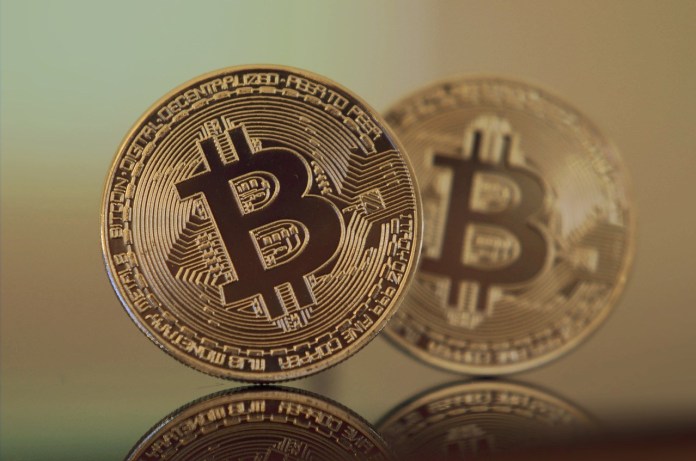
bitcoin,the pioneering cryptocurrency,is divided into various units for transactional convenience and precision. At its smallest denomination lies the “Satoshi,” named in honor of bitcoin’s mysterious creator, Satoshi Nakamoto. A single Satoshi represents 0.00000001 bitcoin (BTC), making it the smallest possible unit of the digital currency. This subdivision not only facilitates micro-transactions but also serves as a tribute to the individual or group who introduced the revolutionary concept of decentralized digital money.Understanding the Satoshi offers insight into both the technical structure of bitcoin and the enduring legacy of its enigmatic founder [[2]](https://bitcoin.stackexchange.com/questions/114/what-is-a-satoshi).
Understanding the Origin and Definition of the Satoshi in bitcoin
The Satoshi represents the smallest recognized unit of bitcoin, symbolizing not just a monetary fraction but a tribute to bitcoin’s enigmatic creator. One Satoshi equals 0.00000001 bitcoin (BTC), making it possible to conduct micro-transactions and enhance bitcoin’s usability in everyday dealings. This minute subdivision allows bitcoin to scale beyond high-value transfers, presenting a flexible digital currency ideal for diverse transactional needs.
Its origin is closely tied to the pseudonymous creator, Satoshi Nakamoto, who introduced bitcoin to the world in 2008.By naming the smallest unit after the project’s founder, the bitcoin community immortalizes the vision and innovation behind the concept of decentralized digital money. This homage reinforces the deep connection between the protocol’s design beliefs and its foundational figure,who emphasized transparency and robustness from the very first release.
Understanding the utility of the Satoshi requires appreciating bitcoin’s practical structure:
- Precision: Enables granular exchange values, essential for market liquidity.
- Accessibility: Low barriers for new adopters using fractional bitcoin amounts.
- Scalability: Facilitates seamless transaction processing even for minimal payments.
| Unit | Equivalent in bitcoin | Use Case |
|---|---|---|
| Satoshi | 0.00000001 BTC | Microtransactions and tipping |
| Bit | 0.000001 BTC | Small scale remittances |
| bitcoin (BTC) | 1 BTC | major transfers and investments |
The Role of the Satoshi in Enhancing bitcoin Transaction Precision
bitcoin’s design as a decentralized digital currency requires precise divisibility to enable smooth and flexible transactions. The satoshi, as the smallest unit of bitcoin, embodies this precision by allowing amounts as minute as 0.00000001 BTC to be transacted. This granularity means users can execute payments or transfers even for tiny fractions of a bitcoin, facilitating microtransactions that were previously impractical with customary currencies. By accommodating such fine subdivisions, the satoshi enhances bitcoin’s usability across a wide spectrum of transaction sizes.
Beyond everyday transactions, the satoshi plays a crucial role in fee calculations and blockchain protocol efficiency.Transaction fees are often measured in satoshis per byte, enabling users to optimize costs depending on network congestion and urgency. The ability to specify fees at such a granular level helps maintain network stability and incentivizes miners appropriately, supporting the system’s decentralized consensus without overpaying or wasting resources. This precision also benefits developers and wallets by standardizing the smallest unit of account within the bitcoin ecosystem.
| Unit | BTC Equivalent | Use Case |
|---|---|---|
| bitcoin (BTC) | 1.0 | Bulk trades, savings |
| Millibitcoin (mBTC) | 0.001 | Moderate payments |
| Microbitcoin (μBTC) | 0.000001 | Small payments |
| Satoshi (sat) | 0.00000001 | Microtransactions and fee precision |
In essence, the satoshi’s role transcends simple currency subdivision; it is integral to enabling bitcoin’s adaptability, efficiency, and accessibility. By honoring bitcoin’s intricate design through its smallest unit, transactions can be as precise as needed, reinforcing the currency’s role in a diverse range of financial applications from everyday use to cutting-edge blockchain technology.
How the Satoshi Facilitates microtransactions and Accessibility
By dividing bitcoin into satoshis-the smallest indivisible units equal to one hundred millionth of a bitcoin-transactional granularity achieves unprecedented precision. This granularity enables microtransactions that were once impossible or impractical with traditional currencies or even whole bitcoin units. For example, satoshis allow users to send tiny fractions of value for digital services, content tipping, or IoT payments without prohibitive fees, bridging the gap between everyday small purchases and blockchain technology.
The broad accessibility of bitcoin is significantly enhanced through satoshis. Users do not need to own a full bitcoin to participate in the ecosystem, lowering financial barriers and democratizing access to the network. This fractional unit system encourages a global user base to interact with bitcoin economically and efficiently. It also supports new business models like pay-per-use and micro-donations, expanding bitcoin’s real-world utility beyond large investments or store-of-value concepts.
Below is a simple reference illustrating how transactions scale in satoshis compared to bitcoin:
| Unit | Equivalent | Use Case Example |
|---|---|---|
| 1 bitcoin (BTC) | 100,000,000 satoshis | High-value transfers, investments |
| 10,000 satoshis | 0.0001 BTC | Small online purchases |
| 100 satoshis | 0.000001 BTC | Micro-tips,content rewards |
- Enables micropayments: From streaming to gaming,satoshis unlock fractional pricing.
- Enhances financial inclusion: Users can interact without large capital commitment.
- supports innovative applications: Facilitates machine-to-machine payments and IoT integration.
Recommendations for Using Satoshis in Everyday Cryptocurrency Transactions
When dealing with satoshis in daily cryptocurrency transactions, precision and accuracy are paramount. Since floating-point numbers can introduce rounding errors, it’s strongly recommended to handle bitcoin amounts as integers by using satoshis (1 bitcoin = 100,000,000 satoshis). This approach not only preserves exact values but also simplifies calculations and storage. As an example, when integrating with databases such as MySQL, using a BIGINT data type to store satoshi values ensures you avoid overflow issues and maintain integrity in your records.
For users and businesses conducting frequent micropayments, it’s helpful to understand the concept of partial satoshis such as millisatoshis, which represent one-thousandth of a satoshi. While the blockchain does not record transactions smaller than 1 satoshi, these subunits are useful off-chain, especially in the Lightning Network where micro-transactions accumulate until they reach a full satoshi or larger unit. This ensures no value is lost when routing payments through channels, allowing flexible handling of fractional amounts effectively.
Practical tips for everyday satoshi use include:
- Always convert bitcoin amounts into satoshis before performing transfers or calculations to avoid precision loss.
- Use wallets and payment services that support the lightning Network to benefit from millisatoshi-level microtransactions.
- When reporting or visualizing balances,format values back into bitcoins or millibitcoins for easier human reading.
| Unit Name | Equivalent in Satoshis | Common Usage |
|---|---|---|
| bitcoin (BTC) | 100,000,000 | Standard denomination |
| Satoshi (sat) | 1 | Base unit & storage |
| Millisatoshi (msat) | 0.001 | lightning Network micropayments |
Q&A
Q: What is a satoshi in the context of bitcoin?
A: A satoshi is the smallest unit of bitcoin,representing one hundred millionth (0.00000001) of a single bitcoin. It allows for microtransactions and finer granularity in bitcoin trading and usage.
Q: Why is the smallest bitcoin unit called a satoshi?
A: The smallest unit is named “satoshi” in honor of bitcoin’s creator,known by the pseudonym Satoshi Nakamoto. This naming recognizes the foundational contribution of this individual or group to the progress of bitcoin.
Q: What does the name “Satoshi Nakamoto” mean in Japanese?
A: “Satoshi” can mean various intellectual virtues such as wisdom, intelligence, or virtue, while “Nakamoto” is a common Japanese family name meaning “middle-origin” or “central root”.
Q: How did the satoshi unit come to be adopted?
A: As bitcoin’s value grew, there was a need for smaller divisible units to facilitate smaller transactions. Naming the smallest unit after the creator was a logical and symbolic way to honor the pioneering work done under the name Satoshi Nakamoto.
Q: Is the identity of Satoshi Nakamoto publicly known?
A: No, the true identity of Satoshi Nakamoto remains unknown. The name is believed to be a pseudonym for the individual or group that created bitcoin.
Q: Where can I find the original bitcoin code authored by Satoshi Nakamoto?
A: The original bitcoin code was published by Satoshi Nakamoto, but direct links to the original code repository may no longer be active. Various archives and community resources retain copies of the initial codebase.
Q: Does the term satoshi have any technical importance beyond being a unit?
A: Primarily, “satoshi” serves as a unit of measure representing the smallest possible fraction of bitcoin. it does not convey any additional technical properties but is essential for pricing, fractioning bitcoin, and unit standardization.
Q: How small is a satoshi compared to typical currency units?
A: one satoshi is 0.00000001 bitcoin, analogous to a single cent in a dollar but on a much smaller scale, enabling tiny units for precise and low-value transactions.
This Q&A highlights the significance of the satoshi both as bitcoin’s smallest monetary unit and as a tribute to its enigmatic creator.
In Conclusion
the satoshi, as the smallest unit of bitcoin, not only facilitates precise transactions within the cryptocurrency ecosystem but also serves as a lasting tribute to bitcoin’s enigmatic creator, Satoshi Nakamoto. By naming this essential unit after Nakamoto, the community acknowledges the profound impact of the original visionary behind bitcoin’s revolutionary technology. Understanding the satoshi helps users appreciate both the technical granularity and the historical significance embedded in the bitcoin network, underscoring the enduring legacy of its inception.