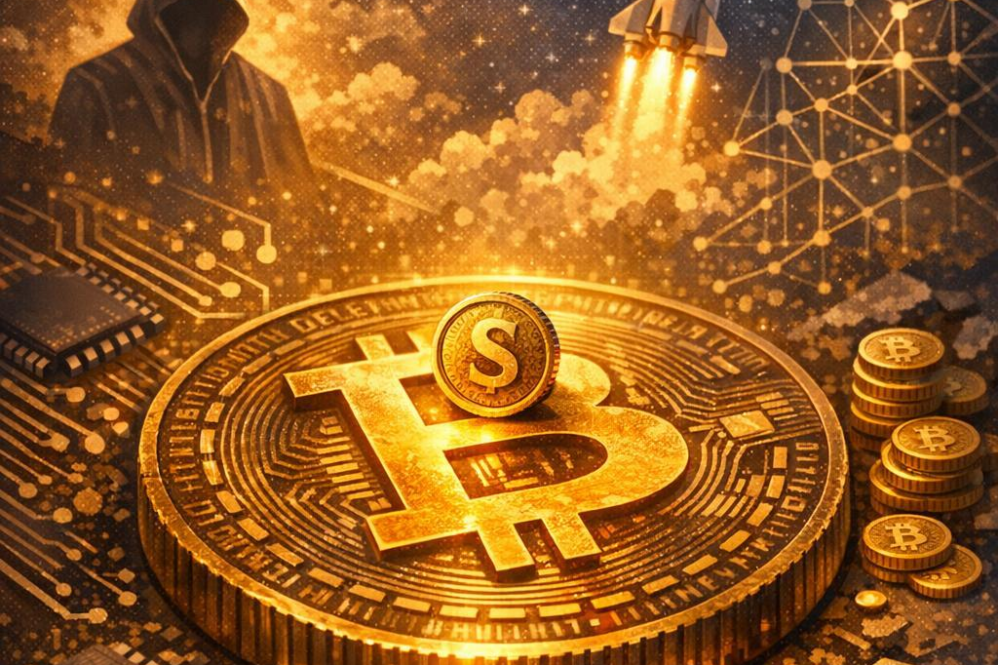
the Origin and significance of the Satoshi in bitcoin Economy
The concept of the Satoshi is deeply intertwined with the origins of bitcoin itself. Named after bitcoin’s enigmatic creator, Satoshi nakamoto, this unit represents the smallest divisible segment of a bitcoin, equating to one hundred millionth (0.00000001 BTC). This granularity was deliberately designed to allow bitcoin to function efficiently as a medium of exchange, facilitating micro-transactions and paving the way for a scalable digital economy. By acknowledging the creator in its smallest unit, the currency embodies both technical innovation and a tribute to the pioneering vision behind it.
Understanding the significance of the Satoshi extends beyond mere decimal points—it symbolizes the accessibility and democratization of digital wealth. Unlike conventional currencies, where fractional units often hold diminishing practical value, the Satoshi enables a system where users can transact in extremely small amounts without losing value. This is notably crucial for emerging markets and online economies,where affordability and inclusivity drive adoption. The Satoshi thus acts as the foundational building block,ensuring bitcoin’s flexibility across diverse financial contexts.
Below is a concise comparison showcasing the practical scale between whole Bitcoins and Satoshis, illustrating their relevance in everyday transactions:
| Unit | Value in BTC | Use Case |
|---|---|---|
| 1 bitcoin (BTC) | 1.00000000 | Large investments, savings |
| 1 Satoshi | 0.00000001 | Micropayments, tipping, micro-transactions |
- Precision: Enables payments with accuracy down to one hundred millionth of a bitcoin.
- Scalability: Supports bitcoin’s potential for global use in everyday commerce.
- Tribute: Honors the mysterious inventor behind the blockchain revolution.
Understanding the Technical Definition and Value of a Satoshi
In the complex ecosystem of bitcoin, the satoshi stands as a fundamental building block, representing the smallest indivisible unit of the cryptocurrency. Precisely, one satoshi equals 0.00000001 BTC, which means a single bitcoin can be subdivided into 100 million satoshis. This level of granularity is crucial for facilitating microtransactions, enhancing bitcoin’s versatility beyond large-scale trades. It also underscores the inherent flexibility embedded in the blockchain’s protocol, allowing users to transact in minute, precise amounts without losing value due to rounding errors.
Beyond its technical role, the satoshi carries immense symbolic value. Named in tribute to bitcoin’s pseudonymous creator, Satoshi Nakamoto, this unit embodies the innovation and cryptographic principles that underpin the digital currency movement. While the true identity of Nakamoto remains one of the greatest mysteries in tech history, the coinage of his name into the currency’s structure immortalizes his contribution.For many in the cryptocurrency community, using satoshis rather of whole bitcoins also signifies a deeper connection to the core philosophy of decentralization and digital empowerment.
| Unit | Value in BTC | Decimal Representation |
|---|---|---|
| 1 bitcoin (BTC) | 1 | 1.00000000 |
| 1 Million satoshis | 0.01 | 0.01000000 |
| 1 Thousand satoshis | 0.00001 | 0.00001000 |
| 1 satoshi | 0.00000001 | 0.00000001 |
- Liquidity and precision: The satoshi allows bitcoin to be highly divisible, fostering broader usability.
- Symbolic honor: Naming the smallest unit after the creator preserves the origin story.
- Practical adoption: Enables seamless micropayments in real-world applications and online services.
The Role of the Satoshi in Enhancing bitcoin’s Accessibility
By breaking down bitcoin into the satoshi — the smallest divisible unit equivalent to 0.00000001 BTC — the cryptocurrency becomes far more accessible to a diverse range of investors and users. This granular denomination allows for microtransactions, empowering individuals to transact with precision nonetheless of their financial capacity. The flexibility of using satoshis facilitates the adoption of bitcoin in everyday purchases, making the currency practical for both small and large-scale applications.
- micro-Investment Amiable: Encourages new users with limited funds to participate in the bitcoin ecosystem.
- Enhanced Transaction Versatility: Supports everything from online tipping to large institutional trades.
- Global Accessibility: Overcomes barriers of conventional financial systems by enabling fractional ownership.
| Unit | Value in BTC | Practical Use |
|---|---|---|
| bitcoin (BTC) | 1 | Large investments and holdings |
| mBTC (MilliBitcoin) | 0.001 | Everyday purchases and small transactions |
| Satoshi | 0.00000001 | Ultra-microtransactions and precise payments |
Implications of the Satoshi for Micropayments and Cryptocurrency Adoption
The introduction of the satoshi, as the smallest divisible unit of bitcoin, revolutionizes the potential for micropayments in digital economies. By enabling transactions as minuscule as one hundred-millionth of a single bitcoin, this unit allows for seamless exchanges of value that were previously impractical with traditional currencies. This granular divisibility not only reduces friction in everyday small transactions but also opens pathways for innovative applications, such as pay-per-use services, micro-tipping, and content monetization at unprecedented scales.
Key advantages fostered by the satoshi include:
- Enhanced accessibility: Users can engage with cryptocurrency without committing large sums, lowering entry barriers.
- Cost efficiency: Reduced transaction fees make low-value payments economically viable.
- Expanded use cases: Digital content creators, IoT devices, and online platforms can implement flexible monetization strategies.
| Micropayment Scenario | Benefit from Satoshi | Potential impact |
|---|---|---|
| Streaming Services | Pay-per-second billing | Higher user satisfaction, reduced subscription overhead |
| Content Tips | Micro-tipping with minimal fees | Increased creator revenue, community engagement |
| IoT Payments | Automated micro-transactions | Efficient device-to-device commerce |
Strategies for Investors to leverage Satoshi Units in Portfolio Diversification
Investors looking to optimize their portfolios should consider integrating Satoshi units as a means to fine-tune exposure to bitcoin without committing large capital upfront. As one bitcoin comprises 100 million Satoshis, these minuscule units offer flexibility, enabling entry at various price points.This granular approach allows for precise risk management and the ability to micro-manage asset allocation in volatile markets.
Key advantages include:
- Affordability: Enables incremental investments for those with limited capital
- Diversification: Facilitates spreading exposure across multiple strategies and holdings
- Liquidity: Simplifies transactions and portfolio rebalancing with smaller denominations
- Access: Opens bitcoin investing to a broader audience, including retail investors
Consider the following illustrative table showing how portfolio diversification can be adjusted through fractional Satoshis exposure in comparison to whole bitcoin units:
| investment approach | bitcoin Units (BTC) | satoshi Units (SAT) | Portfolio Allocation (%) |
|---|---|---|---|
| Conservative | 0.1 BTC | 10,000,000 SAT | 5% |
| balanced | 0.5 BTC | 50,000,000 SAT | 20% |
| Aggressive | 1 BTC | 100,000,000 SAT | 40% |
| Micro-Investor | 0.01 BTC | 1,000,000 SAT | 2% |
By leveraging Satoshi units, investors unlock a level of precision and accessibility in portfolio construction that traditional bitcoin ownership cannot offer.Such strategic division fosters an adaptive investment style suited to evolving market dynamics and personal financial goals.
Future Prospects and Challenges Facing the Satoshi in Digital Finance Systems
As digital finance systems evolve, the satoshi remains pivotal in facilitating microtransactions and enhancing bitcoin’s scalability. Its ability to represent minute fractions of bitcoin allows users to participate in smaller-scale trades,broadening accessibility and increasing the cryptocurrency’s practical usability. With the growing adoption of micropayment models in diverse sectors such as content monetization, gaming, and IoT (Internet of Things), the satoshi’s significance is expected to deepen, enabling seamless value exchange without conventional financial intermediaries.
However, the future landscape presents distinct challenges that must be addressed to sustain the satoshi’s role:
- Maintaining transactional efficiency while dealing with blockchain scalability constraints.
- Ensuring security and privacy in microtransaction processes.
- Adapting regulatory frameworks to accommodate fractional digital assets without stifling innovation.
| Aspect | Opportunity | Challenge |
|---|---|---|
| Scalability | Supports widespread micro payments | Blockchain congestion risks |
| Regulation | Potential for increased adoption | Ambiguous legal frameworks |
| Technology | Integration with IoT and smart contracts | Security vulnerabilities at scale |
Strategic innovations in layer-2 solutions, such as the Lightning Network, emphasize the need for continuous technical advancement to mitigate these challenges. The satoshi’s adaptability will be instrumental in shaping how future decentralized finance ecosystems operate, balancing the delicate interplay between accessibility, security, and regulatory compliance. Ultimately, its journey reflects the broader technological and economic shifts defining modern digital finance.

![Bitcoin [btc]: higher btc price brings more btc scams?](https://ohiobitcoin.com/wp-content/uploads/2019/05/fake-app-proof.jpg "Bitcoin [btc]: higher btc price brings more btc scams?")
