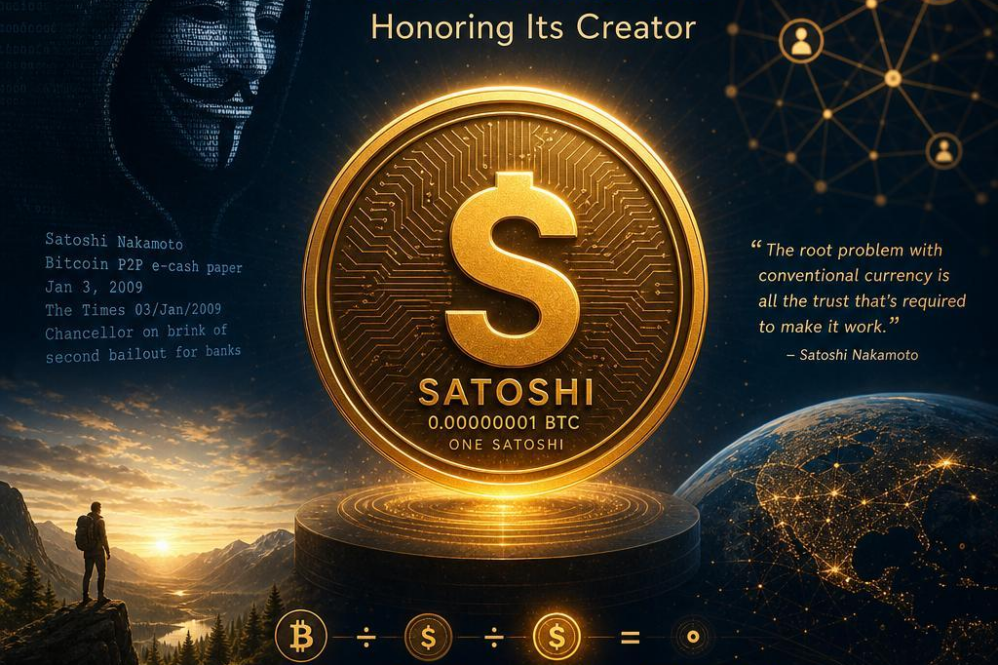
Understanding the Origin and Definition of the Satoshi in bitcoin
at the very core of bitcoin’s structure lies a unit so basic, yet often overlooked: the Satoshi. This smallest subdivision of bitcoin is named after the pseudonymous creator of bitcoin, Satoshi Nakamoto, symbolizing a tribute to the enigmatic figure behind the revolutionary technology. One Satoshi represents 0.00000001 BTC, highlighting the digital currency’s capacity to be divided into incredibly fine increments, thereby facilitating microtransactions and expanding bitcoin’s usability across diverse economic contexts.
Understanding the origin of the Satoshi is essential for appreciating bitcoin’s design beliefs. When bitcoin was introduced in 2009, it was envisioned as a peer-to-peer electronic cash system that could enable small, fastand cost-effective transfers without the intervention of banks or middlemen. The decision to define bitcoin with up to eight decimal places was a deliberate engineering choice, anticipating future growth in value and usage. This level of divisibility ensures that bitcoin remains practical even if its price rises substantially,safeguarding its long-term utility.
To put the Satoshi into outlook, consider the following quick reference table illustrating the relationship between common bitcoin denominations:
| Unit | Equivalent in BTC | Satoshis |
|---|---|---|
| 1 bitcoin (BTC) | 1 | 100,000,000 |
| 1 millibitcoin (mBTC) | 0.001 | 100,000 |
| 1 microbitcoin (μBTC) | 0.000001 | 100 |
| 1 Satoshi | 0.00000001 | 1 |
- Divisibility: Enables bitcoin to cater to a wide range of transaction sizes.
- Legacy: Honors the anonymous innovator behind the bitcoin protocol.
- Practicality: Keeps bitcoin functional even as adoption and value scale up dramatically.
Exploring the Technical Significance of the Satoshi in Blockchain Transactions
The satoshi stands as the fundamental building block within the bitcoin ecosystem,representing the smallest divisible unit of the cryptocurrency-one hundred millionth of a bitcoin (0.00000001 BTC). This granularity not only facilitates precise and flexible financial transactions but also enhances the scalability of the network by allowing microtransactions previously impractical with customary currency systems. Effectively, the satoshi enables bitcoin to transcend its role as a digital asset and operate as a veritable medium of exchange in everyday commerce.
From a technical standpoint, the satoshi’s significance is multifaceted:
- It empowers layer-two solutions and off-chain protocols, such as the Lightning Network, by enabling near-instant, low-fee payments even at the smallest scale.
- Transaction fees are calculated based on satoshis per byte, tying network incentives directly to the smallest unit and optimizing miner rewards in accordance with network congestion.
- Addressing wallets and blockchain explorers reference balances and fees in satoshis, ensuring consistency and transparency in user interactions.
| Unit | Value in BTC | Common Use |
|---|---|---|
| bitcoin (BTC) | 1 | Standard for large transactions |
| mBTC (MilliBitcoin) | 0.001 | Everyday payments and pricing |
| Satoshi (sat) | 0.00000001 | Microtransactions and fee measurement |
The adoption of the satoshi extends beyond mere technical utility; it symbolizes the precision and innovation inherent in bitcoin’s protocol. By honoring its creator through this nomenclature, the community not only acknowledges the invention’s origins but also embraces a currency system originally designed to serve decentralized, trustless transactions at all scales.
The Role of the Satoshi in Enhancing bitcoin’s Accessibility and Usability
The satoshi serves as the foundational unit that allows bitcoin to function as a truly divisible and flexible currency.By breaking down one whole bitcoin into 100 million smaller units, users can engage in transactions of any size-ranging from micro-payments to large-scale transfers. This granularity is essential for enhancing bitcoin’s accessibility, especially in environments where fractions of a bitcoin hold notable value. Without such a subdivided unit, the practicality of using bitcoin for day-to-day purchases and small exchanges would be severely limited.
Furthermore, the existence of the satoshi streamlines usability by simplifying complex calculations and wallet interfaces. End users, merchants, and developers benefit from interpreting values in smaller denominations without the need to manipulate unwieldy decimal numbers. The satoshi enables intuitive pricing models and financial applications by making amounts easier to display, understandand process in real-time transactions. This fosters a smoother, frictionless experience that encourages wider adoption among both novices and seasoned crypto users alike.
Key benefits of the satoshi’s role include:
- Facilitating micro-transactions and tipping online content creators with minimal fees
- Allowing inflation-resistant, highly divisible currency use cases in developing economies
- Improving precision for traders, exchanges, and payment gateways in bitcoin management
| Transaction Type | Example Amount (BTC) | Equivalent in Satoshis |
|---|---|---|
| Micro-tip | 0.000005 BTC | 500 Satoshis |
| coffee purchase | 0.0015 BTC | 150,000 Satoshis |
| Online subscription | 0.025 BTC | 2,500,000 Satoshis |
Analyzing Market Implications and Valuation trends of the Satoshi unit
Understanding the market implications of the Satoshi unit requires a close look at its role in the broader bitcoin ecosystem.As the smallest divisible unit of bitcoin, each Satoshi represents one hundred millionth of a bitcoin (0.00000001 BTC). This extreme granularity enables microtransactions that were previously impractical, expanding bitcoin’s usability beyond large-scale trades to everyday payments. In market terms, the Satoshi enables increased liquidity and flexibility, providing a fine-grained pricing mechanism for assets and services priced in cryptocurrency.
Valuation trends of the Satoshi reflect bitcoin’s price dynamics but also reveal unique characteristics. Unlike bitcoin,whose price tends to be volatile and influenced by macroeconomic factors and regulatory news,the value of a Satoshi frequently enough gains attention in terms of utility and fractional ownership.
Key factors influencing this valuation include:
- bitcoin’s price volatility: as bitcoin rises, the value of each Satoshi naturally increases, encouraging more fractional trading.
- Adoption of microtransactions: Businesses and users accepting Satoshis for small payments drive demand.
- Technological advancements: Layer 2 scaling solutions and payment protocols like the Lightning Network boost transaction efficiency and Satoshi usage.
| Market Aspect | Impact on Satoshi value | Remarks |
|---|---|---|
| bitcoin Price | Direct correlation | Satoshi value fluctuates proportionally |
| Payment Systems | Increased demand | Micro-payments gain traction |
| Regulatory Environment | Potential volatility | Compliance affects trading volume |
Ultimately, as the cryptocurrency market matures, the Satoshi is poised to become a critical unit of account for digital economies. Its adoption not only honors bitcoin’s creator but also embodies the vision of democratizing access to financial transactions at unparalleled levels of precision and efficiency.
Practical Recommendations for Using Satoshis in Everyday bitcoin Transactions
When dealing with bitcoin transactions on a daily basis, using satoshis can enhance both precision and efficiency. instead of transacting whole Bitcoins, breaking down payments into satoshis makes small exchanges more practical and understandable, notably for microtransactions or tipping. This granular approach helps users avoid confusion and adjust payments to the exact value they intend, avoiding overpayments caused by rounding to whole Bitcoins.
To integrate satoshis effectively into your transactions, consider the following strategies:
- Display balances in satoshis: Many wallets and platforms allow you to toggle between BTC and satoshi views. Opting for satoshis helps in visualizing small amounts clearly, especially in retail or service payments.
- Calculate fees in satoshis per byte: Transaction fees can be optimized by understanding fees in terms of satoshis per byte,helping users reduce cost without sacrificing speed.
- Use satoshi-denominated invoices: When invoicing, specifying amounts in satoshis can encourage transparency and simplify calculations for customers unfamiliar with bitcoin’s larger unit.
| Transaction Type | Recommended Unit | Example Amount |
|---|---|---|
| Micro-tipping | Satoshis | 150 satoshis |
| Retail purchase | Satoshis | 25,000 satoshis |
| Subscription payments | Bitcoins (BTC) | 0.005 BTC |
Utilizing satoshis also empowers educational efforts, making it easier to teach newcomers about bitcoin’s scalability and divisibility. As the smallest unit named after bitcoin’s pseudonymous creator, satoshis symbolize the accessibility and precision bitcoin brings to digital currency transactions worldwide.
Future Perspectives on the satoshi and Its Impact on Cryptocurrency Adoption
the Satoshi, as the smallest fractional unit of bitcoin, propels not only micro-transactions but also a broader cultural shift toward financial inclusivity. As digital currencies gain traction globally, these minuscule units enable users in diverse economic environments to participate without the barriers posed by high entry costs. This granular divisibility highlights the promise of cryptocurrency adoption, where even fractions of a coin can represent real value and utility, fostering widespread engagement in the blockchain economy.
Innovations in payment technology are likely to leverage the Satoshi’s precision to enhance transaction efficiency and accessibility. Wallets and exchanges incorporating these units can tailor services for both retail consumers and merchants, supporting micropayments for digital content and services that were previously untenable with traditional finance frameworks. The ripple effect will encourage startups and established businesses alike to reconsider monetary interactions on a smaller scale,cementing the Satoshi’s role as a cornerstone in the evolving economic landscape.
Looking ahead, regulatory frameworks and public perception will considerably influence how the Satoshi shapes cryptocurrency adoption. With increasing clarity and acceptance from governments, these smallest units could facilitate seamless cross-border transactions and remittances, breaking down existing financial silos. Below is a concise overview of potential future impacts:
| Impact Area | Potential Benefit | Challenges |
|---|---|---|
| Micropayments | Enables new business models for digital goods | Transaction fee optimization |
| Financial Inclusion | Access for underbanked populations | Infrastructure growth |
| Regulatory Acceptance | Legal clarity boosts confidence | Compliance complexities |
- Microtransactions: Expand feasible payment methods to tiny denominations.
- Global Reach: Facilitate cross-border remittances with minimal friction.
- Technological Growth: Push further development in blockchain scalability and security.