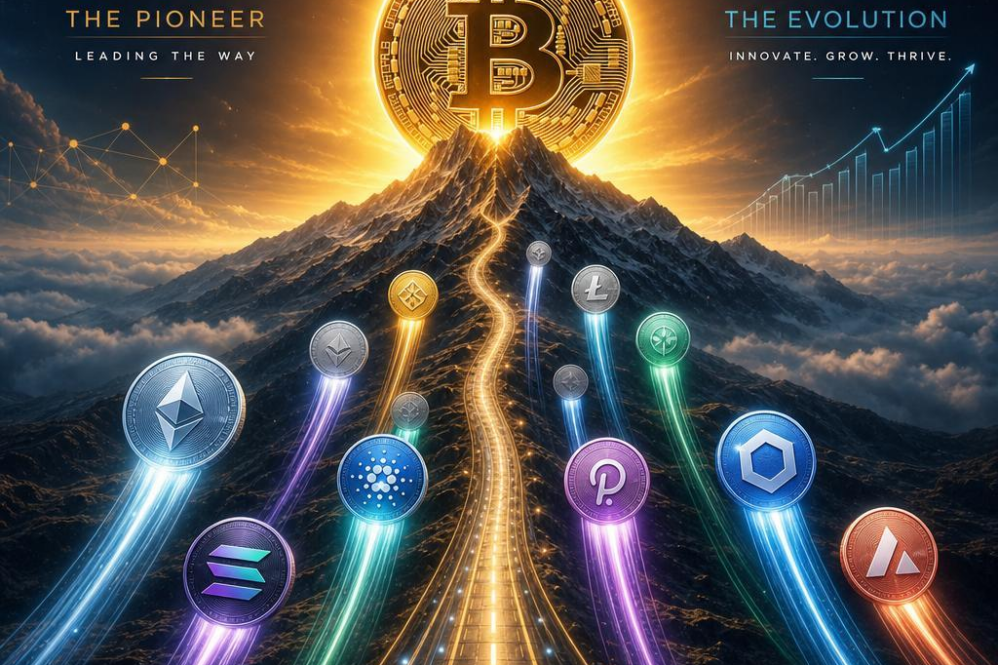
The Genesis of Altcoins and bitcoin’s Foundational Role
At the heart of the cryptocurrency revolution lies a monumental innovation that forever altered the financial landscape: bitcoin. Conceived by the enigmatic Satoshi Nakamoto in 2008, bitcoin introduced a decentralized digital ledger – the blockchain – that empowered peer-to-peer transactions without intermediaries. This groundbreaking mechanism established not only a new form of currency but a robust foundation upon which a myriad of digital assets could be constructed.
As bitcoin’s adoption grew, so did the appetite for alternatives that could either improve upon its limitations or serve niche applications. This burgeoning interest sparked the creation of altcoins-digital currencies that experimented with diverse features such as enhanced privacy, faster transaction speedsand programmable smart contracts. Each altcoin, while distinct, owed its conceptual blueprint to bitcoin’s pioneering architecture, proving that innovation in the crypto sphere is an evolutionary process built on foundational breakthroughs.
Key bitcoin Contributions to Altcoin Advancement:
- Introduction of blockchain as a decentralized trust mechanism
- Proof-of-Work consensus protocol inspiring various mining models
- Open-source codebases facilitating experimentation and forks
- Establishment of a community-driven approach to governance
| Feature | bitcoin’s Role | Altcoin Innovation |
|---|---|---|
| Consensus | Proof-of-Work (PoW) | Proof-of-Stake (PoS), Delegated PoS |
| Transaction Speed | ~10 minutes/block | Seconds/block (Litecoin, Ripple) |
| Privacy | Transparent ledger | zero-Knowledge Proofs, Ring Signatures |
| Programmability | Limited scripting | Smart contracts (Ethereum) |
Technological Innovations Sparked by bitcoin’s Blockchain
bitcoin’s blockchain laid the groundwork for a decentralized ledger system that transcended traditional financial boundaries. This innovation spurred an entire ecosystem of technological advancements that have transformed multiple industries. One of the key breakthroughs has been the development of smart contracts,self-executing agreements embedded directly into the blockchain code.These allow for automated, trustless transactions without intermediaries, influencing projects ranging from decentralized finance (DeFi) to real estate and supply chain management.
Another profound impact has been the rise of consensus mechanisms inspired by bitcoin’s proof-of-work (PoW) model. Innovators have engineered new algorithms such as proof-of-stake (PoS) and delegated proof-of-stake (DPoS), optimizing energy consumption and transaction speed without sacrificing security. This evolution reflects a deeper understanding of blockchain’s potential beyond cryptocurrency, enabling scalable, efficient networks that support complex decentralized applications (dApps).
| Technological Innovation | Primary Impact | Example Request |
|---|---|---|
| Smart Contracts | Automated Transactions | Decentralized Finance |
| Proof-of-Stake | Energy Efficiency | Ethereum 2.0 |
| Layer 2 Solutions | Increased Scalability | Lightning Network |
- Decentralization: strengthening security and transparency across platforms.
- Tokenization: Digitizing assets and enabling new business models like NFTs.
- Interoperability: Facilitating communication between disparate blockchain networks.
Diverse Use Cases Driving Altcoin Popularity
As the cryptocurrency landscape matures, altcoins have carved out notable niches by addressing specific problems that bitcoin’s original vision leaves untouched.Their appeal lies in tailored functionalities that cater to diverse sectors, from decentralized finance (DeFi) protocols enabling peer-to-peer lending and yield farming, to blockchain networks optimized for high-speed transactions and scalability. This focus on specialized use cases has attracted developers and investors alike, fueling innovation beyond bitcoin’s foundational role as digital gold.
key applications driving altcoin adoption include:
- Smart Contract Platforms: Cryptocurrencies like Ethereum, Solanaand Avalanche empower developers to build decentralized applications (dApps), transforming industries such as gaming, supply chainand insurance.
- Privacy-Focused Coins: Altcoins such as Monero and Zcash provide enhanced anonymity features appealing to users prioritizing confidentiality in transactions.
- Stablecoins: Designed to minimize volatility, stablecoins like USDC and DAI facilitate seamless digital payments and remittances within both traditional and crypto ecosystems.
| Altcoin Category | representative Coin | main Feature | Typical Use |
|---|---|---|---|
| DeFi | UNI (Uniswap) | Decentralized Exchange | Trading without intermediaries |
| Privacy | Monero (XMR) | Transaction Anonymity | Secure private payments |
| Smart Contracts | Ethereum (ETH) | Programmable Contracts | dApp development |
| Stablecoin | USDC | Price Stability | Medium of Exchange |
Analyzing Market Trends and Altcoin Performance Metrics
decoding the subtle shifts within the cryptocurrency market requires a careful examination of altcoin performance metrics alongside broader market trends. Volume fluctuations, market capitalization shiftsand relative liquidity serve as critical indicators that reveal investor interest and confidence levels.Altcoins often experience episodic surges in volume which can be precursors to larger market movements, especially when these movements correlate with major bitcoin trends.
The influence of bitcoin as a market pioneer cannot be overstated; it sets a reference point for value and reliability against which altcoins are evaluated. By contrasting key metrics such as price volatility, transaction speedand decentralization features, analysts can derive essential insights into an altcoin’s potential viability and risk.For example, altcoins with faster confirmation times and active development communities frequently outperform peers during bullish cycles, reflecting a dynamic ecosystem responsive to technological advancements.
| Metric | bitcoin | Typical Altcoin | Impact on Market Trends |
|---|---|---|---|
| Market Cap | Largest in crypto | Varies widely | Drives investment flow |
| Price Volatility | Moderate | High | Investor risk perception |
| Transaction speed | ~10 min/block | Seconds to minutes | Appeals to microtransactions |
| Development Activity | Steady and mature | Often innovative | Market adaptability |
By monitoring these quantitative signals alongside qualitative market sentiment, traders and investors are better equipped to predict potential momentum swings. The continuous evolution in altcoin technology and market structure, influenced heavily by bitcoin’s trajectory, underscores the importance of integrating diverse data points for a comprehensive market analysis.
Regulatory Challenges and Compliance Recommendations
As altcoins surge in diversity and popularity, regulatory frameworks worldwide face unprecedented pressure to adapt swiftly. Governments and financial watchdogs are challenged to establish clear guidelines without stifling innovation. Central to this is ensuring transparency around altcoin issuance and trading activities, with a strong emphasis on protecting investors from fraud and market manipulation. Regulators must strike a balance between fostering a secure financial environment and enabling the burgeoning decentralized finance ecosystem.
Compliance in the altcoin space necessitates robust No Your Customer (KYC) and Anti-Money Laundering (AML) protocols tailored to the unique characteristics of blockchain technology. Investors and issuers alike benefit from standardized verification practices that mitigate risks associated with anonymity and cross-border transactions. Adopting technology-driven compliance solutions, such as AI-based transaction monitoring and smart contract audits, enhances regulatory oversight without compromising efficiency.
| Compliance Aspect | Challenge | Recommended Strategy |
|---|---|---|
| Transparency | Opaque token issuance | Mandatory disclosure of tokenomics and team credentials |
| Investor Protection | High volatility and scams | Enhanced risk warnings and regulatory sandbox testing |
| Cross-Border Regulation | Jurisdictional conflicts | International regulatory collaboration and harmonization |
Ultimately, crafting adaptive and forward-thinking regulations ensures that the altcoin market matures responsibly.Encouraging collaboration between innovators, regulatorsand industry leaders creates a resilient framework that promotes sustainable growth. This approach not only safeguards the public interest but also reinforces the pioneering spirit that bitcoin ignited across the cryptocurrency landscape.
Strategic Investment Approaches in the Altcoin Ecosystem
Investors seeking to navigate the altcoin ecosystem benefit from adopting a meticulously crafted strategy, balancing innovation with risk mitigation. A core approach involves diversification across sectors such as DeFi, NFTsand Layer 2 solutions, capitalizing on growth trends without overexposing portfolios to a single category. By analyzing project fundamentals and community strength, investors can pinpoint altcoins with sustainable development roadmaps and active engagement, essential criteria for long-term value retention.
Another impactful strategy is phased entry and exit timing,leveraging market sentiment and technical analysis tools to optimize buy and sell decisions. This approach promotes disciplined investment, avoiding impulsive moves driven by market hype. Seasonal trends and bitcoin’s price momentum serve as critical indicators, often signaling when altcoins may experience volatility or bullish phases. Effective timing enhances returns while curbing downside risks.
a growing segment of investors embraces staking and yield farming as complementary mechanisms within altcoin portfolios.These practices not only generate passive income but also foster deeper ecosystem participation, often leading to preferential benefits like governance voting rights or early access to new features. Understanding the interplay between liquidity provision, reward structuresand smart contract risks is vital before committing ample capital to these protocols.
| Investment Approach | Key Focus | Primary Benefit |
|---|---|---|
| Diversification | Sector & Project Variety | Risk Mitigation |
| Phased Timing | Market Sentiment & Technicals | Optimized Entry/Exit |
| Staking/Yield Farming | Passive Income & Ecosystem Involvement | Additional Rewards |

