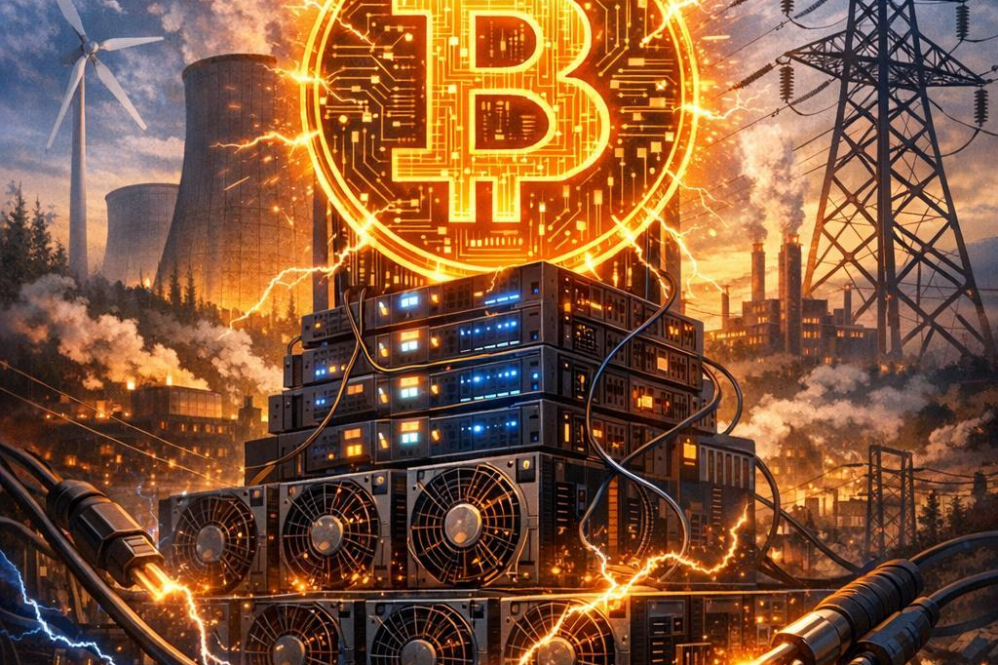
The Fundamentals of bitcoin Mining and Its Energy Requirements
bitcoin mining operates thru a decentralized network of computers solving complex mathematical problems to validate transactions and secure the blockchain. This process, known as proof of work, demands notable computational power, which directly translates to considerable energy consumption. Each mining device competes to be the first to solve these problems, with energy consumption scaling proportionally to the network’s overall hash rate. Consequently, as more miners participate and hardware becomes more efficient, total electricity usage continues to climb.
To appreciate the scale of energy consumption, consider the typical setup: specialized mining rigs called ASICs (Submission-Specific Integrated Circuits) run non-stop at high processing speeds. These machines can consume anywhere from 1,200 to over 3,000 watts each. When thousands or even millions of such devices are aggregated globally, the cumulative electricity demand reaches levels comparable to that of some small countries. This demand is frequently enough measured in terawatt-hours (TWh) annually, underscoring the massive environmental footprint associated with bitcoin mining.
| factor | Impact on Energy Use |
|---|---|
| Hardware Efficiency | Higher efficiency reduces energy per hash but total use may rise |
| Network Difficulty | Increases with more miners,raising power needs |
| Geographic Location | Access to cheap,often non-renewable energy sources |
| Operational Time | Mining runs 24/7,causing continuous energy drain |
- Energy Efficiency Innovations: Efforts to develop more energy-efficient mining machines and switch to lasting power sources are ongoing but face challenges due to profit-driven incentives.
- Environmental Concerns: The high electricity demand raises questions about carbon footprints and the duty of cryptocurrency networks to offset their impact.
- Regulatory Responses: Some regions have enacted policies aimed at limiting or redirecting mining efforts towards greener alternatives to curb excessive energy use.
Factors Driving the Escalation of Electricity Consumption in bitcoin Mining
One of the primary reasons for soaring electricity consumption in bitcoin mining is the complexity of cryptographic computations. Miners compete to solve intricate mathematical puzzles that secure the blockchain and validate transactions-a process known as Proof of Work.As bitcoin’s network difficulty rises to maintain a consistent block time, miners must deploy increasingly powerful hardware to stay competitive, which inevitably leads to higher energy usage. This continuous arms race for computational power is a central driver behind the sector’s escalating electricity demands.
Additionally, bitcoin mining operations frequently enough scale up to industrial levels, with large warehouses brimming with thousands of machines running 24/7.The sheer volume of mining rigs amplifies electricity consumption exponentially compared to small-scale operations. These data centers require not only power for the mining devices themselves but also substantial energy for cooling systems to prevent overheating, pushing overall consumption even higher.
- Rising network difficulty and mining competition
- Expansion of industrial-scale mining facilities
- Continuous operation requiring constant cooling
| Factor | Impact on Electricity Use |
|---|---|
| Mining Hardware Efficiency | More powerful but energy-intensive |
| Cooling Systems | Up to 40% of total energy consumed |
| Operational Scale | Thousands of devices running nonstop |
Comparative Analysis of Energy Usage Across Different Types of Mining Operations
Electricity consumption in mining operations varies drastically depending on the nature of the resource being extracted and the technology employed. bitcoin mining, unlike conventional mining methods for metals or minerals, is an entirely digital process that demands vast computational power. The core reason behind high energy usage in bitcoin mining lies in the cryptographic puzzle-solving work performed by specialized hardware,known as ASICs. These devices run continuously at maximum capacity to validate blockchain transactions, resulting in a consistent and sizable electricity footprint.
When comparing energy demands, traditional mining typically involves heavy machinery, ventilation systems, and material transport, which are inherently energy-intensive but operate intermittently and across diverse sites. In contrast,bitcoin mining facilities often cluster thousands of high-performance machines in a confined space.such setups necessitate not only the immense power to run the miners but also robust cooling systems to dissipate the heat generated, further amplifying overall electricity consumption. The continuous operation model without downtime differentiates this digital mining from the cyclical patterns seen in conventional extraction industries.
| Mining Type | Primary Energy Use | Energy Intensity | Operational Cycle |
|---|---|---|---|
| bitcoin Mining | computational Power (ASICs) | Extremely High (24/7 Operation) | Continuous |
| gold Mining | Heavy Machinery, Ventilation | high (Intermittent) | Cyclical/Shift-Based |
| Coal Mining | Extraction Equipment, Safety Systems | Moderate to High | Shift-Based |
| Diamond Mining | Excavation & Processing | Moderate | Variable |
- Operational Continuity: bitcoin mining operates nonstop, unlike most physical mining operations.
- Energy Profile: Traditional mining consumes electricity for mechanical and environmental control, while bitcoin mining focuses on electronics and cooling.
- Site Concentration: bitcoin mining centralizes its energy load, making it easier to quantify but challenging to reduce.
Environmental and Economic Consequences of High Energy Demand in bitcoin Mining
The surging demand for electricity in bitcoin mining stems from the intensive computational processes required to verify transactions and secure the blockchain. This continuous operation involves thousands of specialized machines, known as ASICs, running non-stop to solve complex cryptographic puzzles. Globally, these operations consume vast amounts of power, often rivaling the electricity consumption of entire countries, thereby placing significant pressure on local energy grids and resources.
From an environmental viewpoint, the intensive energy consumption intensifies carbon emissions, especially when the electricity is derived from fossil fuels. The rapid expansion of mining farms in regions reliant on coal, natural gas, or oil has exacerbated global warming concerns. Moreover, the high electricity use contributes to resource depletion and increases pollution levels, making bitcoin mining a contentious issue within sustainability debates.
| Impact Category | Details |
|---|---|
| Carbon Footprint | High emissions due to fossil fuel energy sources |
| Economic Strain | Increased energy costs impacting consumers and industries |
| Resource Use | Intense demand depleting regional power supplies |
Economically, while bitcoin mining generates profits and incentives for technological innovation, it also raises energy costs in affected regions. The high draw on electricity can prompt utilities to increase prices, burdening both residential and commercial users.Energy-intensive mining operations may also divert power away from critical infrastructure or communities, leading to instability and conflicts over resource allocation. Policymakers and industry leaders continue to explore balancing the economic benefits against these environmental and societal costs.
Innovative Technologies and Strategies to Mitigate Electricity Consumption
“`html
The escalating electricity consumption tied to bitcoin mining has accelerated the need for innovative technological solutions to curb its environmental impact. One prominent approach lies in the adoption of energy-efficient mining hardware. Advanced application-specific integrated circuits (ASICs) designed for mining optimize processing power per watt, thereby reducing the overall energy demand without sacrificing performance. Additionally, integrating renewable energy sources such as solar and wind into mining operations not only offsets carbon footprints but also stabilizes electricity costs amid fluctuating grid prices, proving to be an astute economic and ecological strategy.
Strategically located mining farms are pioneering the use of waste heat recovery systems. these systems capture the heat generated by mining rigs and repurpose it for heating nearby buildings or powering other industrial processes, effectively converting what was once a waste product into a valuable resource. Moreover, dynamic load balancing techniques allow mining operations to modulate their power consumption based on grid availability, contributing to overall grid stability and reducing peak demand stress. Such methods reflect a elegant synergy between digital asset mining and smart grid technology.
| Innovation | Key Benefit | Implementation Example |
|---|---|---|
| High-efficiency ASICs | lower power consumption per hash | Bitmain Antminer S19 XP |
| Renewable Energy Integration | Reduced carbon footprint | Solar-powered mining farms in Texas |
| Waste Heat Utilization | Heat recycling into other uses | Mining facility in Iceland heating greenhouses |
| Dynamic Load Balancing | Grid load optimization | Demand-response based mining in Canada |
Policy Recommendations for Sustainable and Responsible bitcoin mining practices
To address the immense energy consumption associated with bitcoin mining,policy frameworks must incentivize the adoption of renewable energy sources. Governments can implement tax credits and subsidies for miners who utilize solar, wind, or hydroelectric power, reducing reliance on fossil fuels. additionally, creating clear guidelines for carbon emissions disclosures will increase transparency and pressure operators to minimize their environmental footprint.
Establishing stricter regulations concerning geographic mining distribution can also improve sustainability. As a notable example, encouraging mining operations to locate where renewable energy is abundant or where excess energy capacity exists helps balance demand without straining local power grids. Policymakers should also encourage the progress of smart grid technologies that allow dynamic energy allocation based on real-time supply and demand, maximizing efficiency.
Beyond energy sourcing and location, mandatory standards for mining equipment efficiency could drive innovation towards less power-hungry hardware. Policies might include minimum performance benchmarks combined with phase-out timelines for obsolete, energy-intensive devices. Below is a simplified comparison of energy efficiencies for typical mining rigs versus proposed efficiency standards:
| Mining Rig Model | Power Consumption (Watts) | Efficiency Standard (Watts/TH) |
|---|---|---|
| Model A (Current) | 3000 W | N/A |
| Model B (Current) | 2800 W | N/A |
| Proposed Standard | ≤ 2500 W | ≤ 30 W/TH |