
Tom Goldenberg is chief technology officer at , a combined stock and crypto trading platform providing investors with automated trade recommendations and rebalancing tools.
The New York Times economist Paul Krugman keeps bashing bitcoin. Why would you trade such a volatile asset, he asks, if it ?
“So, bitcoin just lost half its value. Where does it now stand relative to its fundamentals? Hard to say, because there aren’t any fundamentals. More than ever, this looks like a pure bubble.”
Let’s take a step back. How important are fundamentals to investing? When dealing with public stocks, we have access to a broad array of company data — revenue growth, price-to-earnings ratio, etc.
From my own observation, I’ve seen that while fundamentals can be useful, they usually aren’t enough to decide which stocks to trade.
A few months ago, I saw that a trader on the investment-algorithm platform Quantopian to build a successful trading strategy with only fundamental data. The results were disappointing.
The resultant strategy underperformed the S&P 500 by 155 percent, prompting feedback from a moderator:
“Purely fundamental-based strategies tend to have long predictive horizons on the factors. Their infrequent nature makes them hard to evaluate as you’d have to wait years to develop enough sample points.”
In other words, fundamentals are good, and there are surely some good strategies that use them. But many professional traders are looking beyond fundamentals to make trading decisions. So, the absence of traditional fundamentals from crypto shouldn’t by itself be a deal-breaker.
Pricing data
Another way of assessing an asset’s risk and potential reward is by looking at historical price data. We can do this with stocks as well as cryptocurrencies such as bitcoin and ethereum.
A key term when it comes to assessing price data is the . This is a score of the asset’s return on investment over its volatility. The goal is to maximize this value. A good Sharpe ratio should be above 1.0, usually.
Because all of the cryptocurrencies have seen such massive returns, their Sharpe ratios will also be above 1.0, generally. However, some are more volatile than others. Using the Sharpe ratio as a tipping point, we can determine what the best blend of crypto assets is for a preferred level of volatility.
This is similar to how portfolio managers determine how to divide a portfolio into buckets of U.S. equity, foreign equity, and bonds. The right blend will minimize volatility for a desired return rate.
My business partner and I performed this type of analysis on a group of crypto assets, and found target allocations for each of the assets. If you’re interested in doing this, there is a pretty good explanation .
However, what we realized when we talked to more experts is that our research had some gaping holes.
For one, most cryptocurrencies don’t have a very long history, meaning that the data is likely to be inconsistent.
Also, we noticed that all crypto assets were highly correlated with one another, something that was seen again in the latest crypto dip. Because of the high correlation, it would be hard to advise a particular allocation of assets.
Alternative ways of valuing crypto
Leaders in the crypto space are seeking alternative means of assessing a cryptocurrency’s fundamental value.
Fred Wilson, a prominent crypto investor, :
“You need to have some fundamental theory of value and then apply it rigorously.”
Some current fundamentals being proposed for crypto assets are:
- (NVT) — this measures the amount of traded volume as an indicator of how actively used it is
- Daily active users (alternatively, daily active addresses, or DAA) — how many users use the crypto asset in transactions on a monthly basis?
- Supply-demand economics applied to crypto assets via
Qualitative analysis
Finally, when we think about longstanding cryptocurrencies like bitcoin or newer initial coin offerings (ICOs) and altcoins, there is always qualitative assessment. This means different things for different people.
Some avid crypto traders claim that they have the key traits to look for. These can include:
- Looking at the core team behind the project and assessing their suitability to solving the particular problem
- Looking at the white paper behind the token or crypto asset and assessing whether the proposed problem and solution make sense
- Seeing how other blockchain enthusiasts speak about the project, including crypto experts
Ultimately, these are not foolproof, though. Some crypto influencers have started offering “ to companies, and many shill endorsements in exchange for some kickback.
My partner and I were even approached by someone who thought we should do an ICO. In his explanation, he explained how to present all of these aspects in the right way. Then he closed, “The blockchain part is not that hard. I can show you info.” Caveat emptor.
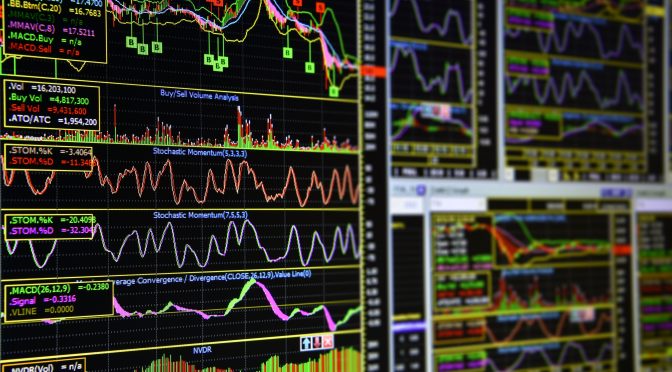
Image via .
The leader in blockchain news, CoinDesk strives to offer an open platform for dialogue and discussion on all things blockchain by encouraging contributed articles. As such, the opinions expressed in this article are the author’s own and do not necessarily reflect the view of CoinDesk.
For more details on how you can submit an opinion or analysis article, view our or email news@coindesk.com.
Disclaimer: This article should not be taken as, and is not intended to provide, investment advice. Please conduct your own thorough research before investing in any cryptocurrency.
Published at Thu, 15 Feb 2018 03:45:27 +0000
Markets[wpr5_ebay kw=”bitcoin” num=”1″ ebcat=”” cid=”5338043562″ lang=”en-US” country=”0″ sort=”bestmatch”]