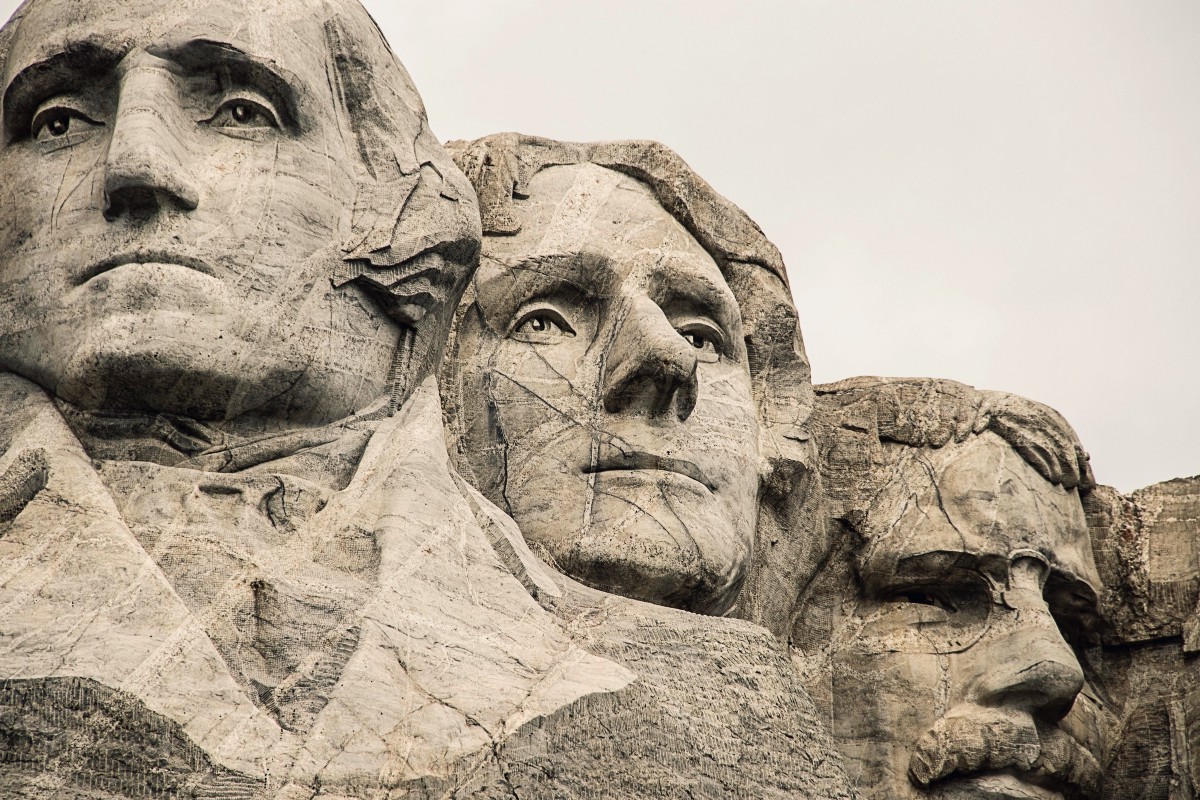
In 1787, a group of 55 men gathered in Philadelphia for a convention. They had a challenge on their hands. Their fledgling democracy and its governance model was not working.
It needed an upgrade.
Each participant came with proposals for improvement and ready to debate them. From May to September of that year these men — who became known as the “framers” — engaged in discourse. They eventually reached a consensus.
The new system — replete with more power for the federal government and an innovative method of checks and balances — was ratified by triggering a “hard fork.”
Just two years later, in 1789, all states adopted this new version of governance to be declared the Constitution of the United States.
Today, there is a global movement to create a new decentralized world — devoid of any centralized government. — once a lone wolf in this experiment — is now the grandfather in a growing ancestral tree of .
There are now hundreds of thousands of users, institutions and individuals alike, developers, and operators supporting this tree worth over nearly .
Most of the talk around this tree is about the red-hot rises and chilling drops in value that have taken place over the past three years. But, there is little talk about how governance works in this brave new world.
To be honest, I never gave it much thought until a few weeks ago, I came across the following tweet in Nathaniel Withmore’s Long Read Sunday newsletter.
“Wow. is one of the largest networks and . And, governance has failed?” I had to learn more.
That’s when I started down a rabbit hole to educate myself on how governance works in both and . What I learned was surprising!
Lane’s indictment — and he is not alone — is that ’s governance model is a technocracy and effectively centralized. He believes that only a small group of core developers shape the future of the and it is getting harder to do the job.
In his words,“…the challenges we face today are increasingly non-technical. Core devs don’t want to make these decisions because they feel unqualified, fear legal liability, are conflict avoidant, and prefer just to write code.”
What he means is, ’s governance model needs an upgrade.
Where did this concern about governance come from? Well, it all started with a crisis situation better known as The DAO saga.
A History of “Centralized” Governance
’s bad press started during their first emergency back in 2016. One of the early smart contracts on the platform was . The DAO was the world’s first attempt at a completely automated venture capital firm for crypto projects. The VC would have no central authority and in theory, deliver broad access to deal flow for investors. Excited members of the community sent Ether to a specially designated for the DAO. It received over 12.7M Ether which totaled close to . It was the fasted crowd-funded raise for a VC firm ever.
Unfortunately, a hacker exploited a flaw in the DAO’s smart contract code and stole $70M.
This was a major blow to the long-term of the fledgling network. So a decision was made to hard fork the network in order to reverse the . On the surface it seemed like the right thing to do — return the stolen money to the community — but, it planted a seed of discomfort with the network’s governance model among its stakeholders.
All was good until earlier this year.
was slated to implement its long-awaited Constantinople hard fork. This upgrade to the network included several improvements, but one much anticipated one. The so-called proposal would decrease the block rewards to miners of Ether. This was in preparation for the upcoming move to Proof-of-Stake — a more energy efficient form of .
The upgrade was foiled by a new vulnerability found by . Shortly after verifying it, developer , from the Foundation, announced, “while there were no contracts found that were influenced by the vulnerability, the risk of that happening is real, and the fork has been postponed indefinitely.”
Again, just like that, a decision — many argue a centralized one — was made.
What is the Ethereum Governance model?
To understand the debate, one must first understand how governance works today.
Vitalik Buterin, the founder of , believes on-chain governance models are — like the one used by Tezos — where users of the network vote their coin to enable wholesale changes to the protocol.
So, ’s governance happens off-chain through an informal process that preserves the role of human intuition. (And, Vitalik likes it that way!)
Every two weeks a group of core developers — who work on the core code, also called layer-1, which runs the network — join a video conference call to discuss improvement proposals (EIPs). These EIPs fall into two categories: (1) changes that will trigger a hard fork, and (2) minor optimizations that don’t.
EIPs can come from any member of the community and usually start their lives on special GitHub groups designed for this purpose. Like a petri dish, they mature or die there. The mature ones with potential make their way to the debate floor. This process is coordinated by several volunteers and moderated by the Foundation.
(There are other types of improvements such as ERCs that are more like specifications, than updates to the network. The most famous of which are ERC-20 that enabled the ICO wave and ERC-721, which brought crypto kitties to the world. I am focusing here on EIPs.)
At these EIP review meetings, this core development group must decide whether the EIP should progress and become part of the platform, return to the drawing board, or simply freeze it due to lack of consensus. Most of the debate in these meetings are usually technical in nature — technocratic.
For instance, EIP-1234 mentioned earlier required a debate that went well beyond the domain of competence for these core developers. Changing the reward affects the economics of the network and members of the broader community.
This broader community is comprised of thousands of people and businesses now relying on the security of the network. It includes thousands of Distributed Applications (DApps) developers, users of these DApps, investors to trade Ether, developers who help maintain the network in exchange for Ether, smart contracts run by enterprises, a Foundation, and Founders of the protocol.
When things get challenging for the core dev team, the Foundation must determine the broader community’s sentiment. is the developer who shoulders a lot of missionary work required to gauge opinion on an issue. He often has to research blogs, Reddit, Twitter, chat rooms, GitHub, and more to assess what the community really wants. This is daunting because the community enjoys its privacy. Hudson doesn’t know the true identity of everyone he interacts with. “After a while, you notice the names on their passports aren’t their real names,” he says in an interview with . He has to avoid bad actors, trolls, and others who may be trying to exert covert influence on the fragile governance process. So, determining the exact sentiment is challenging.
For EIP-1234, Hudson decided to bring miners and other community members on to the core development call to discuss it. As he explains on of the Zero Knowledge podcast, “I spent a lot of time talking to miners. They thought it would reduce the security of the network. I invited them to the core dev call. I moderated a 30-person call, and we spent a lot of time discussing it, and we just couldn’t come to a decision.”
(If you are interested in listening to that monster of a call Hudson moderated, you can find it .)
How does bitcoin do it?
If you read the famous by Satoshi Nakamoto, you won’t find a single paragraph describing its governance model. But, there is one.
’s governance model is implemented through something called “emergent consensus.” Individuals must choose which client (the code) to run based on the protocol rules it enforces.
As explains in , developers aren’t in control of the network.
“ governance itself ultimately emerges from users through the software they run on their computers.
This type of governance is perhaps best compared to human languages. While no single governing body has historically been in charge of the English language, many people do voluntarily choose to apply the same grammar rules in order to communicate. People “govern” the English language by using it.
Those who communicate in English with many people — perhaps popular anchors — will have a stronger influence on the English language. Those who communicate with fewer people, like secluded monks, will have a weaker influence. Similarly, the amount of influence users exert on the protocol depends on their participation.
More specifically, is really only useful (and therefore valuable) if people accept it as payment. Accepting as payment, therefore, adds value to the specific set of protocol rules applied to accept the payment.” he says.
Also, Like , also has the concept of improvement proposals called BIPs. This process is moderated by Core lead developer Wladimir van der Laan, as well as several core developers with commit access to the code.
But, there is an essential distinction between the code and the network.
“The governance of implementations — including Core — is fundamentally distinct from the governance of itself. Whatever code change developers adopt and release really only exists as a series of ones and zeros hosted on websites like or . It has no bearing on the network itself,” Adam elucidates.
“It’s only if actual users download and run a new release on their own computers that it can become part of the network. And, of course, developers have no control over which software people run on their own computers. Anyone who runs Core or any other implementation does so autonomously and voluntarily.”
But, what happens in emergencies?
In 2010, . A hacker exploited a vulnerability that allowed the creation of a block with 92 billion Bitcoins on the network’s . Here the core developers fought for emergent consensus through social means. After some debate on social media channels, including , the entire community unanimously agreed to jump back to a previous point in the before the exploit took place.
Sound familiar?
Thankfully, ’s community was still quite small then. Nevertheless, no one squawked about a flaw in its governance.
There is however a concern that the network’s emergent consensus model is susceptible to exploitation. You see, not all BIPs require hard forks. Some BIPs are not “network breaking” and are implemented using “soft forks.”
As Adam explains, “soft forks achieve this by deeming transactions that would previously have been considered valid as invalid. And since not all users, but only miners, decide which transactions are included in blocks, soft forks can be carried out with a mere majority of miners by hash power. So, huge miners or pools could influence the network that works against the best interest of the broader community.”
This is one of the reasons Vitalik is against on-chain or emergent consensus. A large group’s behavior can have an undue influence on the minority — a consequence of human bias.
(A more in-depth look at governance and related mental models by Vitalik can be found .)
The Governance Dilemma
Governance seems to be the one thing that media outlets focus on to make the case that a decentralized world is doomed to fail.
Just comparing and alone shows how challenging achieving perfection can be. Perhaps it’s a trade-off, decentralization for imperfect governance.
As Andreas Antonopoulos so eloquently puts it in this on governance and trade-offs in a decentralized world,
“…decentralization isn’t a Boolean, it’s a range. Is it much more decentralized than anything we’ve built before, including its governance? Yes. You will not notice that developers and miners really don’t have control to effect change until something goes wrong or until there’s a highly contentious issue. They may want to offer a straightforward, direct, and simple solution, but the system won’t let them do that. Lead developers can make limited decisions about what they include in the code, but with blockchains, you can either have opinions or continue to make money; if your opinions get too strong, you stop making money. Governance in these systems is tricky because by making those explicit trade-offs, we get liberty. If you want to have quick, simple, and easy solutions, you will elect a dictator.”
Since that momentous convention nearly 250 years ago in 1789, the US Constitution has seen over 27 “upgrades” (and some roll-backs). Is it perfect? Well, that is debatable.
The decentralized world has a long way to go. Let’s see what happens.
Published at Sat, 11 May 2019 17:24:25 +0000