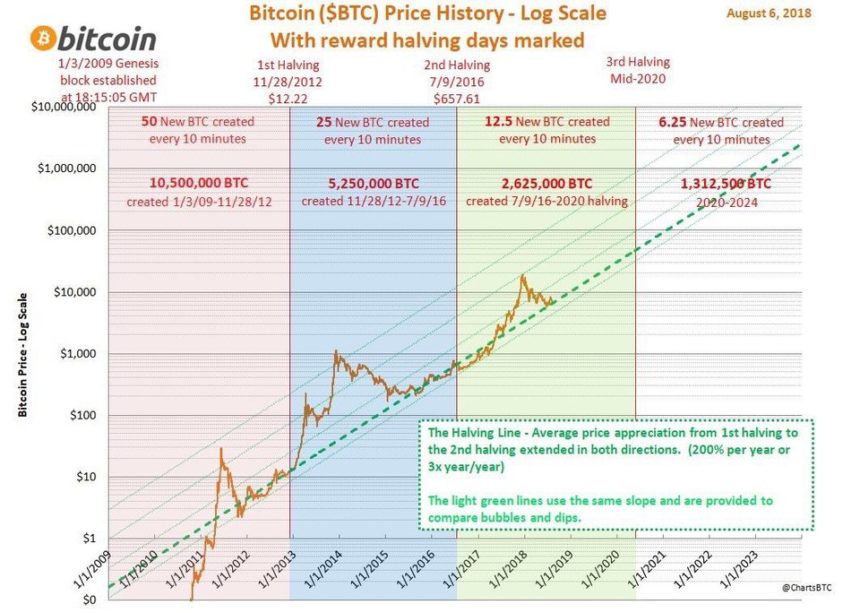
Analyzing Market Demand And Its Impact On bitcoin’s Price Fluctuations
Market demand plays a crucial role in shaping bitcoin’s price,frequently enough overshadowing the technological and speculative aspects of the cryptocurrency. As demand increases, especially from retail investors or institutional players, the value of bitcoin tends to rise, with each new wave of buyers pushing the price higher. This dynamic is particularly noticeable during significant economic events or when mainstream media coverage intensifies, perhaps triggering a buying frenzy among new market entrants. For example, during the 2020 pandemic, when global stock markets were tumbling and gold prices were plummeting, bitcoin emerged as a safe-haven asset, leading to a surge in demand.
The relationship between bitcoin’s price fluctuations and market demand is complex, influenced by various factors. One such factor is the seasonal nature of bitcoin demand, with certain times of the year showing higher activity levels. As an example, the end of the year often sees a spike in trading volume as retail traders take advantage of year-end tax considerations or reset their investment strategies. periods following significant technological advancements, like the launch of new bitcoin nodes or improvements in mining efficiency, can also drive up demand and consequently, prices. These factors create predictable patterns in the market, but they are also subject to sudden shifts caused by unforeseen events or unexpected behaviors.
To understand how market demand impacts bitcoin’s price, it’s essential to monitor key indicators that hint at shifts in investor sentiment and market conditions. Investors and analysts frequently enough look at metrics like on-chain activity, transaction volumes, and the relative dominance of bitcoin over other cryptocurrencies within the overall market cap. Another critical metric is the amount of bitcoin held in long-term wallets versus short-term ones, which can signal whether the holders are in a bullish or bearish sentiment. These data points provide insights into the underlying health and direction of the market, allowing for more informed trading decisions.
Decoding The Role Of Investor Sentiment In Shaping bitcoin’s Value
Investor sentiment plays a pivotal role in the fluctuating value of bitcoin, often acting as a barometer for market mood swings. When confidence is high, investors pour money into the cryptocurrency, driving up its price and creating a sense of optimism among traders. Conversely, a cloud of doubt and fear can lead to a sell-off, reducing bitcoin’s value. These emotional reactions are not just casual observations; they are quantifiable factors that can be tracked through social media trends and trading patterns. As a notable example, a flurry of positive news articles and social media chatter about a potential breakthrough regulatory approval can spark a rally in bitcoin’s value.
A deeper look at investor sentiment reveals its complexity-it’s a blend of psychological and economic forces that can be challenging to predict accurately. For example, when institutional investors show interest in bitcoin, it frequently enough signals a shift towards mainstream acceptance and greater stability, which in turn can attract more retail investors looking for a piece of this emerging asset class.On the flip side, instances of regulatory uncertainty can trigger panic selling, driving prices down as traders opt for the safety of traditional assets. Understanding these dynamics is crucial for anyone seeking to navigate the volatile waters of bitcoin trading.
To better grasp the intricate relationship between sentiment and bitcoin’s value, it’s helpful to consider how market psychology interacts with other key factors like supply and demand. Such as, during a period of low market sentiment, even modest supply increases can exacerbate price drops. Contrarily, bullish sentiment can magnify the impact of limited supply and high demand, driving bitcoin’s value sharply higher. This table illustrates how sentiment amplifies or dampens the effects of supply and demand dynamics on bitcoin’s price.
| Market Sentiment | Supply and Demand Effect | bitcoin Value Impact |
|---|---|---|
| Bullish | High demand,limited supply | Sharp increase |
| Bearish | High supply,low demand | Sharp decrease |
Navigating Economic Indicators To Forecast bitcoin’s Future Performance
Economic indicators offer a window into the broader financial health of economies around the world,which can have a significant impact on the perceived value and future performance of bitcoin. Traditional economic metrics, such as inflation rates, GDP growthand employment levels, influence investor behavior and market sentiment. As an example, during periods of high inflation, investors often look for choice stores of value, such as gold and cryptocurrencies like bitcoin, to preserve purchasing power.
Interest rates set by central banks are another crucial economic indicator that can affect the relative attractiveness of bitcoin.When interest rates rise, the opportunity cost of holding non-yielding assets like bitcoin increases. Conversely, lower interest rates can make holding bitcoin more palatable, especially for those seeking a hedge against central bank policies and currency devaluation. global economic events,such as a trade war or a recession,can trigger a flight to safe-haven assets,potentially boosting bitcoin’s value.
| Economic Indicator | Impact on bitcoin |
|---|---|
| Inflation Rates | Higher inflation may drive investors toward bitcoin as a store of value. |
| Interest Rates | High interest rates can discourage holding bitcoin due to higher opportunity costs. |
| Employment Levels | Stable employment can support the overall economy and increase demand for bitcoin. |
Understanding how these indicators interact and influence financial markets can provide valuable insights for bitcoin investors.However, it’s important to remember that bitcoin’s value is also shaped by its underlying technology and its adoption as a payment method and store of value, making the relationship with traditional economic indicators complex and multifaceted.