January 26, 2026

Capitalizations Index – B ∞/21M

Thai Finance Ministry Awards Licenses to 4 Crypto Firms, Rejects 2

Thai finance ministry awards licenses to 4 crypto firms, rejects 2

Thai Finance Ministry Awards Licenses to 4 Crypto Firms, Rejects 2

Thai finance ministry awards licenses to 4 crypto firms, rejects 2

Thailand’s Ministry of Finance has granted digital asset business licenses to four crypto firms, while rejecting two other applications.

The news was announced Tuesday by the country’s Securities and Exchange Commission (SEC), which clarified that crypto businesses are regulated under the “Emergency Decree on Digital Asset Businesses B.E. 2561 (2018).

The four firms receiving licenses include three crypto exchanges, [BTC] Exchange, Bitkub Online, Satang Corporation (Satang Pro), and one crypto broker-dealer Coins TH Co., the SEC said.

Failing to win a license were Cash2coin and Southeast Asia Digital Exchange (SEADEX). The regulator said the two firms had not met the required standards – for example, custody systems and know-your-customer (KYC) processes were “inconsistent” and the effectiveness of their cybersecurity systems could not be verified.

As a result, Cash2coin and SEADEX will have to cease business operations by Jan. 14, and have been told to return clients’ assets under their custody, the SEC said. The firms can, however, reapply for the license provided the approval criteria are ultimately met.

Meanwhile, the SEC is still considering another application from a firm called Coin Asset. The company has made some executive changes which the SEC considers “material information” for license consideration. Until a decision is made, Coin Asset is permitted to carry out business operations.

Thailand first announced its crypto licensing rules in July of last year, with 20 crypto firms applying for the license within a month. The rules require projects that intend to offer crypto services to gain approval from the SEC before starting operations.

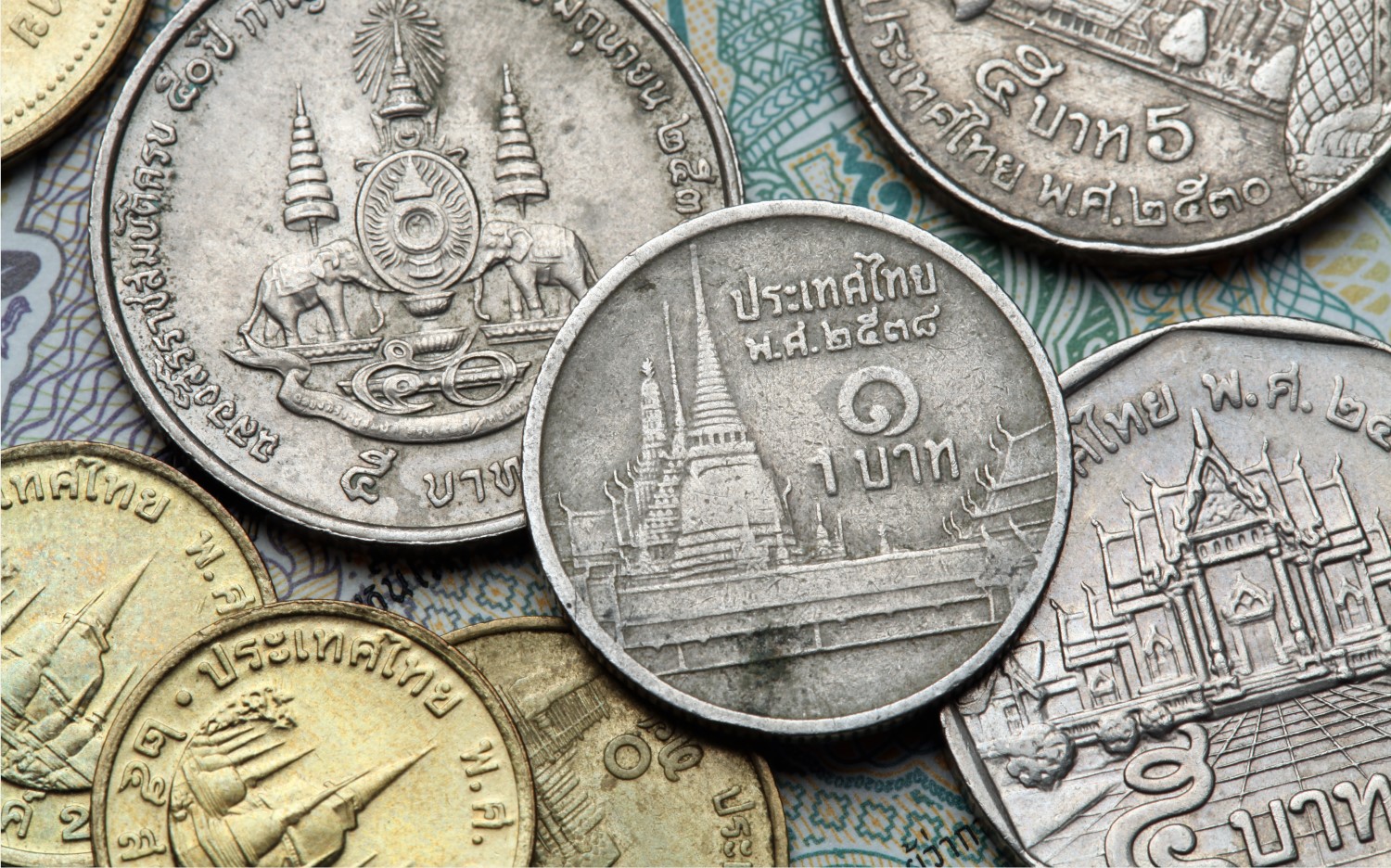
Thai baht coins image via Shutterstock

Published at Thu, 10 Jan 2019 12:05:43 +0000

Previous Article

The bullish scenario if this is actually an ascending triangle.

Next Article

Who is Ripple Labs: The Private Company behind XRP

You might be interested in …

UK Issues a Warning on ICOs But Some Are Already Immune

Less than a year after the industry began, running a Blockchain business using a digital token has suddenly become a lot more complicated.


ICOs Float Between A Rock And A Hard Place

The free-for-all of the first six months of 2017 when Blockchain startups and ‘projects’ created and sold tokens at will, often for hundreds of millions of dollars, has changed thanks to snap regulatory decisions.

The context of regulator reactions continues to dictate digital token or ICO market performance.

SEC Issues Warning for ICO Organizers and Investors

In more liberal settings such as the US, the Securities and Exchange Commission (SEC) has sought to create a wary environment among Blockchain businesses looking to issue a token. According to its exact functions and technical make-up, a token may or may not conform to the legacy description of a ‘security,’ and issuers must act accordingly to stay above the law.

The UK has become the latest major economy to publish official guidance on the phenomenon. Literature released Tuesday, September 12 by the country’s Financial Conduct Authority closely tracks the SEC.

“Whether an ICO falls within the FCA’s regulatory boundaries or not can only be decided case by case,” it states.

Most recently, however, a considerably harder route to ICO market control has come from China. Together with the US, it constitutes the largest participant in the industry, accounting for $398 million of its total $1.7 billion value.

As of September 2017, digital token sales are banned in China, a decision even affecting completed sales retroactively, compelling some businesses to refund sale proceeds.

First Movers Dictate The Golden Rules

The situation poses obvious problems for China-based projects, who are now considering how to continue operating in a market where even fiat-to-crypto exchange could soon become illegal for the second time.

Not a lot of countries have any type of regulation in place,” Blackmoon Crypto CEO Oleg Seydak told Bitcoinist about the current status quo.

Token issues will pay major attention to jurisdictions which have a position on the matter like USA, Singapore, China and comply with that regulation or avoid interactions with their citizens. Blackmoon Crypto is a Blockchain-based platform for tokenized investments, also preparing to launch an ICO. Like international platforms such as LakeBanker, the project faces a regulatory headache launching in such an uncertain global environment.

Tezos and Other Exciting New ICOs

When asked what industry participants should do to bulletproof themselves against unpleasant regulatory challenges, Seydak’s immediate reaction is to create as strong an offering as possible.

“The best solution is to be cross-blockchain startup. But it’s hard from a technical point of view,” he said. “At the same time, it becomes more and more easy with each day.”

Shutting The Door For How Long?

Imbued against regulatory shuffling by technical design are ICO projects which have been years in the making, such as Vinny Lingham’s Civic.

A steadfast delivery and plan for token use has come on the back of a highly controlled yet innovative token sale that ensured few doubts remained about developer integrity.

But so far, the interim method of choice for ICO-implicated businesses has simply been to deny participation to US and Chinese citizens.

The consequences of being lax about adherence are plain to see. This week, China’s regulators ordered even completed ICO campaigns to refund investors, while the scenario of a re-worked regulated ICO industry appearing in the country remain pure speculation.

ICO

Ahead of its planned ICO campaign, LakeBanker is therefore reviewing its options for both the short and long term. One thing is for certain: few cues will come from Civic, the platform having labelled Lingham’s sale “North Korean” in an article in August.

“At the beginning we will focus our resources on countries other than the US and China,” Lakebanker CSO Andrew McCarthy explained to Bitcoinist.

Our choices of the locations are based on two criteria: where our services are needed most and where legal overheads are not beyond reasonable. There are many countries that meet these two criteria better than the US or China.

The company has already converted to a de facto non-Chinese operation, having previously had only little involvement with the market. Chinese investors will also face initial exclusion.

In future, however, things could readily change, and such eventualities are already implanted into the platform’s roadmap.

“For the US and China some preparation work of the markets can be done in parallel, which include compliance/licensing, recruitment, and technology,” McCarthy added.

We will definitely shift our focus to the two biggest economies in the world in a year or two, when we have more streamlined processes, experienced operational teams, and good track records from other markets.

LakeBanker’s ICO is due to commence September 15 as a fixed-price sale, followed by a phase 2 Dutch auction in October.

Do you agree with the tactics of the ICO’s mentioned? Does the industry need more regulations? Let us know below!


Images courtesy of Shutterstock 

The post UK Issues a Warning on ICOs But Some Are Already Immune appeared first on Bitcoinist.com.