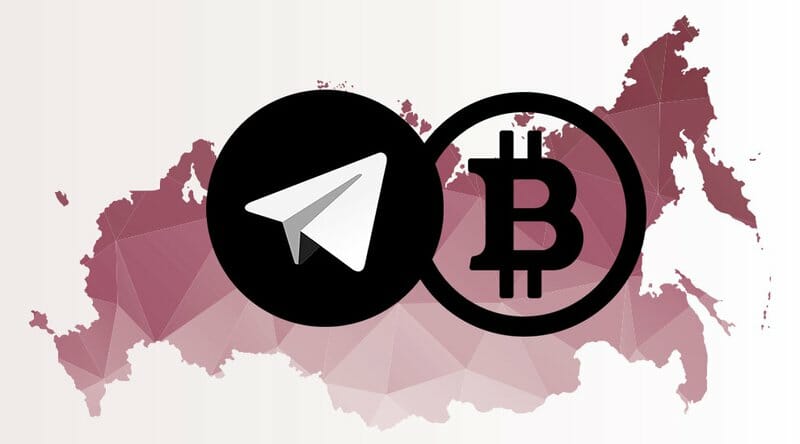
Telegram CEO Pavel Durov is , after they implemented a block on Monday, April 16, 2018, on the messaging app when it refused a court order to “grant state security services access to its users’ encrypted messages,” according to .
The move was initiated by Alexander Zharov, head of the Russian watchdog organization Roskomnadzor, who has blocked 18 sub-networks and various IP addresses belonging to both Amazon and Google in the process.
“We have currently informed both companies that a significant number of IP addresses located in the clouds of these two services have fallen under the block due to the court ruling,” Zharov commented. He further stated that Telegram has to “coordinate attacks” on both Russia and its neighbors.
But as the skies darken and defense seems like a lost cause, Durov is refusing to give up, as Telegram customers early this morning:
“For the last 24 hours Telegram has been under a ban by internet providers in Russia. The reason is our refusal to provide encryption keys to Russian security agencies. For us, this was an easy decision. We promised our users 100% privacy and would rather cease to exist than violate this promise.”
Durov has since taken to his account on VK — a Russian social network — to explain that he is offering bitcoin grants to both that run proxy servers and virtual private networks (VPNs). He says he’s “happy to donate millions of dollars” from his personal stash to illustrate and assist this cause, noting that both VPNs and proxy servers work against the hindrances set in place by Russian authorities.
Proxy servers operate by acting as connective tissue between clients and other servers. Normally, these clients seek information or resources from outside servers and thus link to a proxy server, which decides the best way to simplify and control the complexity of their incoming data. In addition, proxy servers offer anonymity to their users, and can be utilized to bypass blocks on certain IP addresses.
A VPN extends a private network across a public one and allows users to send and receive information without disclosing their identities. According to Durov, both systems require third-party funding, and he’s urging players with money to get in on the game alongside him.
As the last 24 hours have shown, in their ongoing war on progress, Russia’s supervisory authorities are willing to block millions of IP addresses of cloud hosting without regard for losses of extraneous projects.
While Russia only accounts for 7 percent of Telegram’s users, Durov called the recent ban “unconstitutional” and commented that threats to privacy and principles are more important than the numbers.
“Even if we lose the entire [Russian market], Telegram’s organic growth in other regions will compensate for this loss within a couple months,” Durov mentioned. “However, it is important for me personally to make sure we do everything we can for our Russian users.”
Published at Wed, 18 Apr 2018 20:56:18 +0000
bitcoin[wpr5_ebay kw=”bitcoin” num=”1″ ebcat=”” cid=”5338043562″ lang=”en-US” country=”0″ sort=”bestmatch”]