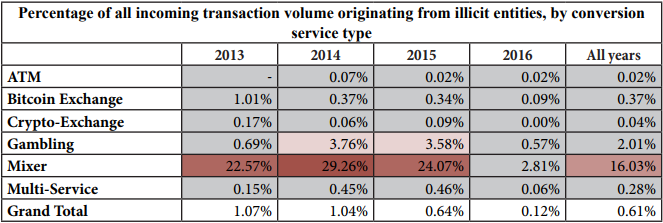
Recently, a Moscow court handed a win to Russian security forces. In an effort to combat terrorism, they announced Telegram would be banned immediately. The company refused to hand over user information. A day after the ban going into effect, CEO Pavel Durov announced Telegram would use bitcoin to fund proxies and VPNs as possible workarounds for Russian customers.
Also read:
Telegram Remains Defiant
Pavel Durov’s Telegram channel followers were pinged early this morning, explaining “For the last 24 hours Telegram has been under a ban by internet providers in Russia. The reason is our refusal to provide encryption keys to Russian security agencies. For us, this was an easy decision. We promised our users 100% privacy and would rather cease to exist than violate this promise,” the company’s CEO stressed.

Telegram has been in with its native government, Russia, for quite some time. The encrypted messaging service is often used all over the world’s for those seeking relative levels of privacy. In fact, it’s a known source of communication for much of the and those under rather oppressive political arrangements.
As a result, Russia points to various terrorist acts on its soil, and around the globe, where Telegram has been accused of playing a role. And so its security and communication agencies have demanded Telegram provide a way for government minders to access user information in at least the most criminal of cases.
bitcoin Used to Digital Resistance
Mr. Durov has outright refused, even holding back participation in this final hearing on the company’s immediate fate in the country. “Despite the ban,” Mr. Pavel continued this morning, “we haven’t seen a significant drop in user engagement so far, since Russians tend to bypass the ban with VPNs and proxies. We also have been relying on third-party cloud services to remain partly available for our users there.”
 Pavel Durov
“Russia accounts for ~7% of the Telegram user base, and even if we lose that entire market, Telegram’s organic growth in other regions will compensate for this loss within a couple of months,” Mr. Durov stressed. “However, it is important for me personally to make sure we do everything we can for our Russian users.”
That necessarily means workarounds. As Mr. Durov urges, “To support internet freedoms in Russia and elsewhere I started giving out bitcoin grants to individuals and companies who run socks5 proxies and VPN. I am happy to donate millions of dollars this year to this cause, and hope that other people will follow. I called this Digital Resistance – a decentralized movement standing for digital freedoms and progress globally.”
Do you support Telegram’s efforts? Let us know in the comments section below.
Images courtesy of Shutterstock.
Need to calculate your bitcoin holdings? Check our section.
The post appeared first on .
According to a recent thread on Reddit, Localbitcoins traders allegedly have to verify their identity if they are trading “significant” volume using the peer-to-peer platform.
Also Read:
Localbitcoins ‘Error’ Involves Know-Your-Customer Verification
 bitcoin users are frantically searching other exchanges today that don’t require Know-Your-Customer (KYC) verification. A post on the Reddit forum /r/bitcoin on April 17 that stated a Localbitcoins user’s trade volume was “significant” this past year, and the trader had to verify their identity in order to keep trading. The picture reads:
Error! Your trade volume has been significant in the last twelve months. Please verify your identity to continue trading.
does use a verification process but it’s never really been enforced, although some believe more traders will trade with you if you are verified. Much like the rest of the exchanges out there that do require immediate verification, Localbitcoins uses an ID service called ‘Netverify,’ created by a company called Jumio. Basically, the user uploads a picture of both sides of their license or state ID and in a few minutes, the platform reveals if the identification is a legitimate or not.
 The Long-Lasting Bastion of Freedom Fell
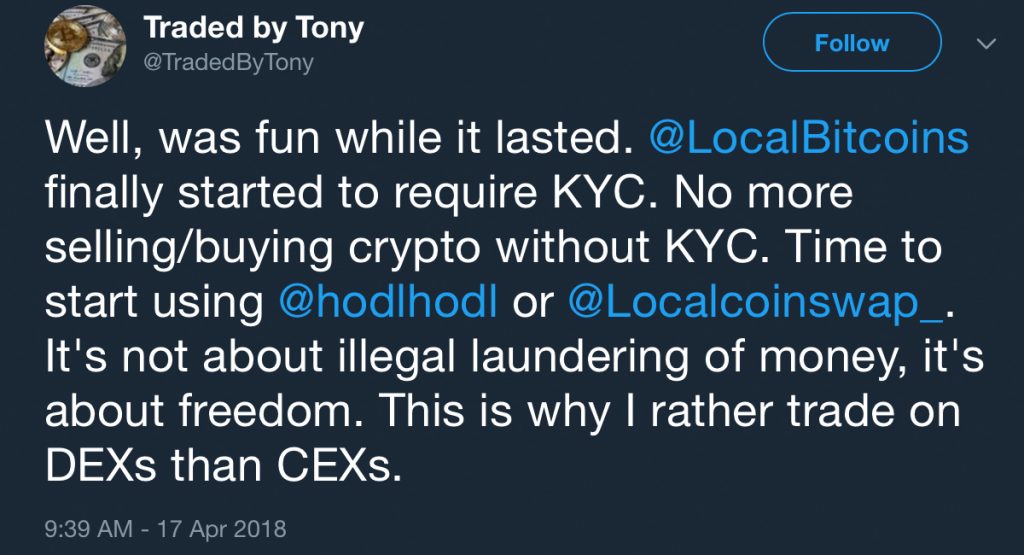
The post on Reddit submitted on Tuesday is not the first time this news has spread among the cryptocurrency campfire. Back in January of 2018, there are posts on and that show another trader required to use their ID to trade on Localbitcoins. Immediately the discussion among bitcoiners turned to decentralized exchanges like Bisq, Hodl Hodl, and Barterdex. The Reddit user /u/yellowcuda who created the post has an account that is three years old, and further down the thread he :
To clarify: me and many of my peers who use Localbitcoins started getting this notification upon signing in, requiring them to submit their ID. Without it, you cannot continue trading. This is it, folks — The long-lasting bastion of freedom fell.
Many of the decentralized exchanges (DEX) today do have operational platforms, but liquidity on exchanges like Hodl Hodl, Bisq, Openledger, Bartdex, Idex, and Waves is not that much compared to centralized exchanges (CEX). Further, some of the platforms are in the very early stages and don’t have the functionality and features found on large VC-funded trading platforms.
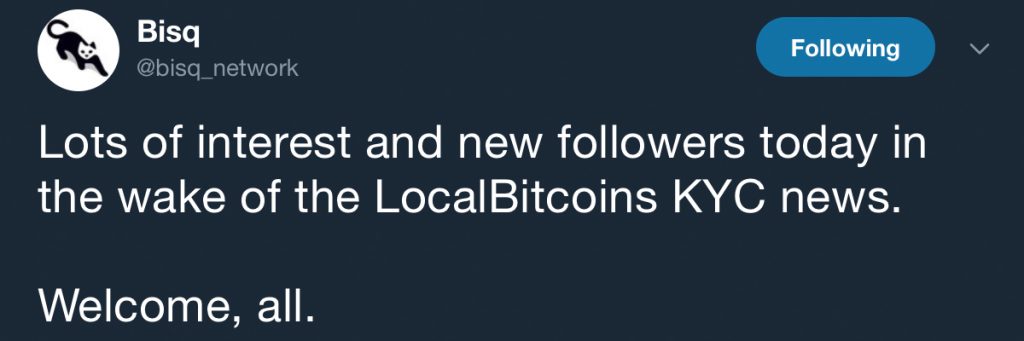
Lastly, a few decentralized exchanges do offer fiat pairs, but a lot of them don’t have access to fiat and most platforms offer cryptocurrency-to-cryptocurrency swaps. It’s safe to say that much of the issues tethered to Localbitcoins users being arrested and the company itself requiring verification is likely because people are swapping for fiat and nation-states like the U.S. don’t appreciate that kind of business without permission. There have been no statements made by the owners of Localbitcoins yet about this issue and there are no official updates on the main page.
What do you think about Localbitcoins requiring users who trade “significant” volume to verify themselves? Let us know in the comments below.
Images via Shutterstock, Localbitcoins, and Twitter.
Need to calculate your bitcoin holdings? Check our section.
The post appeared first on .
Amidst the growing regulatory concerns across the United States, Attorney General Eric Schneiderman for the State of New York is having a closer look at the operations of a few crypto exchanges thereby ensuring more transparency in the overall process.
On Tuesday, Attorney General Eric Schneiderman wrote a to 13 crypto exchanges announcing the “Virtual Market Integrity Initiative” saying that it was a “fact-finding inquiry into the policies and practices” of the digital currency trading platforms. In this letter, the Attorney General seeks for information regarding their “operations, use of bots, conflicts of interests, outages, and other key issues.”
The important basis of this new Virtual Market IntegrityInitiative is the push for higher transparency to protect and preserve investor’s rights in this nascent financial markets. Schneiderman said: “With cryptocurrency on the rise, consumers in New York and across the country have a right to transparency and accountability when they invest their money. Yet too often, consumers don’t have the basic facts they need to assess the fairness, integrity, and security of these trading platforms.”
Schneiderman said that the major effort would be to look into digital currency exchanges that operate out of New York due to regulatory concerns. The announcement read: “We are aware that certain trading platforms have formal rules barring access in New York and may not have a license to engage in virtual currency business activity in New York. Among other topics, we are asking platforms to describe their measures for restricting trading from prohibited jurisdictions.”
Schneiderman in his letter also mentions that even though cryptocurrencies have provided an alternative approach to financial transactions with advanced blockchain-based technology solutions, their probable use for illicit activities needs to be kept in check. He said: “Representing a technological advance, a medium of exchange, and an investment opportunity all at once, virtual currencies are inspiring innovators, entrepreneurs, and investors—and are fueling an increasingly diverse ecosystem of companies and applications.”
He further added: “But virtual currency is also a highly speculative sector, featuring significant volatility, instability, and risk. Moreover, published reports indicate the sector has attracted fraudsters, market manipulators, and thieves.”
The list of 13 crypto exchanges who have received the letter includes GDAX, Gemini, bitFlyer, Binance, itBit, Gate.io, Huobi.Pro, Bitfinex, Bitstamp, Bittrex, Kraken, Tidex and Poloniex.
Each letter comprises of a 34-point questionnaire which the exchanges have been asked to get it completed by filling all necessary details and submit before May 1st. Some of the questions are quite detailed probing deep into the operational policies of the exchange and other procedures related to trading, KYC/AML practices, information on banking relationships and insurance. In order to ensure transparency with customers, the AG’s office will publish this information “in a publicly accessible format.”
New York is said to have one of the most precise and strict rules for exchange operators who are required to have a mandatory “BitLicense” from the state’s Department of Financial Services (NYDFS) in order to continue their business.
Cameron and Tyler Winklevoss, co-founders of the New York-based crypto exchange Gemini who requested for having a nationwide regulatory approach with the best practices in this early-stage crypto industry.
The post appeared first on .