January 26, 2026

Capitalizations Index – B ∞/21M

Study Finds 4 Percent of Monero Mined via. Malware over the Last 12 Years

Study finds 4 percent of monero mined via. Malware over the last 12 years

Study Finds 4 Percent of Monero Mined via. Malware over the Last 12 Years

Study finds 4 percent of monero mined via. Malware over the last 12 years

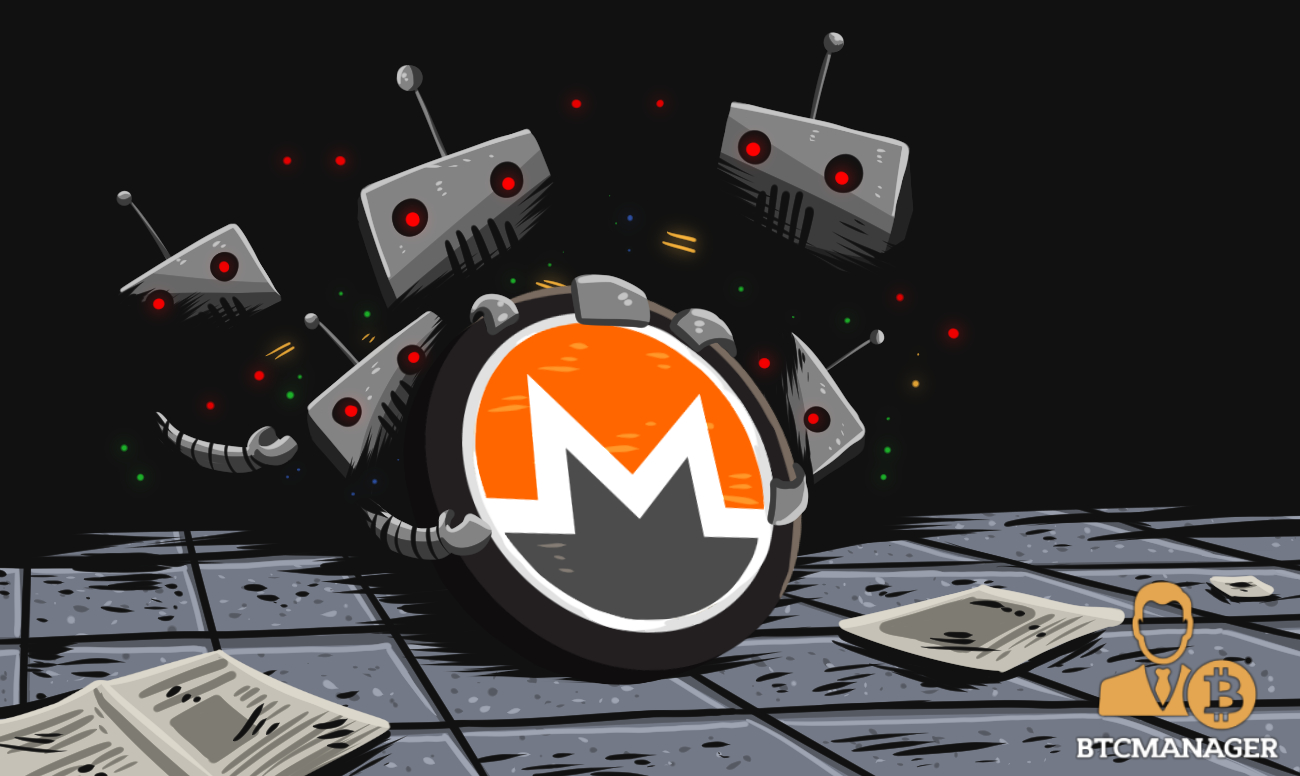
Researchers at Universidad Carlos III de Madrid and King’s College London have found that from 2007 to 2018, around $57 Million of Monero was mined via. Malware, January 3, 2019.

Background of the Study

The joint study co-authored and compiled by two researchers was published January 3, 2019, and it states that four percent of the Monero mined over the last decade was done by the use of malware bots.

Malware’s 12-Year Monero Campaign

The study was carried out through an analysis of 4.4 million malware samples finding that one million of them were used to mine Monero from their hosts.

The one million malware strains were then analyzed over a 12 year period from 2007 to 2018. During this time, the scientists looked out for indicators of compromise and also made use of static and dynamic analysis techniques to extract information from malware strains.

Some of the information gathered included the crypto addresses and mining pools form which funds were funneled through.

After collection, the data was then analyzed and the previous payments used for each Wallet was used to track down the groups behind the activities. The groups were categorized by the similarities in approach and wallets and mining pools that were used.

When the information was further examined, it was discovered that while a variety of currencies were mined, Monero was by far the most popular among cyber-criminals. In total, about 4.32 percent of all Monero coins were mined by crypto-mining malware botnets. The amounts earned as a result of the use of the malware botnets is hardly insignificant.

advertisement

“Although this depends on when criminals cash-out their earnings, we estimate that the total revenue accounts for nearly [$57 million]”, the paper writes.

There was also a recorded disparity in the success rates of different types of malware; cyber-criminals who rented their malware had significantly greater success rates than those who built their malware from scratch, which is telling of how sophisticated malware technology has become. Those who do build their own malware also tend to do so around the xmrig open source tool.

There is a preference amongst these botnet groups in the deployment of their malware, regardless of whether they are bought or built and the biggest source of addresses for cyberspace-criminals trying to cash out their malware. Namely, the site crypto-pool.fr was used to cash out $47 million in total.

Why is Monero so Popular?

The popularity of Monero being used for cybercrime cannot be ignored as it extends past both malware deployment and far more egregious crimes such as kidnapping.

The reason for this is that Monero is an untraceable currency, making it ideal for real-life crimes and Monero mining is less difficult than mining bitcoin-based cryptocurrencies which makes the use of malware to target Monero much easier.

Published at Tue, 22 Jan 2019 17:00:10 +0000

Previous Article

London Stock Exchange Confirms Tech Sale To Hong Kong Cryptocurrency Exchange

Next Article

Why Cryptocurrency Custody Solutions Are on the Rise

You might be interested in …

The virtuous circle of HorYou

Recent Uploads tagged cryptocurrency The virtuous circle of HorYou Horyou posted a photo: Welcome to a unique ecosystem for construction of the social benefit – Horyou platform! The social network and a blockchain technology are […]

Alphabay Phisher Makes $1 Million in 14 Months Stealing Bitcoins

A deep web hacker operating under the pseudonym of ‘Phishkingz’ has recently claimed to have generated over $1 million from phishing Alphabay accounts during the last 14 months. In a recent interview with Deepdotweb, Phishkingz details the methods that he uses when stealing bitcoins.

Also Read: Law Enforcement Takes Down the Biggest Darknet Market on the Deep Web

Phishkingz Claims to Have Sold 500 Stolen Bitcoins in the Last 14 Months

Alphabay Phisher Makes $1 Million in 14 Months Stealing Bitcoins

Darknet phisher, Phishkingz, recently discussed methods that he claims allowed him to generate over $1 million in 12 months by stealing bitcoins. Phishkingz claims to have traded approximately 500 bitcoin on Localbitcoins in the last 14 months, the entirety of which was generated through phishing.

Phishkingz states that he is also a dark market vendor. His decision to start phishing to steal bitcoins was made following the discovery of an error on Alphabay’s forums “that allowed [Phishkingz] to see new members the second they joined.” The hacker would then directly contact new members, “send[ing[ them to my link with a verification process.” From them, Phishkingz is “able to obtain the login details syncing, and the mnemonic phrases, as well as any PGP private key and password and pin code.”

The hacker would then “save a bookmark using blockchain.info… [and] highlight 50 [addresses] at a time every 20 minutes checking for deposits”. The majority of the withdrawals would be processed manually, despite early experimentation with bots. Phishkingz claims that his operations expanded to a scale that required the assistance of employees, stating that at one point he “had 27 people working… running phishers” that were stealing bitcoins for him.

The Admins Didn’t Really Care About Their Customers

Alphabay Phisher Makes $1 Million in 14 Months Stealing Bitcoins

Phishkingz describes Alphabay’s moderators as providing little support to his victims. “The admins didn’t really care about their customers, and it only took opening a support ticket with a problem to learn this. BM (Big Muscles – an Alphabay moderator) especially is a stupid one. He would let me into accounts for 50% if I provided mnemonic phrase knowing I had phished the account in the first place.”

Following the recent removal of Alphabay, the bitcoin hacker claims to “have moved to Dream Market and already made 4 BTC since yesterday launching the new site.”

The number of phishers attempting to hack bitcoins outside of the deep web has also recently proliferated. The record breaking Tezos ICO has attracted the attention of phishers, seeing clone sites being hosted for the purposes of stealing bitcoins. Other creative hackers have recently started setting up websites for fake ICOs, infecting victims’ computers through downloading malicious software disguised as project whitepapers. With bitcoin and altcoins seeing unprecedented media exposure, a growing presence of bitcoin hackers and scammers operating in all corners of the internet appears to be an unfortunate and inevitable consequence of greater cryptocurrency adoption.

Have you ever fallen victim to a phishing scam? Share your story in the comments section below!


Images courtesy of Shutterstock and Wikipedia


Show the world how cutting-edge you are with a bitcoin T-shirt, hoodie, bag, key-ring, even a Trezor hardware wallet. Shipping all over the world, quality merchandise and, of course, a payment system that makes people say “wow!”

The post Alphabay Phisher Makes $1 Million in 14 Months Stealing Bitcoins appeared first on Bitcoin News.