
April 12, 2026

Capitalizations Index – B ∞/21M

Student Cryptocurrency Miners Face Rising Costs, Squeezed Margins

Student cryptocurrency miners face rising costs, squeezed margins

Student Cryptocurrency Miners Face Rising Costs, Squeezed Margins

Student cryptocurrency miners face rising costs, squeezed margins
Advertisement

Join our community of 10 000 traders on Hacked.com for just $39 per month.

Savvy college students who have been mining bitcoin from their dorm rooms are facing a one-two punch from lower cryptocurrency prices and rising mining costs. Even though the electricity bill is included under room and board, giving today’s college kids a key advantage in the bitcoin mining process, the persistently low cryptocurrency prices of late have been eating into their profit margins.

Meanwhile, soaring demand for computer graphic processing units (GPUs), which are also used in the gaming industry, has put a premium on the hardware needed to produce more cryptocurrencies and left gamers and miners alike scrambling for graphic cards. As Forbes pointed out, if you can get your hands on one, a Nvidia GTX 1070 will run you between $699 and $850, which is a steep price for most college kids to pay.

A Fairleigh Dickenson University (FDU) senior who has been mining BTC for the past six years since the bitcoin price was trading in the single digits told CNBC: “It’s gotten pretty ludicrous now the amount of money you have to spend to get in.” This student, whose first name is Alex, invested thousands of dollars into his bitcoin mining operation and till now found a way to keep his business off the radar of the radar of the university by carefully positioning GPUs to avoid a power outage.

At first, he said, cryptocurrency mining “wasn’t really the electricity sapping phenomenon it is today.” But these days, his bitcoin mining business operates around the clock between his dorm room and back home, which has netted him anywhere from a $200 to $1,000 every eight weeks or so and which he directs toward books, etc.

Not all student bitcoin miners run their equipment on campus, however. A Northwest Missouri State University student who has mined different cryptocurrencies over the past few years said cryptocurrency mining commands more than a student’s ‘fair share’ of power: “It is immoral to use [campus power] to mine” and “most mining equipment uses no less than one kilowatt per hour of power,” the student said.

Meanwhile, a second student at FDU built his computer operation with gaming in mind but couldn’t resist the opportunity in cryptocurrency mining at year-end 2017 when the bitcoin price was trading more than double where it is today. He used NiceHash to mine cryptocurrencies, but it wasn’t worthwhile, with this student mining a mere .00027 BTC daily.

Feeding the Beast

bitcoin mining involves solving complicated equations known as proof-of-work to advance the blockchain in exchange for a bonus. But the more transactions and blocks that are completed, the more complex the puzzles become to solve, which only feeds the beast by ramping up power consumption to mine more bitcoin, Monero, etc.

Cryptocurrency mining appears to fall under a gray area for today’s FDU students, but that could change.

“FDU also blocks the mining of cryptocurrency at the firewall level and will probably add some specific language prohibiting mining cryptocurrency to the next version of the Acceptable Use Policy,” according to FDU cited in CNBC.

If universities decide to clamp down on their bitcoin mining policies, college students could lose a key advantage once cryptocurrency prices rebound.

Featured image from Shutterstock.

Follow us on Telegram.
Advertisement

Published at Wed, 04 Apr 2018 21:22:32 +0000

bitcoin Mining[wpr5_ebay kw=”bitcoin” num=”1″ ebcat=”” cid=”5338043562″ lang=”en-US” country=”0″ sort=”bestmatch”]

Previous Article

Ripple Would Pay to Play on Major US Exchanges: Report

Next Article

County Authorities In Rural Washington Catch Unauthorized Cryptocurrency Miners

You might be interested in …

Launching a Cryptocurrency “Token Generation Event” (aka an ICO)

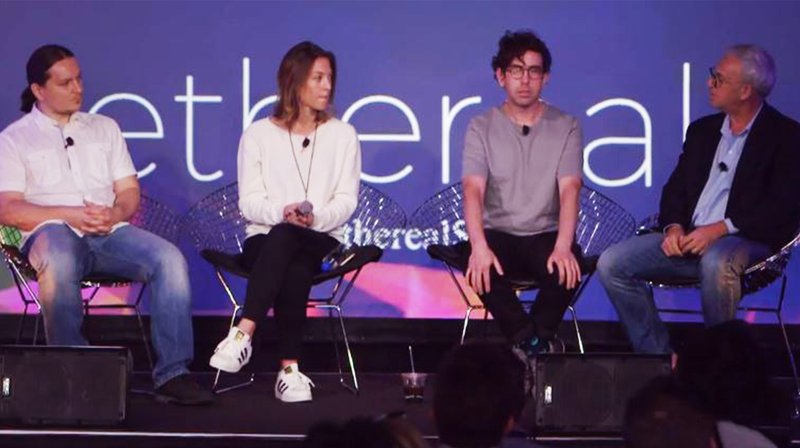
Ethereal ICO panel

On October 27, 2017, disruptors in the cryptocurrency field gathered at the San Francisco Ethereal SummitSponsored by ConsenSys, the summit provided a diverse mix of panels and workshops that demystified the “initial coin offering” (ICO) or “token generation event.”


Side note: Vernacular is key. Referring to a token launch as an ICO is so “September.” The process is now referred to as a “token generation event.”


At the “How to Launch a Token” panel, token generation event veterans Galia Benartzi (co-founder of Bancor Protocol), Matt Liston (CSO at Gnosis) and Piotr Janiuk (co-founder and CTO of the Golem Project) guided Ethereal participants through a hypothetical: founding a hat company and funding the development through a token. Here are some of the key points that they discussed.

Step 1: Determine if the token model fits for the new company

Imagine the whole process backward: What layer does the company involve — application, platform or protocol? Design the decentralized concept first and then discern if a token is necessary.

Criteria:

  • Is the project based on a decentralized model? If not, equity funding is a viable option –– no need for a token.

  • What is the token’s utility within the network? How are customers involved in the network? For example, is the token facilitating and incentivizing collaboration between the community in the network? If so, tokens (similar to shares and equity in a normal company) are a great way to distribute participation among stakeholders.

Tokens work best when fueling network effects around ideas –– when there are benefits to being an early adapter/stakeholder.

Step 2: Find a strong legal team and a favorable regulatory environment

Regulation in the cryptocurrency space is in its infancy and varies greatly around the world.

Criteria:

  • Find a competent lawyer with an understanding of the space that can give risk parameters. It is important to minimize risk for the project.

  • Select a government that defines clear boundaries and has a forward-thinking mentality.

Although blockchains and cryptocurrency promise decentralized disruption to all industries, anarchy would be unfavorable to all. All companies must comply with the law.

Step 3:  Work on the prototype phase

Establish a white paper, set up the concept on the testnet and prove the concept.

Criteria:

  • White paper: describe your network, protocol and model. White papers should strike the proper balance between being math-heavy and marketing-heavy. The goal is for users and stakeholders to understand exactly what the network is doing.

  • Prove that your concept works and expose its source code. Everything should be 100 percent transparent to the public.

  • Trustless (trust forced through code) and transparent networks are critical to long-term success. Secure and validate data by rewarding “oracles,” people who provide trustworthy answers and validate that events did in fact occur. On the flip side, penalize those who lie to the network.

Trust and transparency are paramount for any company that is considering funding its development with a token.

Step 4: Connect with the community

Generating interest for the token and setting the foundation for strong community support before finally launching a token generation event to the public is crucial.

Criteria:

  • Develop a public-relation strategy. Share as much as possible. Post videos, host AMAs, etc. This process can be grueling, but it is necessary to establish a global presence and field questions.

  • Prepare for a fast-paced environment. Communication builds authenticity and credibility with supporters around the world.

  • Listen to outside perspectives and criticisms.

Because token generation events allow for decentralized methods of funding, the company’s diligence process should be decentralized to match.

Tokens generation events are complicated and don’t work for every business type. However, they unlock a new economic driver: permissionless venture capital.

The post Launching a Cryptocurrency “Token Generation Event” (aka an ICO) appeared first on Bitcoin Magazine.