May 8, 2026

Capitalizations Index – B ∞/21M

Starbucks Partners with Microsoft to Track Coffee Beans Using Blockchain

Starbucks partners with microsoft to track coffee beans using blockchain

Starbucks Partners with Microsoft to Track Coffee Beans Using Blockchain

Starbucks partners with microsoft to track coffee beans using blockchain

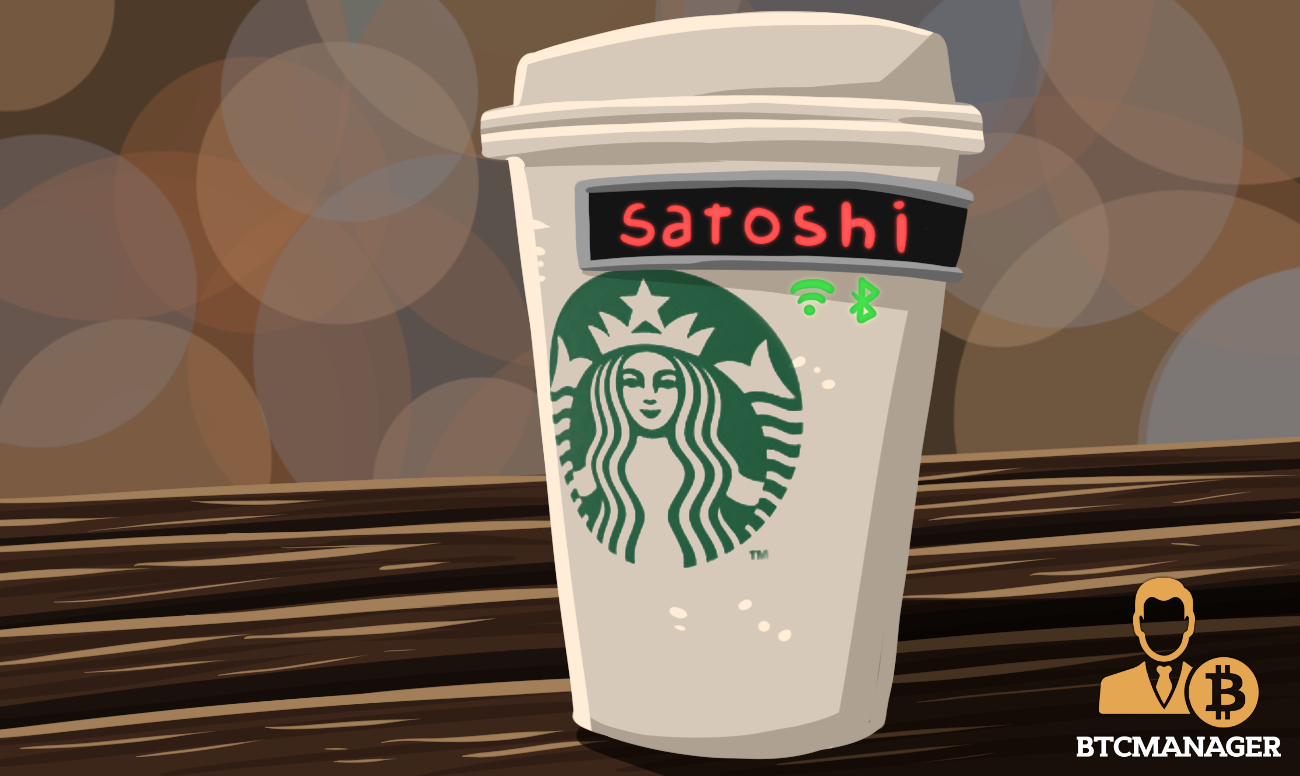
At the Microsoft Build 2019 conference on May 6, 2019, Microsoft CEO Satya Nadela explained how they are working with Starbucks to enhance the coffee giant’s services using technologies such as IoT, Machine learning and blockchain.

Connecting Customers to Farmers

First announced in 2018, Starbucks’ bean-to-cup program was supposed to be used to track coffee beans from the farms to coffee mugs. To achieve that goal, Starbucks now intends to use Microsoft’s recently announced Azure Blockchain Services for its coffee bean tracking.

The initiative is meant to connect coffee drinkers and coffee farmers by allowing customers to use the Starbucks mobile app to trace the journey of the coffee beans used to make their coffee.

Microsoft’s blog explained the end results of implementing blockchain for tracking coffee:

“The company is developing a feature for its mobile app that shows customers information about where their packaged coffee comes from, from where it was grown and what Starbucks is doing to support farmers in those locations, to where and when it was roasted, tasting notes and more.”

Starbucks CEO stated in the company’s first announcement about the bean-to-cup initiative that they will “leverage an open-source approach” to share what they learn with the rest of the world.

Starbucks — A Tech Company?

Starbucks is also using machine learning platform built and hosted on Microsoft Azure to send personalized recommendations for food and drinks to those customers who use the Starbucks mobile application. It tracks several data points such as local store inventory, previous orders, popular selections, weather, and time of day to share those recommendations with customers.

Starbucks executive vice president and CTO Martin-Flickinger says:

Starbucks is an experience. And it’s centered around that customer connection in the store, the human connection, one person, one cup, one neighborhood at a time. I think that mission is so critical to how technology has to show up for us.

To track all the machines being used in the hundreds of Starbucks stores across the globe and be able to spot any problems in them, Starbucks will also be deploying an external device named guardian module to connect all the stores’ equipment to Microsoft Azure Sphere. When enhanced with IoT sensors, the machines will also be able to collect all sorts of data ranging from the type of coffee beans to water quality.

Like BTCMANAGER? Send us a tip!
Our bitcoin Address: 3AbQrAyRsdM5NX5BQh8qWYePEpGjCYLCy4

Published at Tue, 07 May 2019 13:00:48 +0000

Previous Article

Fidelity to Launch Bitcoin Trading Service” Within a Few Weeks”

Next Article

Chinese Authorities Probably Want to Exploit Blockchain to Monitor Citizens

You might be interested in …

Bloq Outlines Blockchain Solutions for Trade Finance and Supply Chain Management

Bloq Outlines Blockchain Solutions for Trade Finance and Supply Chain Management

Bloq, a Chicago-based blockchain developer and software startup, is now developing blockchain platforms and best practices for one of the most promising use cases for blockchain technology: trade finance and supply chain management.

Interest in the use of blockchain for trade is growing rapidly as companies and organizations like IBM, Microsoft, Hyperledger, JP Morgan and Walmart recognize that antiquated trade systems are long overdue for a complete restructuring and that blockchain technology has the potential to revolutionize the systems that make up global trade.

A common problem with current trade systems is fraud. The trip from farm or factory to store shelves involves numerous opportunities to falsify shipping documents and alter shipping container records or contents with little accountability.

“Global supply chain management has drastically changed in the last 10-15 years,” William Nieusma, Vice President, Government Strategy at Bloq told bitcoin Magazine: “Regulatory mandates, operational complexity and data security concerns have ramped up the pressure to overhaul these outdated systems.”

Nieusma is one of the authors of Bloq’s recently released white paper, “Accelerating Global Trade Processes with Blockchain,” designed to introduce their new project to develop a model blockchain network for companies involved in trade.

“But it’s not all doom-and-gloom; adopters of blockchain-based systems can cut costs, improve customer service and find new, verified business partners,” added Nieusma.

Alan Cohn, attorney and consultant and advisor to Bloq told us:

“Global trade is an area where blockchain can play a transformative role, not just for industry but also for government.”

Nieusma noted that Bloq believes that in the future, the most significant and valuable business systems, including trade, will run on blockchains.

IBM has recognized the potential of blockchain and trade. In partnership with seven European banks, it is building a pilot blockchain trade program with Hyperledger to enable companies like Walmart and Maersk to use blockchain technology to better track the movement of farm and factory products to the store shelves.

Microsoft is also building a model trade program using the Ethereum blockchain in a pilot project with JPMorgan.

Blockchain Tech and Trade Are a Perfect Fit

Trade finance and supply management lend themselves well to the particular advantages of blockchain technology. The Bloq white paper states:

Blockchain technology holds considerable promise to substantially improve supply chain security and transparency. Blockchain’s inherent architectural attributes solve several weaknesses in current trade IT systems and processes to ensure information immutability and transaction auditing, thereby increasing trade value capture and value creation.

Bloq’s model trade platform promises companies high levels of cybersecurity, reduced waiting times, transparency, ease of revenue payments, low infrastructure investment, easily auditable transactions, efficient accommodation for additional participants, immutability and automatic bonding and payments through smart contracts.

Bloq plans to build a “permissioned, federated network” built on the bitcoin blockchain that, depending on the client’s needs, will also support Ethereum and Hyperledger. Nieusma said:

“Bloq believes that the future is a multi-chain, multi-network world and that interoperability is a guiding principle in network buildout.”

The Bloq program will connect all parties involved in a trade including buyers, banks, sellers and transporters so that information about a shipment is distributed among all involved parties at the same time.

As the white paper states:

“Trade can be safer, more secure, and more profitable with less human error. We hope this discussion leads to an evolution in trade that benefits all stakeholders.”

The post Bloq Outlines Blockchain Solutions for Trade Finance and Supply Chain Management appeared first on Bitcoin Magazine.