October 30, 2026

Capitalizations Index – B ∞/21M

Stablecoins in a Nutshell…And Why They Can Kill Decentralization

Stablecoins in a nutshell…and why they can kill decentralization

Stablecoins in a Nutshell…And Why They Can Kill Decentralization


Stablecoins in a nutshell…and why they can kill decentralization
Advertisement

The most commonly known stablecoin is Tether. It is a cryptocurrency that buys one American Dollar from the market before issuing one tether. This means that when one American Dollar leaves active circulation, one Tether enters active circulation. Thus, the price of Tether has stayed stable over the years. A swing of fewer than 10 cents is unheard of in the crypto world. Except, in cases of stablecoins such as Tether (TICKR: USDT)

So, what seems to be the problem with stablecoins? Is it not a good sign that we finally have a clutch of cryptocurrencies that can stay stable despite the high volatility shown by their non-stable brethren?
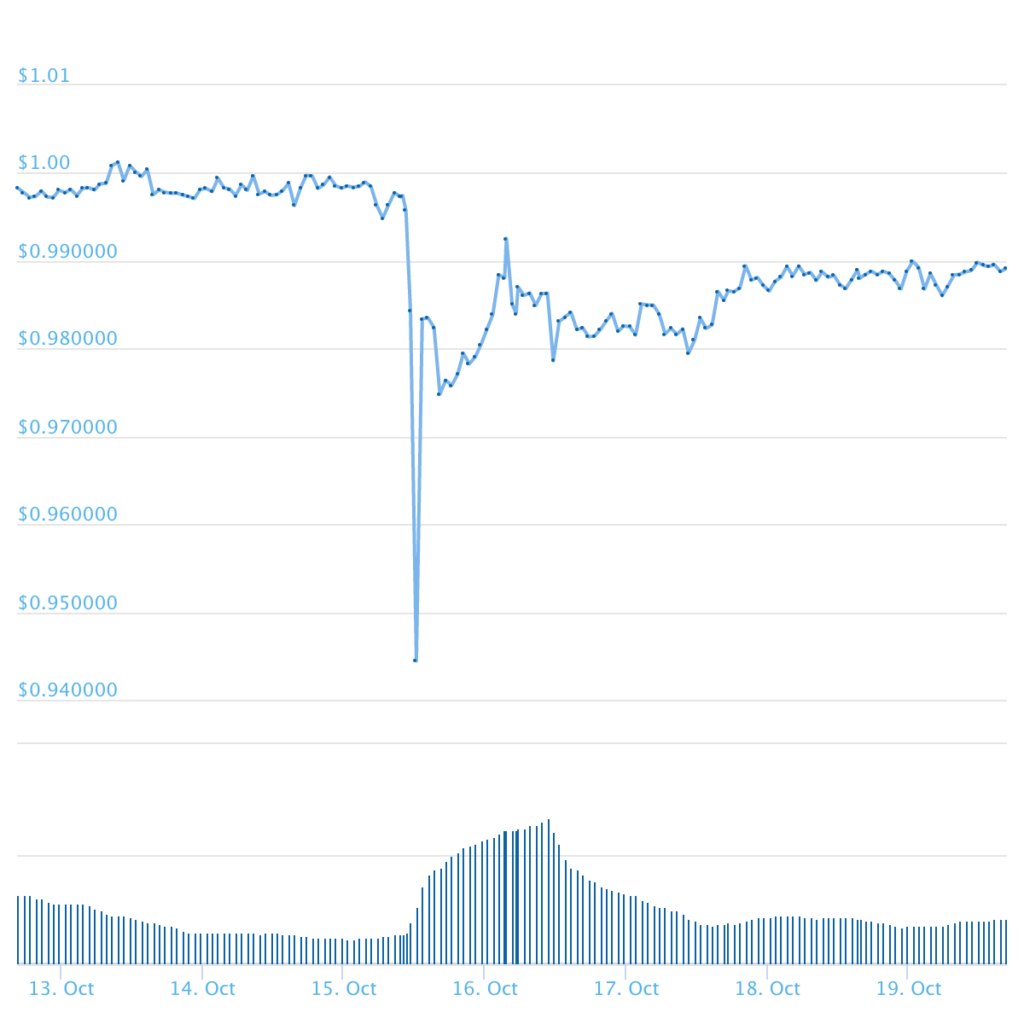
Tether price
Tether price chart (source: coingecko)

Actually, No.

Tether just took a 4% tumble which means that it lost its peg despite having USD in the bank to back its token.

In a ridiculously short paraphrasing, money usually came in two variants:

  1. The ones with intrinsic value (such as Gold), and;
  2. The ones with extrinsic value (such as FIAT)

Each had its pros and cons but it became generally accepted that the usage of money that has extrinsic value gain currency when the stability of the governments (the issuing authorities) increases. Conversely, as the war clouds begin to loom and political crises come into play, the price of Gold shoots up due to increased demand by people who want to get rid of their FIAT and buy Gold instead.
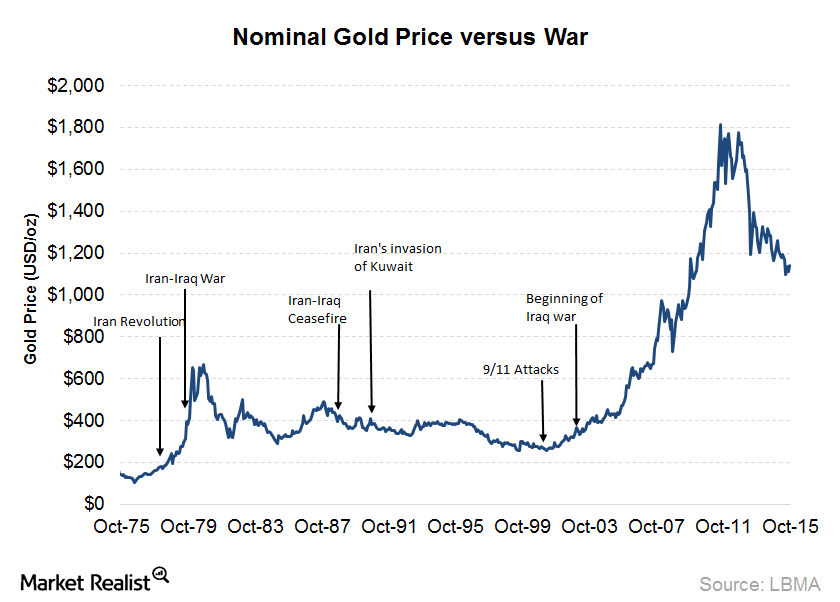
Stablecoins and the price of gold and war
Price of gold vs war

The regular back and forth between intrinsically valuable currencies and extrinsically valuable currencies gave an opportunity to the powerful. They could stir war-like situations and political stability to keep the cycle going and make profits. The Housing crisis of 2007 caused a sharp decline in the price of the American Dollar and a steep rise in the price of commodities.

bitcoin, the first cryptocurrency came into being at this time, and analysts rushed to classify it as one of the two types of currencies:

Some called it an intrinsically valuable currency because:

  1. It had a limited supply.
  2. Its value was determined by its demand.

While others called it an extrinsically valuable currency because:

  1. It was fungible.
  2. It was intangible.

While some people stood by the its-not-a-bug-its-a-feature argument, others saw its volatility as a cautionary tale. This brought several people to the same conclusion that their grandfathers arrived at during the inflationary years following World War II. They pegged the cryptocurrency to the stablest known currency of the time in a bid to stop the inflation.

It was only a matter of time for people to begin minting coins and pegging it to a FIAT currency. Some even tried to peg it to commodities. It is flawed for the same reason that most Americans blame the Chinese for. A Dirty Float. During the Bretton Woods conference of 1944, the top economists of 44 countries arrived at the same conclusion. Maybe, a fixed-exchange-rate system could bring the world’s economic state to behave.

Less than 30 years later, the Americans had to move away from the fixed-exchange-rate system to a partially free float. It is partially free because all governments buy and sell their own currencies and foreign reserves in the open market.

Coming back to stablecoins, they too claim to have established a fixed-exchange-rate system that enables a simple transition from traditional currencies to cryptocurrencies. Surely, if they build it, they would come!

Before we get into the technical issues with stablecoins, let’s address the human element first.

Agencies manipulate the Stablecoin

Tether, the world’s largest stablecoin by market share was accused of creating new USDT without buying an equal number of American Dollars. This is an audit problem. For as long as there is a central authority, the element of human error/malice will remain.

Even if we build a smart contract that buys American Dollars (or any other currency) and then issues a stablecoin, the problems will remain.

Stablecoins affect Velocity

Velocity is the rate at which a currency changes hands. If the velocity is too high or too low, the price will fall. Stablecoins remove a currency or commodity from circulation and create artificial scarcity. Technically, the scarcity should not exist because of the 1:1 exchange rate. Practically though, no jurisdiction will agree to accept a cryptocurrency issued by a non-governmental body and will demand USD instead.
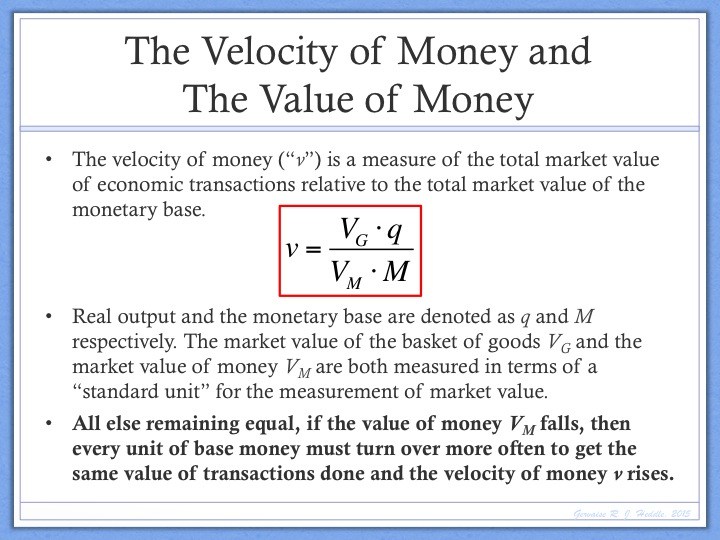
Image result for currency velocity
Source: the money enigma

So, while a 1:1 exchange rate should lead to an increase in the value of the stablecoin, it causes a slight fall in prices due to deflated demand.

Stablecoins are not Decentralized

The stablecoins have issuers to create the token. This is not decentralization. Unless you, I, and everybody else have equal opportunity to create the same stablecoin, like the activity of mining bitcoin, there is no decentralization. Centralized stablecoins are similar to the big banks that were “Too Big to Fail” until they failed.

Stablecoins are Inflationary

The issue of 1 stablecoin to and the removal of 1 FIAT from the economy is inflationary. The exchange of 1 stablecoin for 1 FIAT does not create an economic activity. This makes stablecoins inflationary. Since the FIAT removed from the ecosystem is not destroyed/burned, it is a part of the ecosystem. Issuers can keep this FIAT in banks which loans it out to the public and the locked FIAT increases supply and causes inflation.

Stablecoins Decrease the Tax Base

If you make a profit by trading cryptocurrencies you must pay your taxes on the profits. But, if a trader buys stablecoins during bear market runs, he/she can keep their crypto-profits off the books. Thus, the number of taxpayers and the amount of tax collected decreases. Without taxes, the governments cannot function and will break down. This is different from Zimbabwe and Venezuela. In those countries the government is intact but their economy has fallen. With no government will come anarchy, not laissez-faire.

Also known as Security Tokens, these crypto tokens have a better chance to dodge the problems associated with stablecoins. They are backed by an underlying asset which can be company equities, real estate, or, the world’s favorite asset for over 2000 years – Gold.

Due to their intrinsic value, assets have greater price stability but a lower liquidity. Asset-backed tokens, on the other hand, bring liquidity to the assets without affecting the price stability. If you think about it, this is what happened during the early days of IPOs (Initial Public Offerings). If you owned a big company, you could not sell it. But, if you could divide the company ownership into smaller pieces, you could sell parts of it. That was the birth of equities.

However, equities are highly regulated entities and it is hard to purchase equities in multiple companies based in multiple jurisdictions. At least, for the smaller investor. This is where security tokens come into play. With a standard KYC process and PEP, AML checks, you can purchase equities of companies based in different jurisdictions.

While the standardization of KYC might be a few months/years away, the initial foray can be led by jurisdiction-agnostic assets such as gold which have more palatability. According to the Founder of Aurus, Stefan Gergely,

“Overall liquidity will increase; price will probably stabilize even more. I even expect there to be a long-term, heavy impact such as reducing the potential energy of a financial crisis since people now have a viable alternative to their own currency”.

Crypto-tokens as software layers t0 ensure the fairness of the whole system to via smart contracts is what will bring more acceptance to asset-backed tokens. Offering complex financial products to a people that are still trying to wrap their heads around digital wallet and cryptocurrencies is a hard-sell.

There are other unresolved issues as well such as bounty programs which basically give people free money which is never valued. If I get 10,000 ABC tokens (a fictional token) which I can convert to even 1 ETH, I will not value that 1ETH because I did not work for it. ICOs, on an average, give out 2-5% of their total token supply as bounties and airdrops. This is also a reason for the fall in the price of ETH.

It does not end here, the whacky economics have a dissuasive effect on the investors which was summed up by, Simon Owen, the in-house counsel for Aurus:

I’ve never been a huge fan of bounty campaigns. I understand why many token offerings do them but it seems to me more like a weakness. Here’s how I see things:

  1. Most tokens, even the infamous utility tokens (which I’ve always stood quite firmly against) act in certain ways like securities or shares: their value is supposed to go up, proportionate to the success of the underlying project.
  2. If you own a particular token before your friends or network, you have a vested interest in them getting it anyway, be it because you believe in the project and want to see your friends profit alongside you, be it to hedge certain potential risks.
  3. Regardless, there is an incentive for you to encourage others to buy the token. Any incentive created by the company on top of this has, in my point of view, higher chances of scaring away investors who actually know how to judge the value of a project.

Even though the top 100 bitcoin wallets hold a vast majority of the bitcoins, the community believes in them because bitcoin is decentralized. bitcoin is a parallel currency. bitcoin is not affected by the price of the FIAT currencies. The recent downturn of the crypto-markets has taken us back to 1944. The top economists are contemplating stablecoins as a solution to help us sail through these tumultuous times. Fixed-exchange-rate systems led to an economic depression almost 50 years ago. Stablecoins, if left unchecked will make history repeat and kill the decentralization movement as we know it.

In sum, people think that the march from centralization to decentralization is linear. History teaches us that it is circular. The road back towards centralization goes through stablecoins. The stablecoins are not a bridge, they are a flight of Penrose stairs.
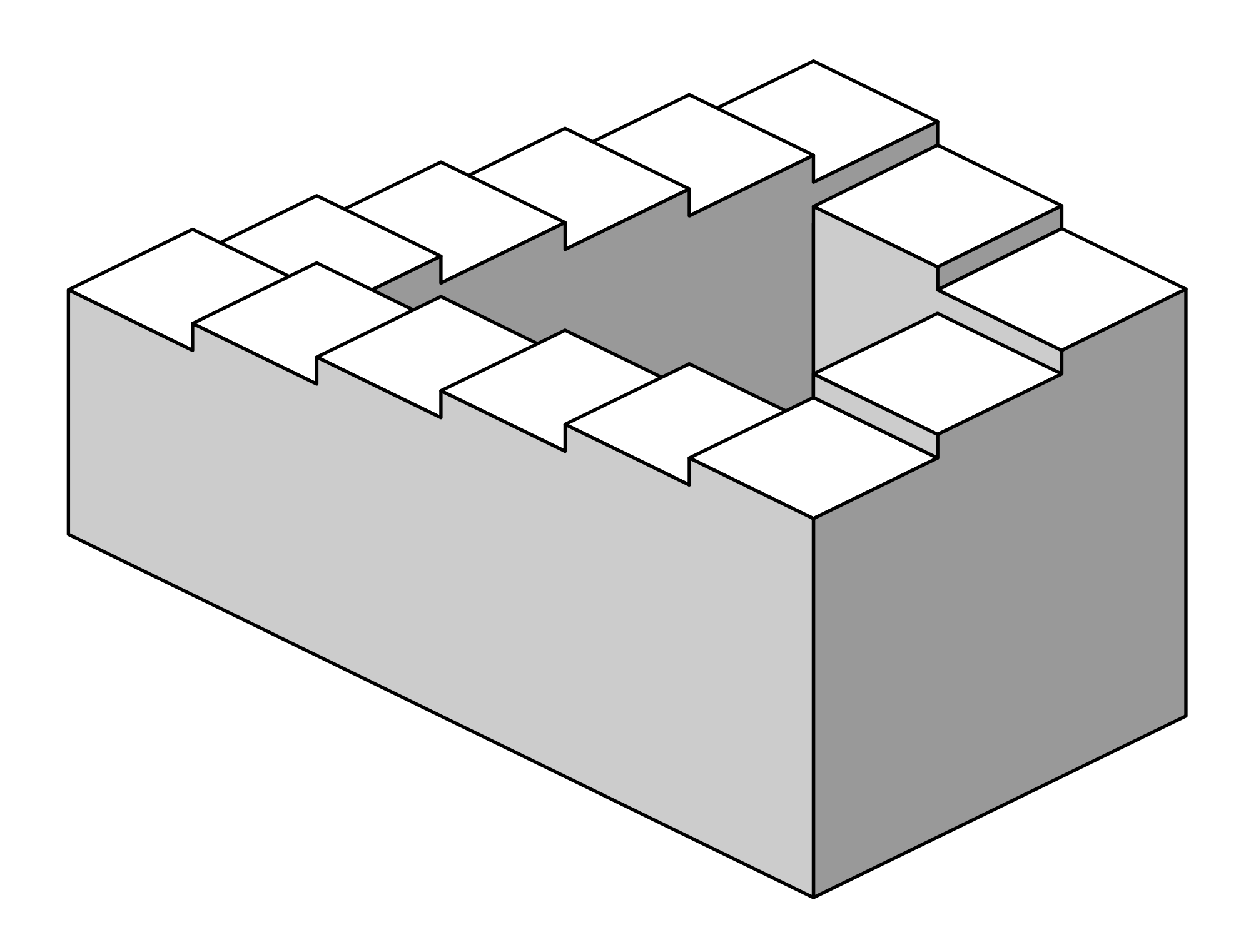
Stablecoins are penrose stairs
Penrose stairs (source: wikipedia)

Featured image from Shutterstock.

Follow us on Telegram or subscribe to our newsletter here.
• Join CCN’s crypto community for $9.99 per month, click here.
• Want exclusive analysis and crypto insights from Hacked.com? Click here.
• Open Positions at CCN: Full Time and Part Time Journalists Wanted.

Advertisement


Published at Sat, 20 Oct 2018 06:41:07 +0000

Previous Article

#Phore blogo v4

Next Article

Bitcoin Cash Merchant Directory Marco Coino Surpasses 500 Listings

You might be interested in …

Hoverex | Cryptocurrency & ICO WP Theme (Technology)

Recent Uploads tagged cryptocurrency Hoverex | Cryptocurrency & ICO WP Theme (Technology) Susan_Moore_Cool posted a photo: gerald-pilcher.com/hoverex-cryptocurrency-ico-wp-theme-te… more info…

Elon musk calls dogecoin ‘my fav cryptocurrency’

Elon Musk Calls Dogecoin ‘My Fav Cryptocurrency’

Elon Musk Calls Dogecoin ‘My Fav Cryptocurrency’ Elon Musk has diversified his cryptocurrency. Or at least, his crypto-related tweets. A month and a half after calling bitcoin “brilliant,” the Tesla and SpaceX founder lauded one […]

‘the blockchain and us’: a new documentary on bitcoin tech changing the world

‘The Blockchain and Us’: A New Documentary on Bitcoin Tech Changing the World

A new documentary film called The Blockchain and Us was released last week exploring how Blockchain technology can change the world in a meaningful way.


Documentary: ‘The Blockchain and Us’

A documentary film dubbed “The Blockchain and Us” by Manuel Stagars has been released last week. The 8-part documentary focuses on what blockchain technology is and the social and economic impact it can have in the world, if its potential is successfully harnessed.

the-blockchain-and-us_still-airport-after-rain

The preview description reads:

Economist and filmmaker Manuel Stagars portrays this exciting technology in interviews with software developers, cryptologists, researchers, entrepreneurs, consultants, VCs, authors, politicians, and futurists from the United States, Canada, Switzerland, the UK, and Australia.

The 30-minute long documentary features cuts from several interviews with industry leaders like Christian Decker from Blockstream, Perianne Boring Founder & President at the Chamber of Digital Commerce, Taylor Gerring Co-Founder at Ethereum, Matthew Roszak Co-Founder & Chairman of Bloq, and many more.

The documentary does not focus on the technical aspects of blockchain technology and should not be viewed as an introductory video. Instead, the film seeks to give a high-level view of the blockchain “far from hype” and “starts a conversation about its wider implications” in several aspects of our society.

Chapter 1: First Contact With The Blockchain

In the first segment, the interviewees describe their first contact with blockchain technology. An experience that has changed many lives but usually starts off with a pinch of disbelief. Most people were quick to dismiss bitcoin and the blockchain once they run into it for the first time, but many return to it after understanding how it works and the potential it has to change the world.

Matthew Roszak Co-Founder & Chairman of Bloq, shared his experience:

I did what most people do the first moment they are exposed to bitcoin. I discounted it. I thought this was silly internet money, you could mine it, it’s like a golden goose and it took me about an year to really re-explore the technology…

Chapter 2: Blockchain Technology

Here, the documentary delves into a high-level explanation of what blockchain technology is and what makes it tick, and what we can do with it.

Image result for R. Jesse McWaters

R. Jesse McWaters Financial Innovation Lead at the World Economic Forum, explained:

You have the ability to create records that are indelible. You have the ability to transfer value by making updates to those records. And you have the ability to automate updates to the records through these things called smart contracts. That means potentially that you could transform the structure of financial services.

Chapter 3: Influence Of The Blockchain

This chapter focuses on how blockchain technology can influence various industries and aspects of our society like financial inclusion, identity, and IoT.

Image result for Rik Willard

Rik Willard, Founder & Managing Director at Agentic Group, said:

As the blockchain became more influential in our thinking we began to realize that it was a profound shift in how the Internet could be used to create new forms of value and how it could be used to enfranchise and include people in global finance.

Chapter 4: New Business Opportunities

Chapter 4 talks about the infrastructure that is being built around blockchain technology, the business opportunities that arise from it and how traditional industries are dealing with and adapting to this disruptive new technology.

Image result for Paul Meeusen

Paul Meeusen, Head Finance and Treasury Services at Swiss Re, stated:

We are all, also in the financial services industry trying to recognize that we don’t have to be defensive but we rather have to embrace not just this technology but this enabler that it brings us to access a vastly underutilized or undiscovered market that we have to do business with on an eye-to-eye level.

Chapter 5: The Blockchain and Banks

This segment explores how big financial institutions will implement blockchain technology through slow upgrade processes and how some of these institutions are reluctant to accept this technological shift, while others are actively researching and testing the technology to stay ahead of the curve.

Image result for Caitlin Long

Caitlin Long, Chairman of the Board & President at Symbiont.io, explained:

I know how big financial institutions work. They’re not going to do something reckless with technology. This is people’s money and livelihood they’re working with.These are slow upgrade processes. These systems, once they get implemented, will run in parallel with the old systems for a while before you have a switch over to the new one. That’s standard in technology upgrade.  knew this was going to take time. But there are antagonists, players who are threatened. It’s the AT&T/Verizon/Kodak analogy again. Their business model is threatened by this and they’re going to do things to slow down and water down the transformational networks. There is a game theory approach to how the technology is being rolled out in the markets, for sure.

Chapter 6: The Blockchain And Financial Inclusion

An estimated 74% of the world population (according to the World Bank) do not have access to basic financial services provided by Banks. Chapter 6 explores how Blockchain technology can drastically change the financial inclusion landscape and allow people to interact with the world economy in a much more meaningful way than micro-finance institutions and other alternatives.

Eric Van der Kleij, Founder OF Adeptra, London Tech City, Level39 and adviser to the UKGovernment expressed his opinion on the subject:

I don’t like to think that we’re creating so much prosperity for the less than one percent. I like to think of purpose-led businesses. By the way, that’s the trick, I think, for large corporations: to understand that the cost/efficiency of embracing this new technology will potentially widen their accessible markets at a cost, that’s reasonable. That in itself will create prosperity in different areas. Something that we should think about.

Chapter 7: The Real Revolution

Blockchain technology can be considered the fourth technological revolution. With it come the same concerns, which is the loss of jobs due to automation. Blockchain technology has the power to cut out institutions that act as intermediaries or “middlemen”, including banks themselves.

This chapter delves into this concern and how various people perceive it. Dolfi Müller, Mayor of the City of Zug stated:

It’s called the ‘fourth technological revolution’ and I think we are at the beginning of such a revolution just now. That’s why we don’t close our eyes. Some people say ‘There will be much trouble, people will lose their work,’ and so on. I’m sure it will happen but it’s better we face it than deny it.

Chapter 8: The Blockchain and Us

In the eighth and final chapter of the Blockchain and Us documentary, interviewees express their thoughts on how blockchain technology can be implemented on a larger scale and how it can affect our lives. From an idea to a full-scale revolution, blockchain technology is here to stay and has the potential to change the world in a meaningful way.

Guido Rudolphi, Founder of Cryptocash:

Everything will change. In my opinion, the possibilities are endless.

The documentary can be seen here.

Full interviews can be seen here.

Do you think Blockchain can truly change the world for the better? Share your thoughts below!


Images courtesy of Angel.co, Linkedin, Blockchain-newyork.com, Caitlin-long.com, Twitter, Shutterstock

The post ‘The Blockchain and Us’: A New Documentary on Bitcoin Tech Changing the World appeared first on Bitcoinist.com.