South Korea to Inspect 3 Banks Over Cryptocurrency Exchange Compliance
Advertisement
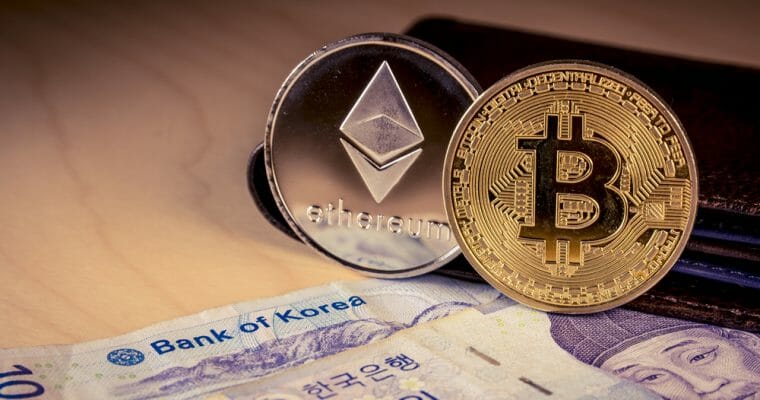
South Korea’s primary financial regulator has confirmed upcoming inspections of three major domestic banks that provide services to cryptocurrency exchanges over their compliance with new AML norms.
In a on Monday, the Financial Services Commission (FSC) said it will be conducting on-site inspections of Nonghyup Bank, Kookmin Bank and Hana Bank between April 19 and April 25 to scrutinize their adherence to newly introduced anti-money laundering (AML) and know-your-customer (KYC) rules. Joining the FSC is the Korea Financial Intelligence Unit (FIU), a watchdog with the mandate to prevent money laundering and illegal financial flows.
NongHyup Bank, in particular, is notable for servicing Coinone and Bithumb, two of South Korea’s largest cryptocurrency exchanges.
As previously, South Korean regulators moved to ban anonymous cryptocurrency trading through anonymous virtual bank accounts offered by domestic banks. The move saw at least six banks issuing new trading accounts for cryptocurrency transactions with new measures that mandates a matching real name between the trader’s bank account and the crypto-exchange account. On January 30, the ban on anonymous trading kicked in and multiple banks began to offer accounts that complied with the new KYC-mandate.
With its inspection, the FSC and the FIU said they would focus on a number of details including checks on the number of trading accounts syncing with the exchanges and their respective deposits, their trading volume and more alongside checking for AML adherence.
The FIU also moved to urge other financial institutions to conduct their own inspections and audits to ensure compliance to new rules.
While anonymous trading accounts to real-name accounts in the country, Korea’s government is also a cryptocurrency taxation framework that is expected to be made public come June this year. The government is expected to begin taxation in 2019.
bitcoin is gaining a lot traction in India. Bitcoinist spoke with Sunny Ray, co-founder of India’s bitcoin exchange UnoCoin, to better understand what is fueling this growing trend in the country.
bitcoin is going places. After conquering China and catapulting it to the front line of bitcoin’s trading and mining sector, it is now starting to get traction in other countries like and South Korea.
Now, bitcoin is also showing signs of a growing adoption rate in India, a country that has been deeply impacted by the demonetization policies implemented.
A look at yesterday’s publication shows that bitcoin is featured on the front page. The publication tells the story of a man who unknowingly exchanged, what would now be, a bitcoin fortune for extra lives on an online game, something that he obviously regrets.
The article also provides some facts about the cryptocurrency, its price, and regulatory standing. It also mentions the Interdisciplinary Committee created to assess the current state of existing global regulatory and legal structures as a means to apply the best regulatory framework possible for bitcoin in India.
The paper reads:
Finance ministry has set up a committee that will look at global regulatory frameworks for bitcoin and suggest measures for India.
bitcoin adoption in the country can be seen, not just in media reports, but also in the data provided by Unocoin, India’s most popular bitcoin Exchange. Co-founder Sunny Ray that:
It took 2 years and 10 months for Unocoin to reach 100,000 users. It only took another 6 months to reach 200,000 users.
bitcoin’s received a lot of attention after the that saw India’s highest denomination banknotes removed from the economy were implemented in November 2016.
Since then, however, much has changed. Unocoin’s Sunny Ray explained what’s fueling bitcoin’s growing popularity in the country:
We think it’s less to do with demonetization and more to do with its underlying benefits. The uses range from: store of value is the number one use case (digital gold), second is inward remittance (as opposed to losing 4 days and 10% in fees), p2p payments, buying things online (mobile top up, etc), and it keeps going.
Furthermore, it’s not just Unocoin that is seeing an increasing adoption in bitcoin within the country.
from p2p exchange reveals this growing trend, for example, as does the global INR market data provided by :
“We conclude that, while the demonetization itself may have been a catalyst for bitcoin’s growth in India, it simply revealed one of the many advantages that bitcoin brings, in this case, the lack of centralized control and the superior provided by the cryptocurrency,” he added.
Earlier this month, the Indian government an Interdisciplinary Committee chaired by various institutions like the country’s central bank and ministry of home affairs.
The committee’s main functions are
to take stock of the present status of virtual currencies (VCs) in and outside of India;
examine existing global regulatory and legal structures for VCs;
suggest measures for dealing with such VCs including issues relating to consumer protection, money laundering, etc;
and to examine any other matter related to VCs that may be considered as relevant.
The committee is expected to release a report on its findings by July of this year.
It is unclear what changes the committee will bring about but Ray hopes that the creation of this organization will help citizens better understand virtual currencies, their benefits and risks.
Ray told Bitcoinist:
Our only hope is to try and educate the public. We are working with the best law firm in the country. The same law firm that’s helped to establish the largest self regulatory body in India, they helped enable payment processing and ecommerce to emerge and many many other seemingly disruptive change to the country: Nishith Desai & Associates. All we can do is try. And the fact that some journalists in India are writing to pry on people’s fears is not helping the cause.
The “largest self regulatory body in India” mentioned by Ray is the (DABFI). The self-regulatory body is comprised of bitcoin startups in the country such as Unocoin, Zebpay, Coinsecure, and Searchtrade.
The organization will focus on creating standard guidelines for trading blockchain based assets, KYC/AML and STR norms, while collaborating with regulators, creating awareness about the benefits and risks of cryptocurrencies such as bitcoin, and producing an environment that will stimulate the creation of other blockchain startups. DABFI will also publish reports regarding cryptocurrencies and blockchain technology.
Will the new Interdisciplinary Committee help advance bitcoin’s adoption in the country? Let us know in the comment section!
Images courtesy of Times of India, CryptoCompare, Shutterstock
AML Compliance Officer bitcoin Depot is one of the largest multi-cryptocurrency ATM Networks in the world offering users the ability to buy and sell bitcoin, Litecoin, Ethereum, and… bitcoin DepotAtlanta, GA From GlassDoor 8 days […]
Ethereum (ETH) Disputations, Code Isn’t Law Insists Vlad Ethereum prices stable but bullish Code is Law a misnomer insists Vlad Zamfir of Casper Labs Transaction volumes low but poised to expand as prices expand After […]