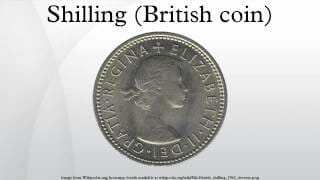
 The shilling was a coin worth one twentieth of a pound sterling, or twelve pence. It was first minted in the reign of Henry VII as the testoon, and became known as the shilling sometime in the mid-sixteenth century, circulating until 1990. The word bob was sometimes used for a monetary value of several shillings, e.g. “ten bob note”. Following decimalisation in 1970 the coin had a value of five new pence. It was made from silver from its introduction in or around 1503 until 1947, and thereafter in cupronickel.
Prior to Decimal Day in 1971 there were 240 pence in one pound sterling. Twelve pence made a shilling, and twenty shillings made a pound. Values less than a pound were usually written in terms of shillings and pence, e.g. forty-two pence would be three shillings and six pence, pronounced “three and six”. Values of less than a shilling were simply written in terms of pence, e.g. eight pence would be 8d.
This video is targeted to blind users.
Attribution:
Article text available under CC-BY-SA
Creative Commons image source in video