Sending bitcoin to the Wrong Address: Loss Unless Returned
bitcoin is a decentralized, peer‑to‑peer electronic payment system in which transactions are recorded on a public blockchain and propagated across a distributed network of wallets and nodes . Because transactions that are confirmed on the blockchain cannot be reversed by a central authority,sending coins to an incorrect address typically results in permanent loss unless the recipient – whether an individual,a custodial service,or an exchange – agrees to return the funds.
Mistakes that cause misdirected transfers include mistyped or truncated addresses, using the wrong address type or network, copy‑paste/QR errors, or sending to an address controlled by another party. Wallet choice and handling practices matter: understanding how yoru wallet constructs and displays addresses, and whether a counterparty (for example, an exchange) can recover funds, affects your chances of recovery . Running your own full node or using trusted infrastructure to verify addresses and transactions can reduce risk, though doing so requires sufficient bandwidth and disk space to maintain the full blockchain .
This article explains how wrong‑address losses occur, what recovery options (if any) exist, and practical steps to prevent sending BTC to the wrong address.
Why Sending bitcoin to the Wrong Address Usually Means Permanent Loss
Transactions on the bitcoin network are final. Once a transaction is confirmed on the blockchain it cannot be undone by a bank,exchange,or any single authority as bitcoin is a peer‑to‑peer system governed by distributed consensus rather than a central operator . This immutability is essential to how the network prevents double‑spending, but it also means human errors - like sending to the wrong address – are encoded into the ledger permanently.
Address strings are long,unique,and unforgiving: a single altered character produces a entirely different destination. Wallet software generally broadcasts validly formatted addresses without guaranteeing the intended owner controls that address,so confirmation checks are limited. Common causes of irreversible mistakes include:
- Typos or truncated copy/paste
- Scanning the wrong QR code
- Using an address for the wrong network (e.g., testnet vs mainnet)
Thes user‑level failures occur despite the network’s technical correctness and decentralization .
Recovery is only possible in exceptional circumstances. If the recipient is a custodial service or an individual who willingly returns funds, coins can be recovered; otherwise the private key that controls the destination address is the only thing that can move the funds.the realistic recovery outlook is summarized below:
| Scenario | Recovery Chance |
|---|---|
| Recipient is known and cooperative | Possible |
| Custodial service (exchange, custodian) | Low to Moderate |
| Unknown address / individual wallet | Very unlikely |
Practical prevention matters more than hope for recovery. Before sending, always verify the full address visually and electronically, send a small test amount first, keep an address book for frequent recipients, and confirm network compatibility. These habits are the most reliable way to avoid the permanent losses that stem from irreversible blockchain transactions .
How bitcoin Address Formats and Immutable Transactions Cause Irreversibility
bitcoin address formats are intentionally precise: different encodings (legacy Base58, P2SH, Bech32) include checksums and distinct prefixes so a mistyped string will frequently enough be rejected by wallet software, but a syntactically valid address that belongs to someone else is treated as a correct destination. once a transaction is broadcast and confirmed, the ledger records the transfer permanently – ther is no centralized “undo” button. This permanence is by design and frequently enough compared to handing over cash, where only the recipient can return the funds and where designers deliberately accepted irreversibility to avoid external control .
The blockchain’s immutability comes from distributed consensus: miners/validators include transactions in blocks, and once those blocks are buried under further work or confirmations, altering history would require overwhelming control of the network. That technical reality means a mistaken send is effectively final unless the recipient voluntarily returns the coins.Researchers are exploring conditional or reversible protocol ideas to mitigate fraud under exceptional circumstances, but these remain experimental and are not the norm for most bitcoin transactions .
Practical consequences for users:
- Loss is highly likely permanent: If the wrong address is valid and privately controlled, funds leave your control.
- no chargebacks: There is no bank or payment processor to reverse the transfer.
- Dependence on the recipient: Recovery requires cooperation from whoever controls the private key.
Below is a compact reference of common address families for speedy recognition (examples only):
| Address Type | Example Prefix | Typical checksum |
|---|---|---|
| Legacy | 1… | Base58Check |
| P2SH / SegWit | 3… | Base58Check |
| Bech32 (Native SegWit) | bc1… | Bech32 checksum |
Because of these technical and social realities, sending bitcoin to the wrong address generally results in permanent loss unless the recipient chooses to return the funds; the architecture that provides censorship-resistance and autonomy also means reversibility is not guaranteed in everyday practice .
Common Mistakes That Lead to Wrong Address Transfers and How to Avoid Them
Human error and address-management quirks are the top causes of funds sent to the wrong place - common examples include pasting an old or truncated address,scanning a damaged QR code,or assuming two similar-looking addresses belong to the same wallet. bitcoin wallets frequently generate fresh addresses for privacy, which can confuse users who expect a single static address; this address rotation is normal for HD wallets and can lead to accidental sends if you use an outdated string .
Malware, clipboard hijacking and network mix-ups introduce another layer of risk. Attackers can replace a copied address in your clipboard, and sending a coin to an address on the wrong blockchain (or an unsupported format) usually means permanent loss. simple practices reduce these risks: verify a pasted address character-by-character, confirm the receiving network, and scan QR codes with care. Wallets with built-in safeguards and address verification can block many of these mistakes .
Test first, then send the remainder. Performing a small-value test transaction before sending the full amount is the most effective habit to avoid catastrophic errors. Other reliable defenses include using reputable wallets,enabling address confirmation prompts,and maintaining offline or hardware wallets for large sums. If a wrong transfer occurs, options to recover funds are typically limited and depend on recipient cooperation or custodial intermediaries; the blockchain itself does not reverse transactions .
Quick reference – practical fixes and checks for common slip-ups:
- Clipboard/typo: verify first 6 and last 6 characters before sending.
- Wrong network/address format: double-check network and wallet compatibility.
- Old address confusion: refresh receive address in your wallet and confirm it’s current .
- Large transfers: always send a small test amount first.
| Mistake | Quick Fix |
|---|---|
| Clipboard hijack | verify characters |
| Wrong chain | Confirm network |
| Old address | Refresh receiver |
| No test send | Always test |
for many wrong-address transfers the only practical recourse is asking the recipient for a return; prevention and cautious workflows remain the most dependable protection .
Immediate Steps to Take After Sending bitcoin to an Incorrect Address
Verify the transaction promptly. Open a blockchain explorer and paste the transaction ID (TXID) to confirm whether the transfer is still unconfirmed or has already been included in a block. Note the destination address, the exact amount sent, the number of confirmations and the timestamp – these details dictate which recovery options (if any) remain available. Quick verification is the first step recommended by wallet and support resources after an accidental send .
Collect and prepare evidence to contact support or the counterparty. If the transaction is unconfirmed, pause any further transactions from the sending wallet and contact your wallet provider or exchange immediatly. If the destination is an exchange or known service, open a support ticket with them. Include the following items when you reach out:
- TXID – the unique transaction identifier.
- Source and destination addresses – full addresses involved.
- Amount and timestamp – exact BTC value and when you sent it.
- Screenshots - evidence from your wallet and the explorer view.
Wallet and exchange support channels often request these exact items to assess possibilities for recovery or tracing .
Understand the likely outcome. bitcoin addresses include checksums that make casual typos less likely to produce another valid address; however, if the address you used is valid but belongs to someone else, the coins are effectively irreversible unless that address owner cooperates. In practice, this means recovery depends almost entirely on whether the recipient (or an exchange that controls that address) agrees to return the funds - otherwise the funds are effectively lost .
What to include in your support request (quick reference)
| Item | Why it matters |
|---|---|
| TXID | Allows support to locate the transaction on-chain. |
| Addresses | Confirms sender and destination for ownership checks. |
| Amount & Time | helps match internal records quickly. |
| Screenshots | Provides visual proof of the mistake and wallet state. |
Submitting a clear, complete support request improves the chance of any possible assistance; consult your wallet or exchange support guidance for next steps and expected timelines .
When and How Recovery might potentially be Possible: Contacting the Recipient or Exchange
Recovery is never automatic: as bitcoin transactions are settled on a decentralized, peer-to-peer ledger that does not support unilateral reversals, the only realistic path to getting funds back is for the party controlling the destination address to voluntarily return them.On-chain immutability means you cannot “cancel” or rewind a confirmed transfer; any recovery depends entirely on human cooperation or custodial policies rather than technical rollback.
If the destination belongs to an exchange, custodial wallet, or a known service, open a support case immediately with clear documentation.Provide the transaction ID (txid),sending and receiving addresses,timestamps,amounts,and any screenshots proving ownership of the sending account. Typical details to prepare includes:
- Transaction ID (txid)
- Exact amount and timestamp
- Sender account details or receipts
- Destination address and any memo/tag used
Exchanges and wallet providers each have different policies and recovery workflows-check their support pages and follow their instructions precisely.
Below is a simple reference of common scenarios and their typical likelihood of recovery:
| Scenario | Likelihood | Typical Outcome |
|---|---|---|
| Wrong memo/tag to exchange | Moderate-High | Exchange can credit after support case |
| Funds to exchange address on wrong chain | Possible, complex | Manual recovery, fees & delay |
| Transfer to an unrelated external address | Low | Only if recipient cooperates or is known |
Policies vary by service-some exchanges maintain explicit deposit-recovery teams while others may refuse or charge high fees. Always check the destination provider’s support documentation and open a formal ticket right away.
Act quickly and keep records: responsiveness and thorough proof speed up reviews, but expect processing times and potential recovery fees. If the recipient is an individual, recovery depends on their goodwill and trustworthiness-public community channels and forums may offer guidance or contacts but cannot compel a return. When seeking help or escalation, use official support channels first and consider community resources for advice only.
Technical and Legal Limitations on forcing a return of Misplaced bitcoin
bitcoin’s ledger is intentionally immutable and distributed: transactions accepted by the network are recorded across thousands of nodes and cannot be unilaterally erased or rewritten. This peer-to-peer design means there is no central operator who can “undo” a confirmed transfer – the protocol treats spent outputs as spent, so recovering funds requires control of the receiving private keys or cooperative action by the recipient . Courts and law enforcement can only compel custodians or individuals to return funds if those actors can access the keys or comply; they cannot command the blockchain itself to reverse a transaction.
From a technical viewpoint, once a transaction has propagated and enough confirmations accumulate, it becomes practically irreversible.Running a full node and understanding block finality depends on downloading and validating the complete chain, which requires considerable bandwidth and storage (the initial sync can take a long time and the full chain size is over 20GB) – factors that underline why the network prioritizes consistency and resistance to arbitrary rollbacks . Attempts to “force” a return via protocol-level attacks (deep reorgs, 51% attacks) are theoretically possible but economically costly, temporally limited, and would likely devalue the asset, making such routes unrealistic for individual victims.
Practical options you can consider include:
- Contacting the recipient – the simplest and often only effective route if the receiving address is controlled by a willing party.
- Contacting exchanges or custodians – if funds went to an exchange deposit address, compliance teams may assist (subject to KYC, legal process, and internal policy).
- Legal action - civil remedies may succeed against an identifiable wrongdoer, but they cannot change the blockchain; they can only compel an entity to relinquish control if that entity still holds the keys.
| Scenario | realistic Outcome |
|---|---|
| Sent to unknown external address | Loss unless holder returns |
| Sent to exchange deposit | Possible recovery via support/KYC |
| Sent to your other wallet | Recoverable with your private key |
As the ledger is distributed and nodes must validate the same history, technical immutability plus jurisdictional limits on enforcement make forced recovery rare and frequently enough impractical – prevention (address verification, small test transactions, and careful key management) remains the primary defence .
Best Practices and Wallet Features to Prevent Wrong Address Errors
human-proof your flow: Treat every outgoing payment as irreversible-design your sending routine to minimize distraction and mistakes. Use copy‑paste with a manual visual check of the first and last 4-8 characters, scan QR codes only from trusted sources, and enable address checksum validation when your wallet supports it. Wallet vendors and guides emphasize that securing your wallet and adopting disciplined habits are your duty for preventing irreversible errors .Hardware wallets and simple,repeatable checks reduce risk dramatically .
Choose wallets with defensive features: Modern wallets include tools specifically designed to stop wrong‑address sends. Look for and enable these features in your app or device:
- Address book / contacts – reuse verified entries rather than typing addresses each time.
- Address format validation – automatic checksum and Bech32 checks to reject malformed addresses.
- Transaction preview – clear display of destination, amount, and fee before final confirmation.
- Whitelist & domain verification – bind known payees to verified domains or IPFS proof for recurring recipients.
- mandatory confirmations – require a second confirmation step (PIN/Biometrics) for high‑value sends.
Many wallet security guides recommend combining these features with hardware signing for the best protection .
| Feature | Prevents |
|---|---|
| Checksum/Bech32 | Typo and copy/paste errors |
| Address Book | Accidental manual entry |
| Hardware Signing | Malware & remote tampering |
| Test Transaction | Sending large amounts to wrong address |
Keep this checklist accessible in your wallet UI or personal SOP so each send follows the same guarded steps-consistent habits are a core part of wallet security advice .
Operational rules to enforce every time: Always send a small test amount first for new recipients, confirm the on‑device display when using hardware wallets, and never rely solely on exchanged text messages or web pages to provide an address without self-reliant verification. If you generate or manage addresses, use reputable wallet software and follow provider recommendations for backups and address generation to reduce user error when creating or copying addresses . Remember: because bitcoin transactions are irreversible, these preventive measures are the practical last line of defense against permanent loss.
Insurance Options, Backup Strategies, and Policy Recommendations to Reduce Risk
Insurance for crypto transfers is evolving; firms may offer custodial insurance (covers assets held by a custodian), bespoke policies from specialty insurers, or rider clauses within broader cyber insurance. Individuals using custodial services should verify whether on-chain transaction errors are covered-most standard policies exclude voluntary transfers to wrong addresses. When choosing a wallet or custodian, confirm insurance scope and claim procedures before transacting .
Robust backup strategies materially reduce loss risk: keep an air-gapped copy of your seed phrase,store hardware wallets in seperate secure locations,and use multisignature setups for higher-value holdings. Recommended practices include:
- Seed phrase redundancy-split and store in geographically distinct,tamper-evident media.
- Hardware wallets-use reputable devices and firmware; retain a verified recovery process.
- Multisig-require multiple approvals to move funds, reducing single-point human error.
Running a personal full node also aids verification and recovery planning for complex setups; be prepared for the storage and bandwidth requirements of full-node operation .
Policy recommendations for organizations and advanced users prioritize procedural controls and technical safeguards. Enforce address whitelisting, require mandatory small-value test transfers before large sends, and implement dual-approval workflows with time delays for high-value transactions. Additional measures:
- Pre-transaction verification-automated checksum and domain validation for pasted addresses.
- transaction caps-limit single-transfer amounts pending manual review.
- Incident response-documented steps for attempted recalls and communication with counterparties and insurers.
Adopt a documented policy and regular drills to ensure staff follow the protocol consistently .
Balancing insurance and operational controls yields the best protection; below is a simple, illustrative coverage matrix to guide planning. Use it as a starting point to discuss terms with insurers and to calibrate backups and controls.
| Tier | typical Coverage | Recommended Controls |
|---|---|---|
| Basic | Small wallet reimbursements | Seed backups, single-sig |
| Standard | Business-level theft & error | Hardware + multisig, whitelists |
| enterprise | Custom large-value policies | Multisig, dual approval, full-node verification |
match coverage to recoverable exposure and continuously test backup integrity; insurance is a complement, not a substitute, for disciplined operational controls .
Q&A
Q: What happens if I send bitcoin to the wrong address?
A: bitcoin transactions are recorded on the blockchain and are irreversible by protocol. If you send BTC to an address you don’t control, the coins will move to that address and remain there unless the holder of that address chooses to return them. Loss is the default outcome unless returned by the recipient or recovered through special circumstances with an intermediary’s help .
Q: Are there any situations where recovery is possible?
A: Recovery can be possible if the wrong address belongs to a service (exchange/custodial wallet) that controls the private keys; in that case you can contact their support and request a manual return. Recovery also may be possible if you sent funds to another address you control (for example, one of your own wallets). Absent control or cooperation of the recipient, recovery is not possible .
Q: What if I mistyped the address (typo) – can the network detect and stop it?
A: Wallet software typically validates address format and checksum and will reject addresses that are invalid. However, if the mistyped address is still a valid address (passes checksum) but belongs to someone else, the transaction will proceed and cannot be undone by the network. Only invalid-format addresses are usually blocked before sending .
Q: What should I do immediately after realizing I sent BTC to the wrong address?
A: Stop any further transactions from the sending wallet, gather transaction details (txid, timestamp, from/to addresses, amount), and contact the recipient or service (exchange) if you can identify them. If the destination is an exchange or custodial service, open a support ticket with full transaction details – they may be able to assist. Keep expectations realistic: recovery depends entirely on the recipient’s cooperation and policies .
Q: Can I reverse the transaction by creating a conflicting transaction?
A: No. bitcoin’s consensus rules and the immutable blockchain prevent you from reversing a confirmed transaction by issuing another transaction. The only practical way funds leave the wrong address is if the holder controlling that address spends or returns them voluntarily .
Q: What if I sent BTC to an address on the wrong network (e.g., sending BTC to a BCH or ERC-20 address)?
A: Outcomes depend on the networks and services involved.Some custodial services can recover cross-chain mistakes if they control the private keys and support the asset, but many such errors result in permanent loss. Always confirm the correct currency/network and address type before sending .
Q: how often are mistaken-send funds recovered in practice?
A: Recoveries are relatively uncommon and typically hinge on the recipient being an exchange or custodial service willing to help, or on the sender having control of the destination address. The typical result reported in guides is loss unless the recipient voluntarily returns the funds or an intermediary intervenes .
Q: are hardware/software wallets liable or able to reverse mistaken transactions?
A: Wallet software cannot reverse a transaction once broadcast and confirmed. Wallets can only help prevent mistakes via checks (address validation, QR scans, paste warnings) and user education. Liability depends on wallet terms and whether a provider offers custodial services – noncustodial wallets have no ability to retrieve funds .
Q: What information should I include when contacting support to request recovery?
A: Provide the transaction ID (txid), source address, destination address, amount, timestamp, wallet software or exchange involved, and any relevant screenshots. Clear, complete information speeds assessment; however, support cannot guarantee recovery and may charge fees or refuse depending on policy .
Q: How can I reduce the risk of sending to the wrong address in the future?
A: Best practices include: double-checking addresses (compare full address, not just start/end), using QR codes or copy-paste carefully, sending a small test amount first for new recipients, using address books or labels in trusted wallets, and enabling wallet safety features (address checksum, warnings). Custodial services often provide deposit addresses per asset – confirm network compatibility before sending .
Q: Is there any legal or law-enforcement route to get funds back?
A: Legal remedies are limited because blockchain transactions are technically transfers of value; law enforcement can investigate if theft or fraud is suspected, and a court order might pressure an identifiable custodian to return funds.If the recipient is an individual with no ties to a recoverable service, legal action is unlikely to succeed in practical recovery of private-key-controlled funds .
Q: Summary: What is the bottom-line rule about sending bitcoin to the wrong address?
A: The bottom line: bitcoin transactions are irreversible and funds sent to an address you do not control are effectively lost unless the recipient (or a custodial service that controls the destination keys) voluntarily returns them or intervenes. Prevention and careful address handling are the primary defenses against permanent loss .
The Conclusion
bitcoin sent to the wrong address is effectively lost unless the recipient (or a custodian such as an exchange or wallet provider) voluntarily returns it – the blockchain’s immutability means transactions cannot be reversed by protocol rules alone. Takeaway precautions include double-checking and validating addresses (use copy‑paste verification, QR scanning, and address books), always sending a small test amount first, confirming the correct network and token, and keeping the transaction ID and timestamps in case a service provider can assist. If a mistake occurs,contact the recipient or the involved service immediately with full details; legal remedies are limited and slow,and success depends on the other party’s cooperation.
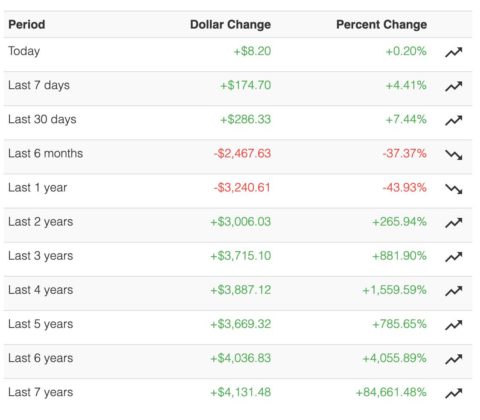
Market volatility can amplify the cost of mistakes – large price swings and significant liquidations have recently produced rapid, substantial losses in crypto markets, increasing the financial impact of any accidental transfer. Exercise caution,use best practices,and treat address entry and transaction confirmation as critical final steps before sending funds.