October 10, 2026

Capitalizations Index – B ∞/21M

Saudi Regulators Warn Against Trading Cryptocurrencies, Citing ‘High Market Risks’

Saudi regulators warn against trading cryptocurrencies, citing ‘high market risks’

Saudi Regulators Warn Against Trading Cryptocurrencies, Citing ‘High Market Risks’

Saudi regulators warn against trading cryptocurrencies, citing ‘high market risks’

A governmental committee of the Kingdom of Saudi Arabia has warned the public that trading digital currencies is illegal in the country, according to an Aug. 12 announcement by the Saudi Arabian Monetary Authority (SAMA). The warning was issued by the Standing Committee for Awareness on Dealing in Unauthorized Securities Activities in the Foreign Exchange Markets.

The standing committee was established by supreme decree headed by Capital Market Authority (CMA), and contains such ministries as the Ministry of Media, Ministry of Commerce and Investment, SAMA, and the Ministry of Interior.

According to the statement, digital currencies are not recognized by the government and no entities are licensed to deal with them. In the warning, the committee notes “high risks” and “negative consequences” associated with virtual currency trading, and urges the public not to fall for so called “get-rich schemes” as they imply “high regulatory, security, and market risks.” The statement does not mention the penalties for those found trading or dealing in cryptocurrencies.

Though Saudi Arabia does not recognize cryptocurrencies, the country has embraced the benefits of distributed ledger technology in various fields. Last month, the municipality of Riyadh entered into a partnership with IBM to jointly develop a strategy to streamline government services and transactions using blockchain technology. The move was made in order to improve the quality of municipal services for customers and integrate leading technologies into services as part of the Saudi Vision 2030 program.

The Saudi Vision program was originally introduced in 2016 by the Crown Prince Mohammad bin Salman and is devoted to the economic development and diversification of the country’s economy. In addition to prioritizing innovative technologies like blockchain, the program aims to develop such sectors as infrastructure, healthcare, tourism, education, as well as military spending and manufacturing.

In February, SAMA and Ripple announced an agreement to provide support for Ripple’s cross-border payments technology to banks in the Kingdom of Saudi Arabia. The two parties created a pilot program to support Saudi banks in using xCurrent, Ripple’s enterprise software solution that enables banks to instantly settle international payments with end-to-end tracking.

Published at Mon, 13 Aug 2018 22:49:00 +0000

bitcoin

Previous Article

Pillar – Shine

Next Article

REALIST NEWS – Psychic Utsava Has a Coin Pick for you – Gifto (GTO) coin

You might be interested in …

BitPesa & BitBond Jumpstart Bitcoin Blockchain Loans to Kenya

German Blockchain loans provider BitBond has partnered with BitPesa to facilitate payments directly to Kenya mobile accounts.


BitBond: Sub-Saharan Africa is 10% of Our User Base

The international partnership comes as Sub-Saharan Africa grows to 10% of BitBond’s user base and BitPesa’s popularity in its native Kenya continues.

BitBond CEO Radoslav Albrecht said in a blog post Tuesday:

This means that a small business owner from Kenya can receive loan funding from investors from all over the world via Bitbond and have the funds paid out to his mobile money account in 20 minutes. 


radoslav-albrecht-bd60bbfa3202bf6dce4e7625032aa01623d8b4921ed065146af93d315faab208

Smaller African enterprises’ lack of access to mature funding options has become a focus in recent times. In catering specifically to businesses, BitBond hopes to provide a major overhaul to the local ecosystem using the Blockchain and bitcoin as a backbone.

Focus on Developing Market Financing

Earlier this month, Daimler hinted at the possibility of considerable expansion into African markets following its acquisition of a European cryptocurrency transmitter business.

The concept is likely to involve similar facilitation of funding access for local businesses – specifically those in the automotive transport sector – helping resolve the current status quo where loanshark-like operators abound.

Africa mobile

“The major problem observed in the automotive sector is lack of adequate financing facilities,” Ethiopian financial services company director Eskinder Desta told industry magazine Autconomy in an article discussing Daimler’s move.

Across the world’s developing economies, a reported 2 billion individuals and 200 million businesses lack the sort of funding options available elsewhere.

“This is an unprecedented level of innovation and convenience in the entire online lending space,” Albrecht added.

Blockchain Channels International Remittance Interest

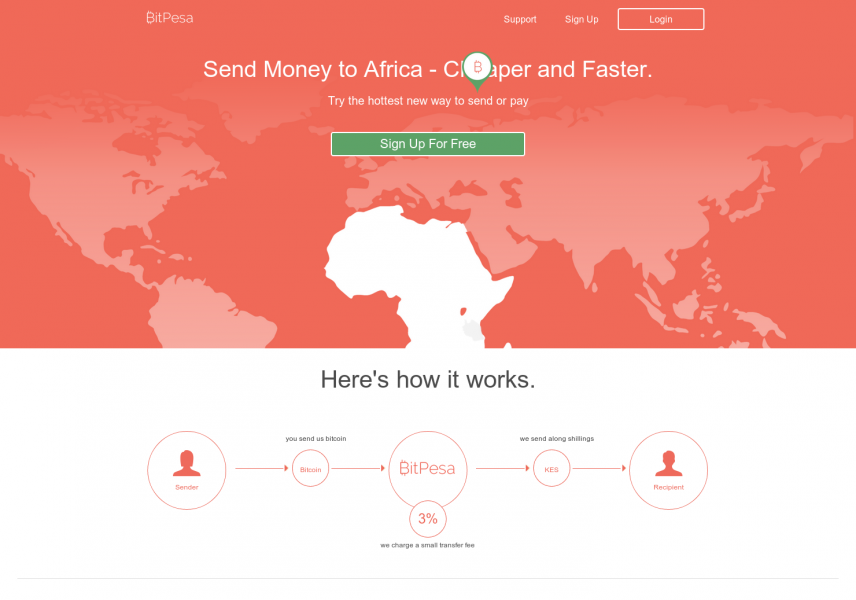
BitPesa offers a raft of cashing out options on the consumer end, first and foremost via Kenyan mobile accounts, the analog equivalent of which – M-Pesa – has held a consumer monopoly for years in lieu of significant banking penetration.

The startup is seeing continued international interest in its remittance functionality. In February, Japanese-Kenyan company Africa Incubator joined up in order to expedite payments to and from the Far East.

BitPesa-Wide-e1432028690201

“We are always excited to partner with companies that make doing business in Africa easier and more efficient,” BitPesa’s CEO Elizabeth Rossiello continued on the BitBond deal.

Our customers are businesses looking to grow across the continent and beyond. Better access to efficient financing is a tremendous way to boost their growth.

What do you think about BitBond’s plan to increase Blockchain loans to Kenyans? Let us know in the comments below!


Images courtesy of Shutterstock, Bitpesa, Bitbond

The post BitPesa & BitBond Jumpstart Bitcoin Blockchain Loans to Kenya appeared first on Bitcoinist.com.