June 15, 2026

Capitalizations Index – B ∞/21M

Romania Imposes 10% Tax on Cryptocurrency Earnings

Romania imposes 10% tax on cryptocurrency earnings

Romania Imposes 10% Tax on Cryptocurrency Earnings

Romania imposes 10% tax on cryptocurrency earnings

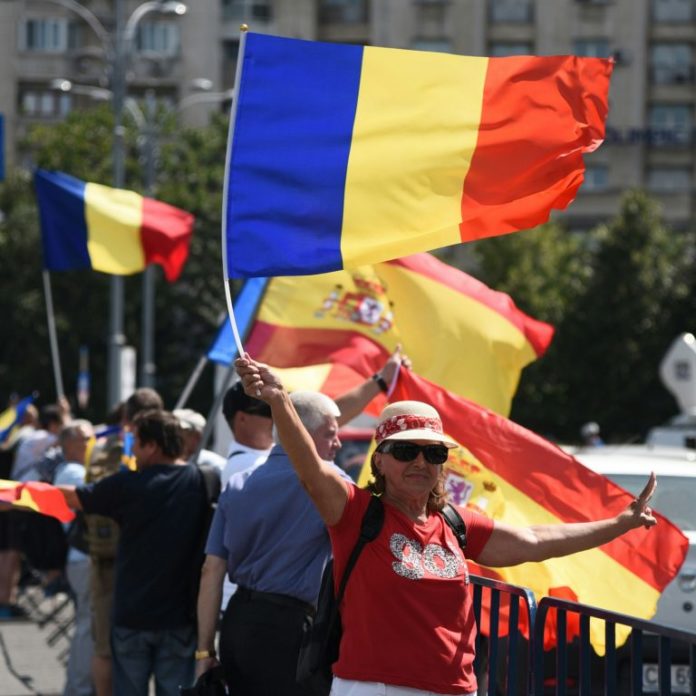
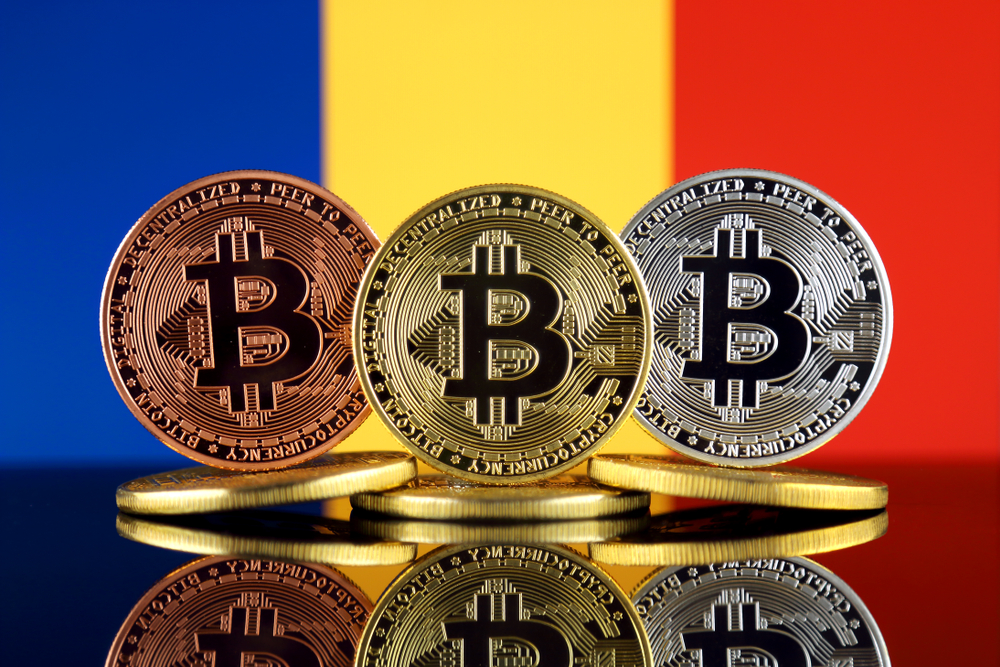
Romania has amended its tax laws, allowing it to start taxing gains from bitcoin $BTC investments at a rate of 10 percent. The improved fiscal code legislation categorizes earnings generated from buying and selling cryptocurrencies as “income from other sources” and therefore subject to income tax, local media reports.

Also read: Falcon Private Bank Launches Crypto Wallet With Support for Direct BTC and BCH Transfers

Only Gains From Crypto Investments to Be Taxed

Romanian daily financial newspaper Ziarul Financiar quoted Adrian Benta, a local tax consultant, as saying: “Now, the earnings from bitcoin $BTC are taxed and declared in the annual income statement. Only the earnings [or gains, as opposed to revenues] are taxed.”

Romania imposes 10% tax on cryptocurrency earnings

Gains from any single transaction which are below 200 Romanian ron (about $50) will not be taxed, the article said. However, investors will pay the 10 percent income tax on crypto earnings that exceed a cumulative 600 ron in a year.

Benta told the Bucharest-based publication that the cryptocurrency tax thresholds, according to the new legislation, were “fair”. He stated:

Before this, we had a more cumbersome procedure in which one had to register as freelancer if he was trading repeatedly. It is now treated as an extraordinary income from other sources.

It is not clear how government will enforce compliance of the self-declared crypto income tax.

Growing Crypto Taxation Trend

The east European country’s nascent bitcoin $BTC market was recently rocked by news of the arrest and impending extraditiin of Vlad Nistor, founder and chief executive officer of Coinflux, to the U.S. Nistor, who heads one of Romania’s biggest digital asset exchanges, is facing charges of money laundering, allegedly committed through his trading platform. Coinflux has traded the equivalent of $229 million worth of crypto since it was founded in 2015 and reported turnover of $3.4 million last year.
Romania imposes 10% tax on cryptocurrency earnings

Cryptocurrency has become a prime target for governments throughout the world seeking to help themselves to profits from a technology built to resist their control. Romania joins a growing list of governments to roll out crypto tax legislation. Chile announced this week that it will start taxing bitcoin $BTC profits in April and that it will monitor individual investors to ensure they are paying the crypto tax at the right level. In Spain, government has drafted a law that seeks to compel investors to declare their crypto asset holdings, partly as a measure to prevent tax evasion.

Spain’s Ministry of the Treasury has since identified 15,000 cryptocurrency investors it is monitoring to prevent tax evasion and money laundering. The ministry has vowed to ensure that the investors pay taxes on capital gains from digital currency transactions and that they declare any other benefits accrued from trading.

What do you think about the growing trend by world governments to tax cryptocurrency? Let us know in the comments section below.


Images courtesy of Shutterstock.


Express yourself freely at bitcoin.com’s user forums. We don’t censor on political grounds. Check forum.bitcoin.com

The post Romania Imposes 10% Tax on Cryptocurrency Earnings appeared first on Bitcoin News.

source: https://news.bitcoin.com/romania-imposes-10-tax-on-cryptocurrency-earnings/

Published at Tue, 22 Jan 2019 18:22:21 +0000

Previous Article

Bank of England Senior Advisor: Cryptocurrencies Neither a Good Store of Value nor a Medium of Exchange

Next Article

Romania Imposes 10% Tax on Cryptocurrency Earnings

You might be interested in …

Introducing a Programming Language so Simple, It “Fits on a T-shirt”

http://plas2017.cse.buffalo.edu/

Blockstream is introducing Simplicity, a new programming language for blockchain-based smart contracts, intended for inclusion in Blockstream’s sidechains and eventually in bitcoin. The new language was presented by its creator, Russell O’Connor, Infrastructure Tech Developer at Blockstream, at the ACM SIGSAC Workshop on Programming Languages and Analysis for Security (PLAS 2017).

“Simplicity is a blockchain programming language that is so simple, it fits on a t-shirt,” O’Connor told bitcoin Magazine. “It is critical that smart contracts behave in ways that all participants expect, and applying formal verification to Simplicity allows us to achieve that.”

Simplicity is still a Blockstream Research & Development project, but there’s potential for its use in Blockstream products in the future, according to the company’s announcement.

“Simplicity is flexible enough that I anticipate many new, domain-specific, languages will generate Simplicity, and this will give users the freedom to generate smart contracts using the tools that most suit their needs,” added O’Connor.

O’Connor’s paper, titled “Simplicity: A New Language for Blockchains,” presents Simplicity as “a new programming language, designed to be used for cryptocurrencies and blockchain applications, which aims to improve upon existing cryptocurrency languages, such as bitcoin Script and Ethereum’s EVM [virtual machine], while avoiding some of the problems they face.”

bitcoin script is limited by design and unsuitable for complex smart contracts that need more than a small set of simple templates to perform tasks like digital signature verification. Ethereum, on the other hand, includes a more expressive and flexible, Turing-complete programming language, which allows for arbitrarily complex smart-contracts in principle.

But, in practice, Ethereum doesn’t support static analysis to pre-determine the computing resources that a program will require and, thus, filter out too costly contracts and infinite loops. Therefore, pre-paid “gas” fees are lost when an Ethereum program “runs out of gas.” The simpler bitcoin scripting, which supports static analysis, doesn’t present similar issues.

In a post to the bitcoin-dev mailing list, O’Connor proposed Simplicity as an alternative to bitcoin Script, noting that static analysis is important for both node operators and for Simplicity program designers.

“Static analysis is a technique that provides a universal algorithm to determine how much any Simplicity program will cost to run before you stake your money on it,” O’Connor told bitcoin Magazine.

Simplicity can be seen as a more flexible alternative to bitcoin scripting, not Turing-complete but expressive enough to build useful smart contracts for blockchain applications, or as an alternative to Ethereum, which will support static analysis and other desirable features including improved safety, formal semantics, and Merkelized Abstract Syntax Trees (MASTs).

While Simplicity is intended as a low-level language for smart contracts, O’Connor envisages the possibility of compiling programs written in higher-level languages (like Ethereum’s Solidity) to Simplicity.

“Ivy and the Σ-State Authentication Language are existing programming language development efforts that may be suitable for being compiled to Simplicity,” notes O’Connor in the paper. “For the time being, generating Simplicity with our [Haskell] and [Coq] libraries is possible.”

The next step in Simplicity’s development will be a bare-bones SDK (Software Developer Kit) that will include formal semantics and correctness proofs in Coq, a Haskell implementation for constructing Simplicity programs and a C interpreter for Simplicity. Then, the new language will be ready for initial deployment in the Elements project, Blockstream’s open-source codebase for sidechains, so that developers can start experimenting with the code.

But, as O’Connor stated on bitcoin-dev, “Only after extensive vetting would it be suitable to consider Simplicity for inclusion in bitcoin.”

The post Introducing a Programming Language so Simple, It “Fits on a T-shirt” appeared first on Bitcoin Magazine.