November 12 2018, Lugano, Switzerland – , the decentralized asset management protocol, has announced that it will be holding an ongoing airdrop of the Rigo (GRG) Token to coincide with its upcoming public token sale. The blockchain based project revealed that it had opened its .
Rigo Investment Limited recently announced that RigoBlock would be holding a public ICO. The sale, which is set to be carried out on December 18th 2018, will see 3,000,000 GRG tokens distributed equating to 30% of the total token supply.
The airdrop will see each successful whitelisted participant in the RigoBlock protocol given a free GRG Token, with the distribution of these tokens set to come from the ‘bounties’ pool of the total token supply. This initiative comes as a reward to all those who have been early followers of the RigoBlock project. RigoBlock’s Founder and CEO, Gabriele Rigo stated that:
“We are excited to reward all of our early adopters who have completed the whitelisting process. The aim of this airdrop is to have users experience the full functionality of the platform and be able to use the tokens instantly. This comes as a thank you to all of those who have believed in the RigoBlock project and as a sign of our goodwill. I hope that you enjoy this airdrop and we look forward to having you join us for the rest of our journey.”
The GRG token is the first utility token for asset management designed to be used as the basis of a rewards mechanism for specialized operators within the RigoBlock ecosystem, as well as being an access token. Participants receive GRGs based on the value and the performance of a specific token pool. This allows token pools to be operated without fees for an alternative and fairer rewards mechanism.
In order to be eligible for this airdrop, all participants must have completed and be approved by the TokenMarket whitelist process.
Details of the full overview of token metrics and a thorough explanation of the GRG token’s utility within the network are available at .
To register for the limited whitelist visit .
About RigoBlock
RigoBlock is a blockchain protocol for decentralized asset management. It is an abstracted and generalized standard, built and deployed on the Ethereum public blockchain and portable to multiple blockchains, which streamlines the creation and management of complex applications for asset management. The RigoBlock protocol offers new types of incentives by aligning interests through the Proof-of-Performance algorithm, eliminating traditional management and performance fees. RigoBlock graduated from the “Blockchain Business Solution” accelerator program by H-Farm in cooperation with Deutsche Bank. RigoBlock is a member of the Enterprise Ethereum Alliance and Cryptovalley Association.

In today’s edition of The Daily, we report on the latest U.S. museum to open up to cryptocurrency payments, as well as several new lawsuits that have been filed over simjacking. Additionally, the government of Estonia has granted a license to B2BX Exchange, which will allow the company to attract traders from across Europe.
Also Read:
Science Museum to Take bitcoin Payments
 Great Lakes Science Center, an engineering and technology museum in Cleveland, Ohio, has told local media outlets that it will begin accepting cryptocurrency payments on Nov. 13. The educational center is integrating Bitpay into its payments system for ticket sales ahead of a blockchain conference that will be held at the facility in December.
“Accepting bitcoin is just a small part of the momentum to grow a blockchain ecosystem in Cleveland,” Kirsten Ellenbogen, president and CEO of Great Lakes Science Center. “Last year we launched our mobile app that uses augmented and virtual reality to allow guests to experiment with flames in space and test spacecraft designs re-entering Earth’s atmosphere when they visit the NASA Glenn Visitor Center, and now they’ll be able to use their phone to pay for their admission using bitcoin.”
Estonia Grants License to B2BX Exchange
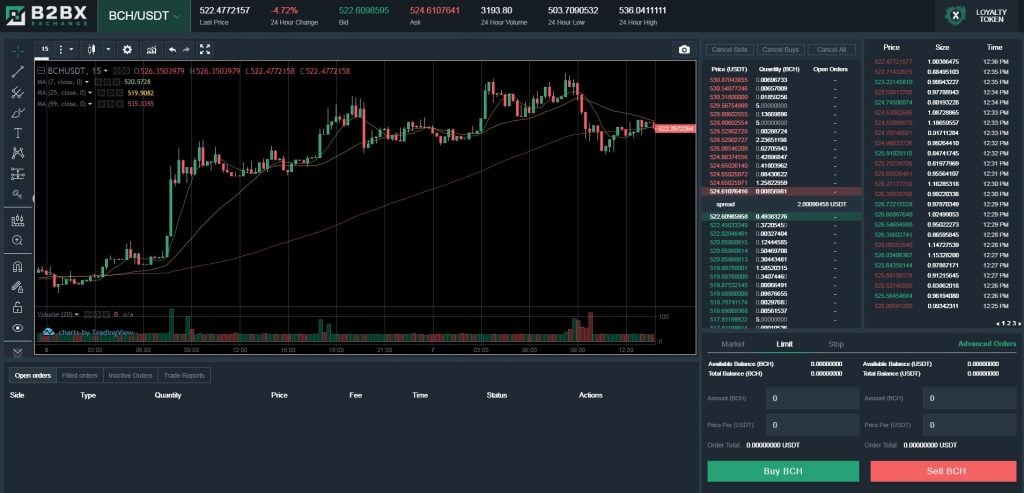
 B2BX Exchange, a cryptocurrency exchange developed by forex solutions provider B2broker, announced today that it has received approval for a regulatory license from the Estonian Financial Intelligence Unit (FIU). The company explained that it applied for a license in Estonia due to the country’s track record of openness to new technologies. Under the regulations the exchange will be expected to follow strict KYC procedures, but in return users will get increased daily limits on deposits and withdrawals, as well as access to fiat currencies via bank transfers and major payments providers.
“I have long been a proponent of regulation which I believe will promote further the adoption of cryptocurrency usage and cryptocurrency trading,” commented Arthur Azizov, CEO and founder of B2broker. “Our users will be able to benefit from an enhanced level of protection, safe in the knowledge that they are dealing with a world-leading, regulated cryptocurrency exchange.”
Florida Law Firm Files Simjacking Lawsuits
 Silver Miller, a Florida-headquartered law firm, said on Thursday that it recently filed a number of arbitration claims against both AT&T and T-Mobile on behalf of cryptocurrency holders who have fallen victim to . The firm revealed it already represents one AT&T client who was robbed of more than $600,000 in cryptocurrency, as well as two T-Mobile clients who respectively lost $400,000 and $250,000 in cryptocurrency due to simjacking.
“By leaving holes in their security protocols and failing to properly train and monitor their employees, cellphone providers have assisted thieves in remotely taking over the SIM cards in people’s smartphones,” the law firm explained. It also called on anyone else who has been a victim of simjacking to join its legal efforts against the phone companies that enabled it.
What do you think about today’s news tidbits? Share your thoughts in the comments section below.
Images courtesy of Shutterstock.
Verify and track bitcoin cash transactions on our , the best of its kind anywhere in the world. Also, keep up with your holdings, BCH and other coins, on our market charts at , another original and free service from bitcoin.com.
The post appeared first on .
Someone on Reddit under the name AUTI9003, posted a which demonstrated arbitrators on the network in action, reversing confirmed transactions. A “judge” is referring verses from the EOS blockchain’s constitution, and trying to resolve a dispute between two account holders.
The claimant accused an unidentified individual of possessing private keys to its EOS account via a phishing attempt. The user reached out to the EOS with a complaint and the network chose one Ben Gates as an arbitrator to resolve it, under the management of another individual called Moti Tabulo.
The rulling says:
“Under the powers afforded to me as arbitrator under article 6 of the Rules of Dispute Resolution, I, Ben Gates, rules that the EOS account in dispute should be returned to the claimant with immediate effect and that the freeze over the assets within the said account is removed.”
EOS is a relatively new blockchain protocol in the crypto-sphere. It’s ICO, which began in June 2017, went on for a year and ended in June 2018. The ICO raised over $4 billion without a live product, thus becoming the most successful ICO to date according to the funds raised.
Prominent names including Peter Thiel, Bitmain, Louis Bacon, Alan Howard, and Mike Novogratz’s Galaxy Digital have invested in the platform.
This announcement was soon pretty much criticized by other Reddit users who asked why anyone would use EOS over a bank account and traditional legal system. In fact, blockchain testing firm Whiteblock recently found that the network had fewer features of a decentralized blockchain than that of a cloud computing service.
The project is now also questioned over its scalability solutions. If we, for example have 100 accounts that are phished in an attack, that means that each of them creates a “case” on the EOS portal, each of them present evidence, the other party responds, then the EOS gods come to a decision. From this ruling it seems that it takes almost a month or more from freezing the account, hearing both sides, taking a decision.
Many also argue that why would a crypto user find EOS better than any traditional legal system, given its high authority over the network.
Daniel Larimer, one of the creators of the EOS protocol said in an interview that decentralization is not what they are after.
He said:
“What we’re after is anti-censorship and robustness against being shut down.”
In June, EOS “froze” seven accounts that were suspected of having been compromised through phishing scams, with EOS Block Producers (BP) shortly after reportedly receiving a separate emergency order to stop the processing of transactions for 27 accounts with reasoning to follow.
In November, a report was circulating about EOS . There are other people in the blockchain world who would agree with at least some of the statements from the report.
According to Whiteblock, the “world’s first blockchain testing company,” EOS may claim to be blockchain but it is really something else. More specifically, EOS is a distributed homogeneous database management system.
Whiteblock hammers EOS further calling it just a cloud service:
“EOS token and RAM market is essentially a cloud service where the network provides promises for computational resources in a blackbox for users to access via credits. There is no mechanism for accountability due to the lack of transparency on what Block producers are able to create in terms of computational power. EOS throughput is significantly lower than EOS initially claimed in marketing materials. EOS suffers from consensus failures and lacks Byzantine Fault Tolerance.”
CarbonUSD Becomes First EOS’ Stablecoin
U.S. dollar-pegged stablecoin has launched on the EOS (EOS) network, only months after Carbon released it on Ethereum’s network.
Stablecoins are designed to remove the volatility associated with cryptocurrencies, and each stablecoin has a unique method of achieving this stability. In the case of CUSD, the tokens are backed on a 1-1 basis to US dollars, and funds are held in FDIC-insured accounts.
Carbon also offers a portal that provides users the facility to interact with their EOS application, and includes native smart contracts for “one-to-one redemption from tokens into real USD.”
Sam Trautwein, CEO and co-Founder of Carbon said:
“We are honored and excited to be the first stablecoin on EOS and to play such a crucial role in such a burgeoning ecosystem. Stablecoins are critical infrastructure for value and we think providing this to EOS further enhances the ecosystem.”
The announcement noted that Carbon would provide early access to the token to a select group of investors, including institutional investors, crypto exchanges and hedge funds.
Users will make deposits in fiat to the company’s banking partner Prime Bank, and the Nevada-based institution will forward it to a smart contract that will initiate the ‘minting’ of new CarbonUSD tokens. These token are then sent to the user’s wallet address.
The Carbon team believes that its unique algorithmic model gives it a distinct identity in comparison to its competitors. The team is working on interoperability of CarbonUSD, based on Ethereum, with other blockchain protocols. If CarbonUSD reaches $1 billion market cap, the team will shift the stablecoin protocol to a more robust Hedera Hashgraph public network, which is currently under development.
Just for reminder, last month Ethereum-based popular decentralized exchange protocol announced starting working on a new platform BancorX to facilitate easy cross-chain transfers between Ethereum and EOS. This platform should be acting as a bridge between the two decentralized blockchain platforms enabling easy cross-chain transactions.
The post RigoBlock Announces Airdrop for All Whitelisted Participants for December 2018 appeared first on Ohio Bitcoin.
