PhD candidate Yonatan Sompolinsky and Dr. Aviv Zohar, both of the Hebrew University of Jerusalem, released a this week on a new scalable BlockDAG — an alternative network structure to — protocol called PHANTOM.
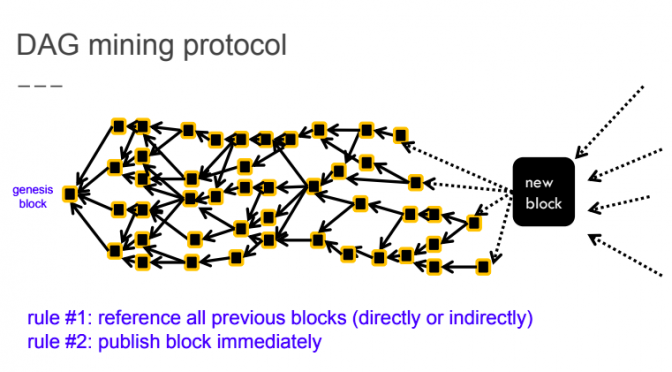
Sompolinsky and Zohar’s on the GHOST protocol introduced the BlockDAG structure — which essentially changes bitcoin’s Blockchain structure into a tree — as a way to improve security and speed up transaction times.
In a talk at in November 2017, Sompolinsky explained the BlockDAG structure as serving everyone simultaneously. This is in contrast with the structure of Blockchain, in which new blocks are added one at a time once they have been verified.
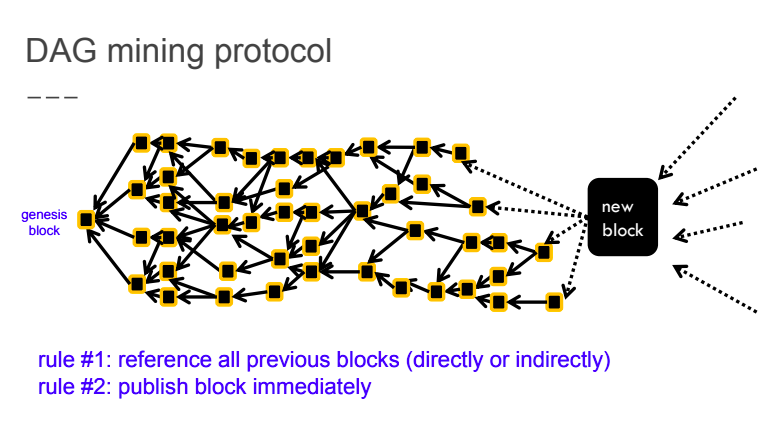
The PHANTOM paper builds off of the researchers’ protocol, which confirms transactions with recursive voting of previous blocks. However, unlike SPECTRE, PHANTOM will use a “greedy algorithm” on a BlockDAG protocol to create a more linear block structure by “distinguish[ing] between blocks mined properly by honest nodes and those mined by non-cooperating nodes that deviated from the DAG mining protocol.”
The linear structure of PHANTOM means sacrificing the faster confirmation times that came with SPECTRE, although the paper brings up the possibility of combining the two protocols in order to “enjoy the best of both worlds.”
Although most cryptocurrencies run on a Blockchain protocol, there are . Byteball is a DAG-based currency in which transactions are linked together and contain hashes of previous transactions. is also DAG-based — the creation of a new transaction must validate at least two previous transactions.
Published at Sat, 03 Feb 2018 21:37:09 +0000
Blockchain[wpr5_ebay kw=”bitcoin” num=”1″ ebcat=”” cid=”5338043562″ lang=”en-US” country=”0″ sort=”bestmatch”]