It could also be them who is spamming the network. Spend a little in fees to get a little profit in fees.
Imagine two mechanics own an autobody shop and there’s a car that needs an oil change.
One guy wants to do it the simple way: drain the old oil, and pour in the new oil.
The other mechanic says “no no, we can’t do it that way, we might spill some oil,
so we’re going to do a fancy engineering project that will cost 5000x as much.
It will involve dissassembling the car, building a separate garage, its going to
take 2 years, but that’s my plan.” If the mechanics disagree, who’s fault is it?
Raising the blocksize is the obvious simple move (literally 1 line of code), and it was the Satoshi’s plan from the beginning.
Miners all favored it, but it was Core who blocked that with their influence, and then came out with segwit which is
literally 5000 times more complex (5000 lines of code).
You decide who is at fault.
Published at Fri, 14 Apr 2017 04:06:21 +0000
[wpr5_ebay kw=”bitcoin” num=”1″ ebcat=”” cid=”5338043562″ lang=”en-US” country=”0″ sort=”bestmatch”]
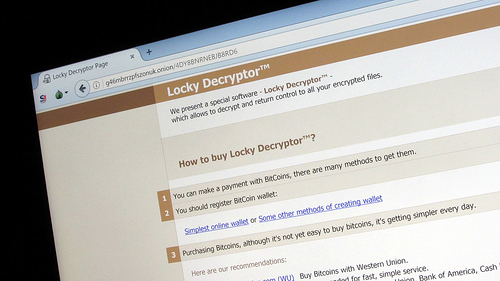
Example of Locky ransomware.
Locky is ransomware malware released in 2016. It is delivered by email and after infection will encrypt all files that match particular extensions.
After encryption, a message (displayed on the user’s desktop) instructs them to download the Tor browser and visit a specific criminal-operated Web site for further information.
The current version, released in December 2016, utilizes the .osiris extension for encrypted files.
Many different distribution methods for Locky have been used since the ransomware was released. These distribution methods include Word and Excel attachments with malicious macros,DOCM attachments and zipped JS Attachments.
Read more:
By Christiaan Colen on 2017-03-15 21:56:35