Transportation mobility options are not only critical for many people’s lives, but they are also a key element of a thriving economy. As our world becomes more urbanized though, many are choosing not to purchase a car of their own due to the ever-growing and increasing cost of ownership.
There is already a growing body of evidence that car ownership may no longer be a good deal. When people become unhinged from their cars, they no longer have to worry about issues such as parking, insurance, maintenance and fuel costs.
It’s evident that the sharing economy, a rapidly growing social phenomenon that has sprung out of the digital economy, is upending the trajectory of many industries and, in general, challenging the status quo. Using this model, owners share resources they’re not using, such as a car, a bicycle, or other mobility option for marginal profit.
A new startup company, Helbiz, envisions a world of decentralized transportation by way of an on-demand, peer-to-peer (P2P) marketplace. The company is poised to serve as the nexus between those seeking short-term mobility rental and those with access to a private vehicle, bike, motorcycle or even an airplane.
To usher in the decentralized sharing-economy business model, Helbiz is championing the notion that mobility options can become money-making assets for owners who choose to rent them. In other words, Hellbiz wants to monetize the cars and other mobility assets that often sit idle the vast majority of the time. This value proposition is of particular appeal to a new generation of potential users who harbor a “car-free, rent it when you need it” mindset.
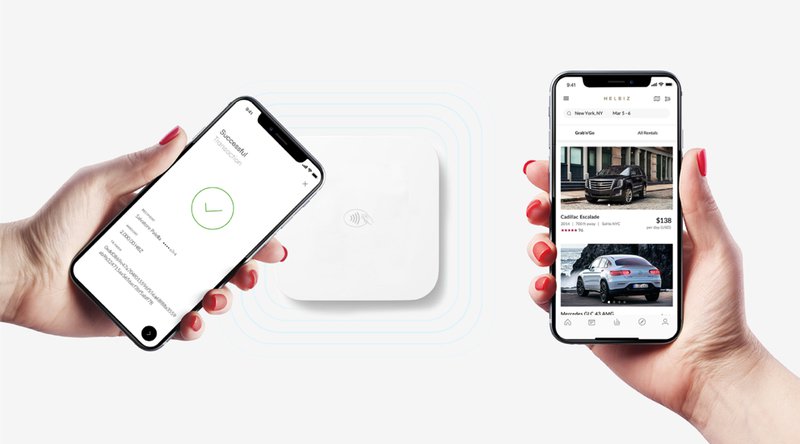
Helbiz intends to provide mass consumer adoption by implementing a state-of-the-art application available on smart devices that enables users to unlock and start a car digitally, without the need for paperwork or correspondence. In other words, the users’ mobile device becomes the car and ignition key whenever they need to rent one.
“Our solution will provide a means for car owners seeking to rent out their personal vehicles on an hourly or daily basis, all through our mobile and web application, without the need for any interaction, pre-bookings or key exchanges,” said Hellbiz founder and CEO Salvatore Palella.
Palella went on to note that car locks will be controlled by the app, allowing owners to more efficiently monetize the time their car would otherwise sit parked at home or work. “What’s nice is that the owner can fit in multiple rentals during a day and always have their car back before they need it. This added level of freedom, along with less friction, is what we believe is necessary for car sharing to become truly mainstream.”
A new normal in P2P car rentals
A veteran of the financial and investment world, Palella believes the blockchain is the future of business, having the potential to upend status quo models that exist in transportation. The idea for Helbiz, he said, grew from his own life experience.
“As I started traveling more and more for work, my own car would sit untouched for longer and longer periods, from weeks to sometimes months at a time collecting dust in my garage in Italy.” Every time he landed in a new airport, Palella would have to spend valuable time driving through full parking lots of private cars; then he would have to go through the process of renting a car. Overall, he found the rental process lengthy, tedious, expensive and limited in vehicle selections.
“I began thinking, What if you could rent out your car, but without the need for extensive communication, key exchanges, paper contracts, and insurance? An owner could rent out their car hassle- and risk-free without having to be physically present. This would allow renters to simply walk up to the car and unlock it directly from their phone and drive off within seconds, avoiding the time-consuming process of typical car rentals.”
From a business perspective, if car sharing is ever going to be adapted by mainstream society and integrated into daily life, Palella believes that it is essential for companies to combine the pros of business-to-consumer (B2C) and P2P business models. By fusing the rental convenience of scheduling and drop-offs, B2C models (Car2Go, DriveNow, Zipcar), with the business scalability and inventory of the current P2P models (Turo and Getaround), Helbiz intends to offer unique value for renters and rentees that has not yet been done.
When asked about Helbiz development road map, Palella added, “We have been fortunate to secure numerous partnerships over the last month for the overall ecosystem, allowing us to significantly improve the use of our Helbiz token, both from an integration, transaction and partnership perspective, even beyond the transportation sector. Paired with our transaction wallet application, we believe that our token offers wide and seamless use of the ability for third parties to integrate.”
Currently, Helbiz is and their CEO, Lorenzo Pellegrino, on a large-scale partnership, with the goal of promoting the mainstream adaptation of digital currencies, and in particular their use and integration through Helbiz. According to Palella, this partnership, along with a few other integration opportunities in the works, could eventually make Helbiz one of the most widely accepted digital currencies in the world.
Helbiz has also recently been working on a partnership proposal directly to the board of one of the largest global auto manufacturers. Because this partnership would mean implementation and integration on every level, all the way back to the car factory, Palella said that if implemented, the partnership could shift the perception of car sharing completely.
In the meantime, the back end of Helbiz’ platform is fully developed, with work continuing to take place on the front end with optimization and procedural testing in progress before going into beta phase.
“Ideally, in 18 months we will be established in the major United States markets with enough cars available in Los Angeles to enable some citizens to give up their car and completely rely on Helbiz, said Palella. “We’ll also be close to expanding to Europe and have sealed the deal with an auto manufacturer we are currently trying to work with. We have started production and integration on both the hardware and software side of their production line, allowing for a user experience unlike anything ever seen before.”
Published at Sat, 28 Apr 2018 01:17:37 +0000


